President Biden has promised to put the US on a path to net-zero emissions by 2050. Meanwhile, President Xi announced back in September that China would aim for carbon neutrality by 2060. The two countries should now establish a “US–China Decarbonisation Working Group” to rekindle their cooperation in moving towards a net-zero future.
A useful model can be found in the US–China Climate Change Working Group launched in 2013. The group supported the 2014 joint US–China climate announcement and their 2015 joint climate statement. It catalysed breakthroughs in international climate negotiations that led to the multilateral Paris Agreement. And it provides a template for both countries to coordinate joint decarbonisation progress and raise international climate ambition.
The working group had a dynamic tripartite structure – sectoral and technical cooperation, an enhanced policy dialogue and a domestic policy dialogue, both of which involved regular meetings. The three components fed into one another, facilitating communication and building trust. The group established linkages between domestic and international institutions, placing it at the core of interlocking dialogues and technical cooperation. A US–China Decarbonisation Working Group could apply these design characteristics to spur the two economies to greater decarbonisation.
To bridge the divide between short-term dialogues and long-term effective cooperation, the Decarbonisation Working Group will need to be more than the sum of its parts, each component amplifying the credibility of the others. At the same time, each component should play a discrete role in bringing the two countries together, and provide space for regular interactions so they can overcome lingering distrust. This is precisely what the Climate Change Working Group enabled.
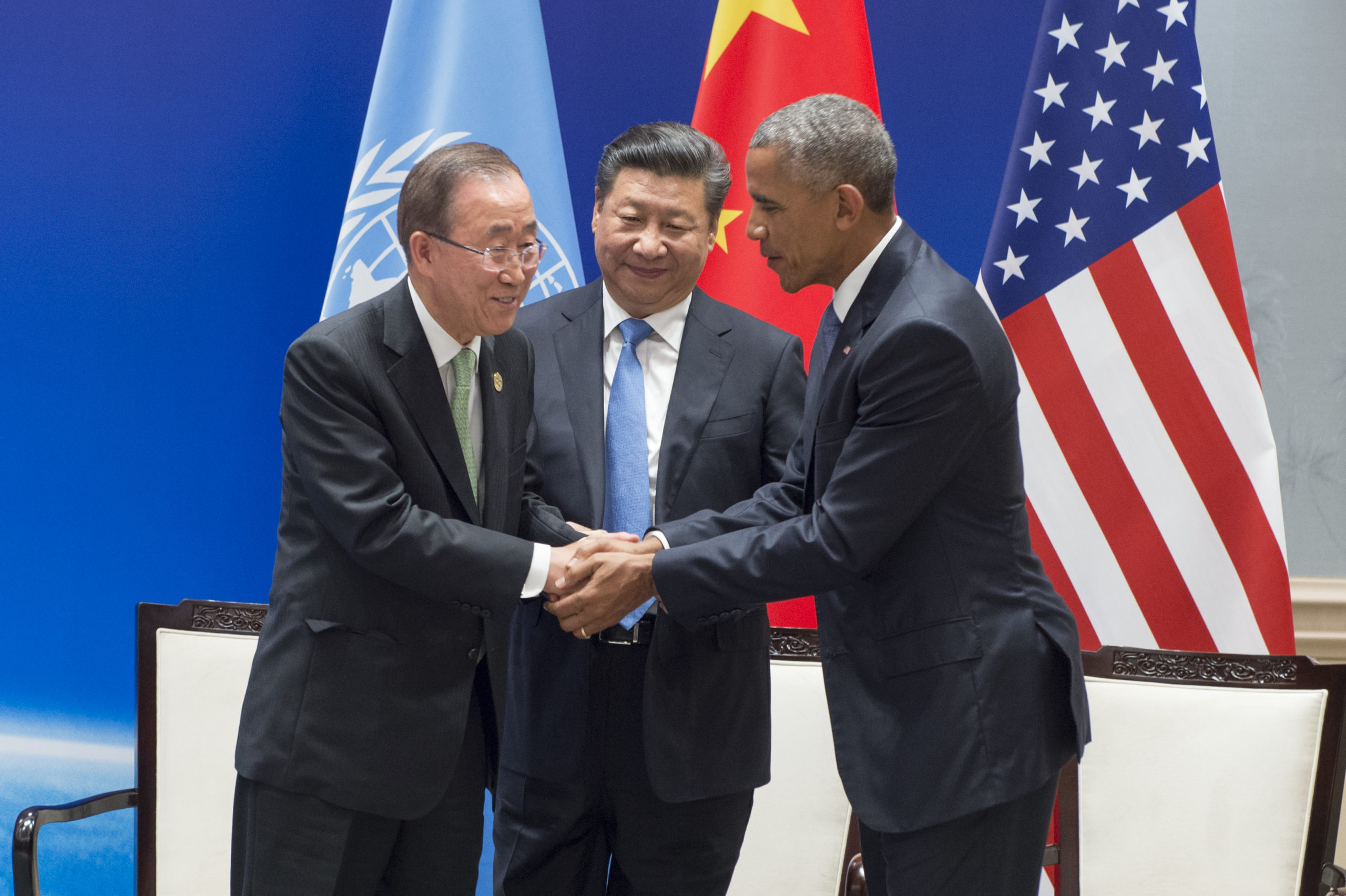
An enhanced policy dialogue within the Decarbonisation Working Group could strengthen relationships between top negotiators and provide the institutional space to continue targeted discussions. US Climate Envoy John Kerry, who initiated the Climate Change Working Group, can use the dialogue as a channel for intense conversations with Chinese policymakers to coordinate decarbonisation goals. On the Chinese side, Xie Zhenhua, recently reappointed China’s special climate envoy, can play a similar role in setting interim joint benchmarks. By engaging in constant, high-level discussions, the two countries can raise the ambitions of their next set of Nationally Determined Contributions (NDCs) and galvanise a race to the top among other countries in reaching net-zero emissions.
Within the Decarbonisation Working Group, domestic policy dialogue can comprise small-scale meetings and be a channel for experts from both countries to discuss decarbonisation policies at home. This would increase trust that both sides will work on various climate action projects and deliver on their commitments. The dialogue should include more than conversations about what the federal government in Washington or the central government in Beijing is undertaking. It should also involve discussions of decarbonisation efforts at the sub-national level. The last four years has seen a proliferation of initiatives at the state, city and municipal levels in the US and numerous policy experiments at the provincial and municipal levels in China. The domestic policy dialogue will ensure candid conversations about these, and any innovations that can be transplanted to other settings.
Sectoral and technical cooperation should be at the core of the Decarbonisation Working Group. It will contextualise and anchor the dialogues and negotiations taking place in the other two tracks. Through practical cooperation on specific issues, the two sides can create a broader foundation for policy cooperation. New sectoral cooperation can aim for zero-emission transportation, buildings, electric grids and industry. These goals can closely follow existing roadmaps, including China’s Long-term Low-Carbon Development Strategy and Pathway and the US’s Climate 21 Project. By identifying and acting upon points of convergence, the two sides can reinforce attempts to meet their decarbonisation targets.
Decarbonisation can occur along multiple pathways. The Climate Change Working Group recognised this and focused on initiatives such as the reduction of hydrofluorocarbons (HFCs) in the two countries, which provided them with credibility to negotiate the Kigali Amendment. Likewise, the new working group should seek to identify and regulate other short-lived pollutants that lead to global warming and ozone depletion. A natural candidate is nitrous oxide. By coordinating to reduce such emissions in their economies, the US and China may eventually regulate them through the Montreal Protocol, expanding the protocol’s scope and strengthening its successful record.
The form and substance of the sectoral cooperation will be shaped by and incorporate existing initiatives undertaken in the countries’ domestic government agencies. The Climate Change Working Group built upon the US–China Ten Year Framework for Cooperation on Energy and the Environment, and the US–China Clean Energy Research Center. The new working group would operate within a similarly complex institutional architecture. The dialogues and projects within the Decarbonisation Working Group should complement the work undertaken in the respective government agencies and discussions in forums for international dialogue. If a revived strategic and economic dialogue is not feasible, the Decarbonisation Working Group should directly feed its progress into other international forums such as the G20, Major Economies Forum and the annual UN climate conference. This might spur similar bilateral or multilateral efforts, facilitating efforts to intensify ambitions at the global level, including within the Paris Agreement.
Joint coordination between the two countries will also impact international climate negotiations outside the Paris Agreement. Institutions that would be affected include the Climate and Clean Air Coalition, International Civil Aviation Organisation and International Maritime Organisation. The focus should be on initiating and implementing domestic decarbonisation projects in the sectors covered by these institutions. This would provide the US and China with the credibility to rally other countries to negotiate new sectoral international agreements. The emphasis should be on generating momentum and durability in international negotiations. The Decarbonisation Working Group would thus engage both in incremental problem solving and have a transformational impact on the institutional architecture within which it operates.
Building trust between the US and China has never been more critical. An effective template already exists and the countries have a rare opportunity to align their goals. At the same time, the Decarbonisation Working Group can adapt to reflect the dynamic bilateral relationship. It could incorporate greater short-term reciprocal action when designing and implementing projects, or engage in more targeted communication when conducting dialogue to test the waters on cooperation. The two countries can create a flexible and powerful framework to accelerate the reduction of new carbon emissions and raise climate ambitions globally. Both countries can again exhibit joint climate leadership and pave the way for others to follow.