The city of Volta Redonda, located in the south of Rio de Janeiro state, differs from other nearby municipalities for the colour of its sky. In a region more famous for its sunny blues, the grey skies here in Brazil’s “Steel City” are a brand of their own.
In the 1940s, Brazil’s National Steel Company (CSN) established itself in Volta Redonda, in a key step for the country’s industrialisation. Today, the company’s vast iron and steel complex is home to two coal-powered blast furnaces that can produce nearly 6 million tonnes of steel a year. This complex has positioned CSN as one of the largest steelmakers in Latin America.
However, this growth has often come at an environmental cost, namely in the “black dust” emitted by its operations. Air pollution in the municipality has previously been found to exceed the limits set by Brazilian legislation, and has been scrutinised by local authorities. In the media, images have circulated showing clouds of pollutants emanating from the CSN plant, and dust gathered in local homes.
“In my neighbourhood, people clean their houses three times a day due to the dust. Whenever there is wind, it enters their homes. It’s very sad,” Ricardo Nascimento, a resident of the city’s Brasilândia neighbourhood for the past 11 years, told Dialogue Earth. This area of Volta Redonda is also located close to a waste site linked to the company’s operations, where slag, the solid wastes that steelmaking processes generate, has been deposited for decades. The site has been dubbed the “slag mountain” by locals and media, and blamed as another source of the dust. “The impact for us is this one: sick people,” Nascimento added.
“The pollution inside houses represents a giant risk,” said Leandro Vargas, who works in toxicology at Fiocruz, a Rio-based health research institute. “The limits set don’t preserve the population’s health. There are many impacts on cardiovascular and respiratory diseases.”
The federal government platform Painel Vigiar monitors pollution and its health impacts. Its data shows that Volta Redonda consistently ranks above national averages for deaths, lung cancers and other illnesses estimated to be attributable to particulate air pollution.
In recent years, CSN has taken measures and sought financing to confront pollution. This has included modernisations and upgrades at its steelworks, such as filters to try to counter its emissions. This followed multiple “conduct adjustment” agreements it has had with the Rio de Janeiro state government to meet its environmental obligations. One of these was a six-year agreement signed in 2018, with a deadline that was ultimately extended to 2026 – the associated inspections took place last month.
In 2024, Brazil’s public prosecutor recommended expanded monitoring of pollution in Volta Redonda, having disputed previous air quality measurements by Inea, the state-level environment agency. On Dialogue Earth’s visit to the city in June, local residents and organisations said they felt this had not been enough to assure better air quality.
In 2025, the civil society association Ethics in Politics Movement Volta Redonda (MEP-VR) conducted a poll of 334 residents. Forty-seven percent of respondents said they felt the level of pollution had increased on the previous year, while 46.7% felt it had remained the same. On a scale of zero to 10, the residents’ perception of pollution was almost at its highest: 9.2.
Dialogue Earth consulted Volta Redonda’s environment secretary, Jorge Alberto Felipe Cury: “We know that the situation is far from ideal, however, actions are being taken by CSN to mitigate damage, such as the recent installation of filters inside the plant. According to monitoring panels spread throughout the city, the air quality is good.” He said that this referred to data provided by Inea.
The latest focus on CSN’s environmental performance at its base in Volta Redonda also comes at a time when the steel industry, in Brazil and beyond, is exploring pathways to decarbonisation and producing “green steel”. The company has itself launched pilots to produce green hydrogen, a potentially key future input for near-zero-emissions steel, and states it is analysing more than 100 emission-reduction projects for feasibility.
CSN has also reportedly fed green hydrogen into its blast furnaces in Volta Redonda, to begin to reduce emissions and dependence on coal. But for those living closest to its homebase in the city, cleaning up pollution remains an urgent task for today.
The ‘city’s father’
The founding of CSN came during the first government of Getúlio Vargas, a president who oversaw nationalisation plans and the consolidation of pro-worker labour laws. The Brazilian national oil company Petrobras was also established during his administration. While Dialogue Earth heard differing views in Volta Redonda on CSN’s current responsibilities and its future, there remains something of a consensus on a past that brought benefits for the company’s workers.
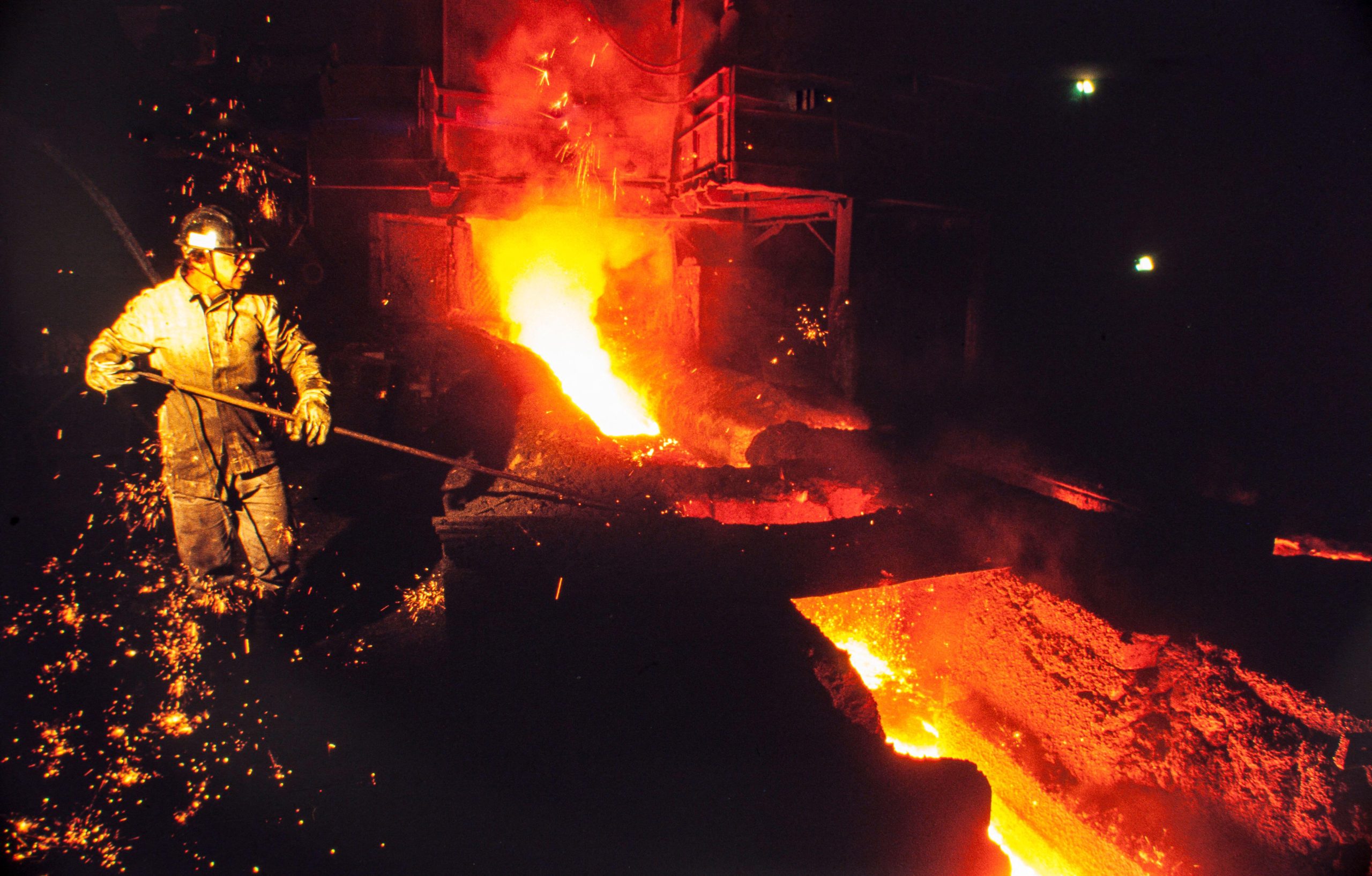
Volta Redonda developed with and around its main historical employer, including purpose-built “villages” that used to house company staff. The city reached a population of around 261,000, according to the 2022 Brazilian census.
Local people described grandparents and parents with well-paid jobs and other advantages, such as good schools and company-supported social clubs. In the 1990s, like other Brazilian national companies such as the miner Vale, CSN was privatised.
This change arrived as other external factors affected Brazilian industrialisation, including the massive migration of manufacturing to Asia, and automation, which reduced the number of jobs in the sector. But the moment is nonetheless seen by some as a milestone in the relationship between the company and Volta Redonda’s population.
“CSN passed from a city’s father to an unknown,” said Luís Antônio Lima Neves Júnior, an urbanist and socio-environmental coordinator from the MEP-VR. Now, he said, “there is precariousness in the jobs, including an outsourcing of services”. In recent years, the company has also been subject to fines for its accountability over impacts to workers and the local population, and to the environment.
“There is a very important environmental legacy to be repaired. We have always recognised the historical and current role that CSN has played since its founding. It’s a benchmark for development in Brazil. However, this came with profound marks on local quality of life,” José Maria da Silva, the MEP-VR’s executive director, told Dialogue Earth.
Fiocruz toxicologist Vargas argued it is “common in cities with huge ventures such as CSN that those companies co-opt the population” through wide employment. “They always do everything to show that they are looking after people,” he claimed. “In any case, chronic exposure leads to illness, even if people don’t make the connection.”
Júnior described a decades-long journey and awareness around the city’s air quality. “In the 2000s, there was the discovery of the impacts of pollution that used to be treated as normal. At this moment, the population started to fight for its rights,” he said. “However, as time went by, it became normalised again.”
But today, his colleague da Silva highlighted, “there are technologies that were not available decades ago that can repair parts of the emissions”.
CSN has begun to explore integrating these technologies, but the need for upgrades comes at a challenging moment for the company, and the wider Brazilian steel industry. It has been under pressure from cheap imports that have hit competitivity and profits, and limited capacity to invest.
This year, CSN has sought to confront debts of BRL 40.5 billion (USD 8 billion), announcing plans to sell stakes of its subsidiary activities, including infrastructure and cement. Some sources have claimed this could generate between BRL 5-8 billion (USD 1-1.6 billion) in cashflow for the company.
The slag is there, and near the river. All of our neighbourhood could be affected in the event of a slide, and also the watercourseRicardo Nascimento, resident of Volta Redonda’s Brasilândia neighbourhood
In Volta Redonda, the news around CSN’s asset sales have fuelled rumours and anxiety on the company’s plans to keep operating in the city.
“What will be left for us? Who is going to pay the bills?” asked Nascimento.
“Even in the case that the steel plant isn’t for sale now, there are no indications that the activities will last for much more in the city,” claimed Júnior.
CSN was approached for comment on concerns raised by residents in this report, but at the time of publication Dialogue Earth had yet to receive responses. In January, it was reported that the company was considering the sale of its steelmaking assets, which it did not confirm or deny at the time. Coverage has since focused on CSN’s preparations for bids on its cement and infrastructure divisions.
The ‘slag mountain’
In recent decades, a huge waste pile has sprung up on the banks of the Paraíba do Sul River that runs through Volta Redonda. It has attracted much attention, and local worry.
Throughout the day, trucks loaded with slag unload their cargo onto the growing pile. The massive accumulation has caused concern for local residents due to the spreading of dust from its surface, especially on days with higher winds. But they have also expressed fears beyond this.
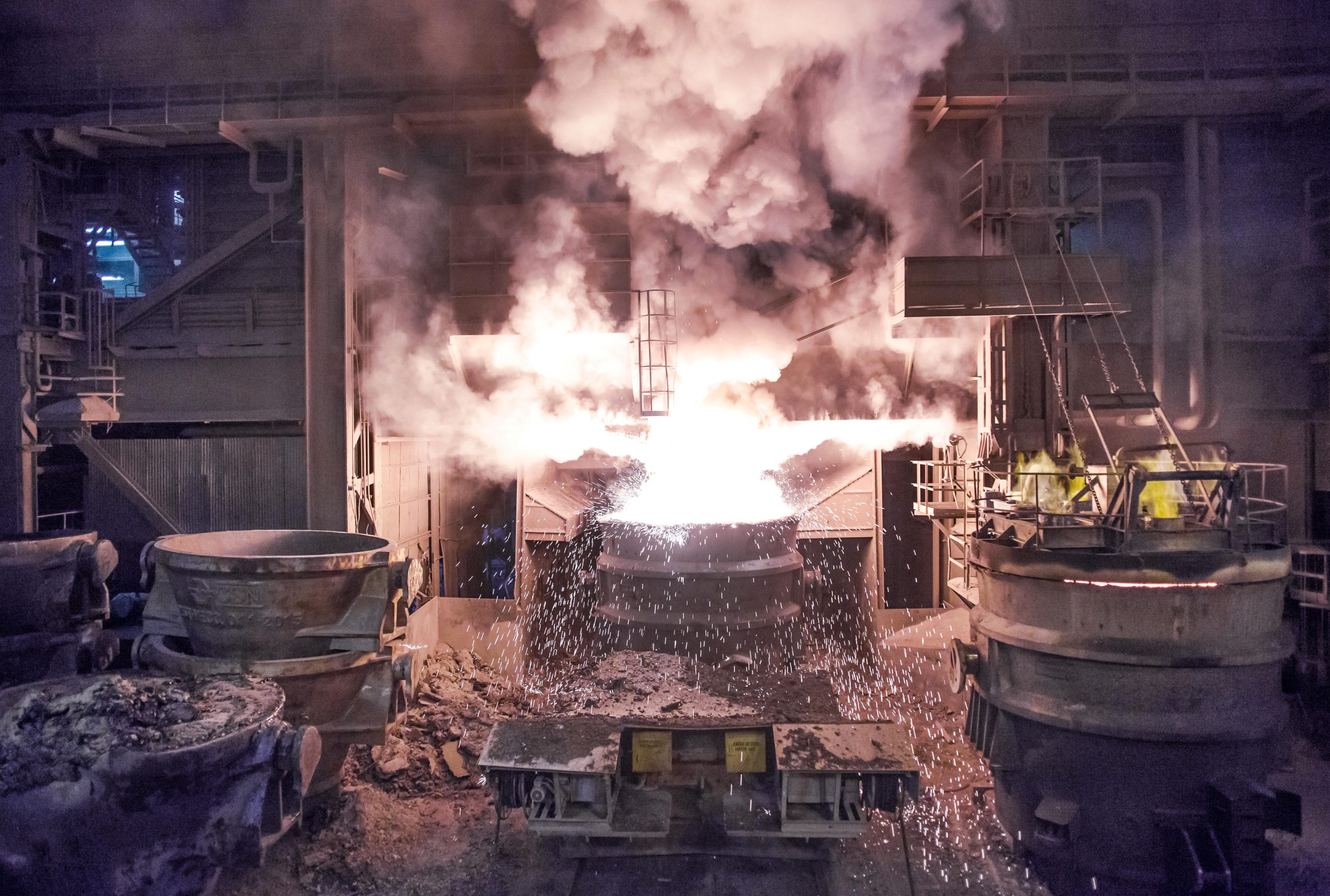
“The slag is there, and near the river. All of our neighbourhood could be affected in the event of a slide, and also the watercourse. This would reach the wider population. It would be like Brumadinho and Mariana,” said Ricardo, referring to two of Brazil’s worst ever environmental disasters. In both cases, the collapse of tailings dams containing mining wastes caused massive damage to local populations and dozens of deaths.
“This is a tragedy waiting to happen,” said Júnior of the MEP-VR.
In 2025, Brazil’s Federal Public Prosecutor’s Office (MPF) launched a lawsuit against CSN and a partner business due to their activities in the area. According to the complaint, CSN and Harsco Metals are alleged to have caused pollution at levels capable of resulting in harm to human health, by storing and disposing of solid waste improperly, and in violation of environmental legislation.
According to the MPF, more than 5 million tonnes of slag are alleged to have been dumped as of December 2023. Waste piles have reached more than 30 metres in height, posing an environmental and landscape risk. The displacement of particles from the site are said to have reached neighbouring districts, affecting more than 40,000 residents. The complaint characterised these as ongoing crimes and affirmed that they date from the 1970s and 1980s to the present day.
The prosecutor set out a minimum compensation for environmental and social damages exceeding BRL 430 million (USD 86 million).
Following the announcement, a statement from CSN described the lawsuit as “unexpected”. It disputed the description of the facility as a “landfill”. CSN also countered that independent technical studies had reportedly indicated the “stored steelmaking aggregate is neither dangerous nor toxic”, and that there was no risk of collapse or contamination of the river.
The case is on course for the regional federal court in Rio de Janeiro, with no date yet announced.
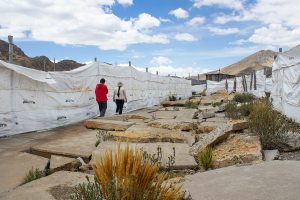
Today, the mountain has taken on a different hue. The reason is “GreenCarpet”, a product that the company has applied as an attempt to fix the dust issue – quite literally, a green-coloured polymer sealant sprayed on the surface of the deposit, which aims to control erosion, and therefore the dust. A Volta Redonda government press release claimed the product, produced by the US-headquartered firm Benetech, can reduce the dust dispersion in the air by 90%.
Earlier in 2025, CSN said it has “intensified its efforts to move and reuse the steelmaking aggregate” stored there. The material is being used in applications such as paving rural roads, earthmoving, and railway ballast, according to the company. It reiterated its position on analysis that had reportedly disproven environmental risks at the facility.
However, scepticism remains in the neighbourhood about the longevity of the current solutions. “They can do this. In any case, the slag and the river will still be there – and the risks,” Nascimento argued.