Editor’s note: this is an updated version of an article published on Monday entitled ‘Protests erupt in Chile ahead of APEC, climate summits’
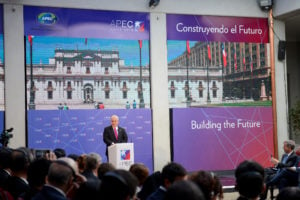
Ongoing clashes between protestors and security forces in Chile have forced President Sebastián Piñera’s government into a U-turn over hosting world leaders for two major international summits – the Asia Pacific Economic Cooperation Forum (APEC) and COP25 climate talks – that were scheduled for November and December, respectively.
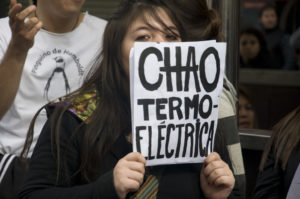
Piñera, who insisted last week that APEC and COP25 would go ahead as planned, has come under intense pressure since a 4% hike in metro fares in Chile’s capital Santiago sparked protests that have now run into a third week.
Many Chileans saw the raise as a move by its billionaire president to further enrich private companies while their living standards stagnate and inequality increases.
“As president of all Chileans, I always have to put their problems, interests… their needs, desires and hopes first in line.” Piñera said Wednesday. “It’s painful for Chile, but our government has decided not to carry out the APEC Summit…nor the COP.”
At least 18 are reported to have died since protests began. A state of emergency and curfew were in place last week, which saw the military hit the streets in several cities in an attempt to quell unrest.
30,000
people were expected to travel to Santiago for COP25 climate talks
Around 30,000 delegates were expected to attend COP25, but with the capital’s metro system severely damaged by protesters – only three of six lines are running and few stations are open – the government acknowledged that full transport operations could not have been restored for months.
Nicole Jenne, an international relations professor at Santiago’s Catholic University, told Diálogo Chino prior to today’s announcement that Chile faced “gigantic” logistical challenges in hosting the events.
However, she said they presented a huge opportunity, not only for the government to improve its tarnished international reputation but to show that it was taking seriously what people in the streets were calling for.
Patricia Espinosa, executive secretary of the UNFCCC, the UN climate arm that co-organises the COP, released a short statement Wednesday saying the body was “exploring alternative hosting options”.
Chile protests force APEC, COP25 cancellations
In a move Jenne said was designed to address international concerns, two-time Chilean president and current UN High Commissioner for Human Rights Michelle Bachelet sent a team to investigate alleged abuses since Piñera declared the country at war with “a violent enemy”.
Piñera apologised to citizens and agreed a set of economic and social policies designed to ease tension, including an increase in the universal basic pension and the minimum wage, and reneging on recent electricity hikes. On Saturday, he asked his cabinet to resign.
the scenario has radically changed
But the moves had little immediate impact as protestors again took to the streets up and down the country Monday, lighting bonfires and scuffling with police.
Sociologist Augusto Varas had told Diálogo Chino last week that protests were likely to rumble on. He said the maintenance of the social order in the coming weeks depended on the proper implementation of Piñera’s new Social Agenda and the police’s capacity to control demonstrations without the army’s help.
“A new state of emergency during these two meetings would not be acceptable and another mass outburst would mean they’d be cancelled,” he predicted.
The Chilean government had already faced calls for COP25 to be relocated or boycotted.
Ximena Rincón, a Chilean senator, said COP25 co-host Costa Rica should stage the event, while French politician Alexis Corbiére suggested the national government not attend so long as Chile’s military is outside the barracks.
However, Carlos Rodríguez, Costa Rica’s environment minister had ruled out his country hosting the COP.
“We expect the event to be in Chile and to go ahead as normal,” he said last week.
Yet Cristóbal Bellolio, a Chilean political analyst told Diálogo Chino, “the scenario has radically changed”.
“It’s unclear whether we can go back to normal and start thinking about the two upcoming summits in Santiago again,” he said Friday.
On China’s attendance at APEC, foreign ministry spokesperson Hua Chunying told a press conference last week: “As we are following the situation in Chile, we believe the Chilean government can properly handle it and ensure a smooth and safe meeting.”
US President Donald Trump said earlier this month he expected a resolution to long-running trade tensions with China at the APEC meeting, although US officials since said this could take longer.
Civil society
Trump’s mere presence at APEC in Chile would’ve had special significance and likely sparked another outburst. Whereas climate talks are bigger, have widespread citizen involvement, and would’ve attracted less “aggressive” demonstrations demanding more assertive policies to combat climate change, Varas said.
Jenne said that the climate movement is a bottom-up process, but that APEC has not properly fulfilled commitments to involve civil society in decision-making, nor focus on young people and gender equality.
Did you know…
APEC has 21 member countries that account for around 60% of global GDP
Yet even during COP25, there was a risk of tension between the Chilean government and social groups.
The group Civil Society for Climate Action (SCAC, in the Spanish acronym), which includes several Chilean NGOs, said the current situation made dialogue on climate impossible.
“It is not viable to discuss the future of the planet, climate justice and each country’s commitments (known as Nationally Determined Contributions, or NDC’s), as long as Chile has broken with the rule of law and sent soldiers to contain protests over social discontent, generating panic, murders, and cases of torture,” it wrote in a press release issued Friday.
Civil society groups might’ve taken advantage of the two global meetings to denounce human rights violations committed before, during and since the demonstrations, Varas said.
Jenne said that COP25 offered an opportunity to: “make an important step forward by committing to civil society’s demands, and pushing – even unilaterally – concrete measures.”