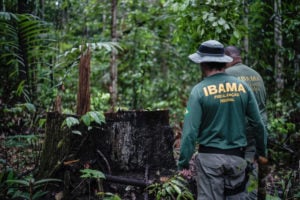
In December, the Peruvian congress passed amendments to the country’s Forest and Wildlife Law, effectively decriminalising illegal logging in the Amazon. The revised law now permits the clearing of forested lands for agricultural purposes or other economic activities without requiring consideration of the existing forest ecosystems. Notably, the law lacks environmental safeguards to ensure that these activities are conducted responsibly within forest areas.
These legislative changes open the door to widespread deforestation and destruction of the country’s forests, including in the Peruvian Amazon. This represents not only an environmental crisis, but is a direct attack against our human rights, the pillars of our buen vivir – our “living well” in harmony with nature.
The elementary freedoms that belong to all people, human rights include the right to life, to political participation and freedom of expression, as well as the right to culture. One of the latest to be recognised at the international level is the universal right to a clean, healthy, and sustainable environment. Peru has recognised all such human rights, including the right to peace and security, to a healthy environment, as well as access to information and public participation.
The protection and responsible management of forests, including the Peruvian Amazon, are indispensable for our buen vivir: forests provide us with water, food and medicine, regulate the global climate, and are home to millions of living beings, both human and non-human. Without healthy and protected forests, we cannot enjoy our human rights.
Unfortunately, the struggle for the preservation of forests in Peru has intensified and become more dangerous in recent years. In June 2023, for instance, the current congress tried to approve a set of norms that prioritised and encouraged more oil extraction and gold mining in the Amazon. These laws ultimately failed to pass, thanks to civil society opposition, but the economic interests behind them remain. There is evidence of influence from strong agricultural and mining lobbies that have gained many allies within the Peruvian congress.
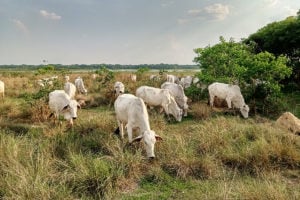
With this in mind, it was not surprising that on 14 December the congress approved an irregular modification to the Forest and Wildlife Law, later enacted by the chamber’s president on 10 January. The amendment includes several changes, including allowing the deforestation of forests in order to apply for land titles, and validating land titles and ownership certificates that were previously granted in an irregular manner for agricultural and livestock purposes. These changes have harmful consequences for the forests, and may aggravate the disputes around drug trafficking, palm oil, hydrocarbons and gold mining that have already been felt in the country.

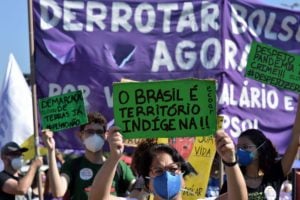
Those most affected by this regulatory change are the local communities and Indigenous peoples who live in the forests. In Peru, it is Indigenous people who often lead the struggle for the protection of the Amazon. These resistance efforts put them at risk as they are the ones who actively denounce illegal or unsustainable activities.
Between 2013 and 2023, 32 environmental defenders were killed in Peru for their efforts to protect their lands, Indigenous rights organisation Aidesep reports. Most recently, these have included the killings of Benjamín Flores in the Ucayali region, and Quinto Inuma in San Martín, both murdered at the end of last year.
Activities such as drug trafficking, illegal logging, gold mining and oil extraction are the main sparks for the conflicts behind the murders of environmental defenders. As highly lucrative activities, politically and economically powerful actors tend to be the masterminds behind the killings, but are often never prosecuted for their crimes. Worse still, political instability, corruption and the rise of organised crime in Peru are laying the ground for a future where such cases will become even more common.
Without forests, millions of people in Peru who indirectly and directly depend on them will not be able to enjoy their fundamental human rights. Moreover, without a political context that protects and respects our environmental defenders, our guardians of the forests, no Peruvians will be unable to enjoy their human rights. The amendments to the forestry law are therefore not only an attack on the country’s natural heritage, but also a direct violation of the human rights of the entire nation.
All rights come with responsibilities and obligations: people have a duty to follow the laws of our countries, to contribute to building a prosperous society as well as to ensure respect for the rights of others. Unfortunately, it seems that Peruvian parliamentarians have forgotten such elementary legal concepts, and lost sight of their duties to build a safe, healthy and prosperous nation.