Food

Why agriculture is so important to solving water scarcity

Half of the world’s cities are suffering water scarcity. Here’s what we can do about it, writes Huw Pohlner
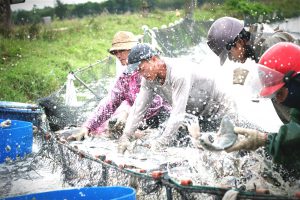
<p>In areas facing water scarcity, more than 90% of consumption on average goes to irrigated agriculture. But inexpensive tools for managing water scarcity exist (Image: </p>

In areas facing water scarcity, more than 90% of consumption on average goes to irrigated agriculture. But inexpensive tools for managing water scarcity exist (Image:

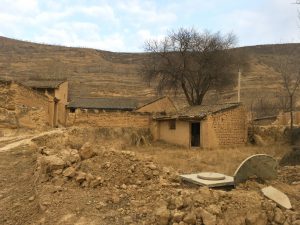
Over coming decades, hundreds of communities will likely be faced with the prospect of mass forced or voluntary relocation because there is simply not enough water to support business-as-usual agriculture and industry.

The story of the Xihaigu region (published recently on China Dialogue) in China’s Ningxia province is one of a growing number of cautionary tales.

Where settlements are “too big to fail” (think Beijing or São Paulo), there will be no option but to bring more water in (e.g. China’s South-North Water Transfer Project) or fundamentally change the way existing water resources are used. So, what are the changes that we can make and how costly are they?

More than 50% of the world’s cities and 75% of all irrigated farms are experiencing water shortages on a recurring basis. Where water scarcity exists, more than 90% of water consumption on average goes to irrigated agriculture. The agricultural sector is an obvious target for improving the way water is allocated and used. And there are proven ways to promote efficiency.

Generally, the tools for managing water scarcity already exist and can be adopted or applied at a cost to national, provincial or state budgets that is significantly less than the value of the resulting benefits for people, economies and environments. 

In China, technical measures (the use of polythene soil covers, canal lining, and planting of drought-resistant crop varieties), economic incentives (expanded water metering to support volumetric pricing), and regulatory incentives (formalising legal water rights and enabling the trading of rights) have been adopted to varying degrees. Many of these can deliver benefits that are larger than their associated costs.

In many instances, current inefficiencies in water allocation and use are so profound that major water and financial savings could be realised with the implementation of relatively small incremental changes.

Nearly a decade ago, the 2030 Water Resources Group showed that almost all of the lowest-cost options for closing the gap between water supply and demand in India by 2030 targeted agricultural efficiency and productivity. These included: no-till farming; reduced over-irrigation; rice intensification; optimised fertiliser application; and improved drainage.

While more technologically advanced than most existing means of conducting irrigated agriculture in India, these are by no means ground-breaking advances in water management.

National and local water management ministries and authorities facing challenges from water scarcity must develop plans for financing and implementing demand-side interventions if they are to avoid costly, disruptive and often traumatic mass relocation of communities. If people stay and conditions worsen, economic inequality and environmental degradation is almost inevitable. A critical part of the solution is to better understand and communicate the value of water and the true cost of inaction.

Decision makers must act now: the road ahead is long, and the political and implementation challenges along the way may appear insurmountable. But there is no future – economic, social or environmental – in draining rivers and pumping aquifers dry.
Also see: Water scarcity might be Xiong’an’s undoing

Cookies Settings

Dialogue Earth uses cookies to provide you with the best user experience possible. Cookie information is stored in your browser. It allows us to recognise you when you return to Dialogue Earth and helps us to understand which sections of the website you find useful.

Required Cookies

Required Cookies should be enabled at all times so that we can save your preferences for cookie settings.

Dialogue Earth - Dialogue Earth is an independent organisation dedicated to promoting a common understanding of the world's urgent environmental challenges. Read our privacy policy.

Cloudflare - Cloudflare is a service used for the purposes of increasing the security and performance of web sites and services. Read Cloudflare's privacy policy and terms of service.

Functional Cookies

Dialogue Earth uses several functional cookies to collect anonymous information such as the number of site visitors and the most popular pages. Keeping these cookies enabled helps us to improve our website.

Google Analytics - The Google Analytics cookies are used to gather anonymous information about how you use our websites. We use this information to improve our sites and report on the reach of our content. Read Google's privacy policy and terms of service.

Advertising Cookies

This website uses the following additional cookies:

Google Inc. - Google operates Google Ads, Display & Video 360, and Google Ad Manager. These services allow advertisers to plan, execute and analyze marketing programs with greater ease and efficiency, while enabling publishers to maximize their returns from online advertising. Note that you may see cookies placed by Google for advertising, including the opt out cookie, under the Google.com or DoubleClick.net domains.

Twitter - Twitter is a real-time information network that connects you to the latest stories, ideas, opinions and news about what you find interesting. Simply find the accounts you find compelling and follow the conversations.

Facebook Inc. - Facebook is an online social networking service. China Dialogue aims to help guide our readers to content that they are interested in, so they can continue to read more of what they enjoy. If you are a social media user, then we are able to do this through a pixel provided by Facebook, which allows Facebook to place cookies on your web browser. For example, when a Facebook user returns to Facebook from our site, Facebook can identify them as part of a group of China Dialogue readers, and deliver them marketing messages from us, i.e. more of our content on biodiversity. Data that can be obtained through this is limited to the URL of the pages that have been visited and the limited information a browser might pass on, such as its IP address. In addition to the cookie controls that we mentioned above, if you are a Facebook user you can opt out by following this link.

Linkedin - LinkedIn is a business- and employment-oriented social networking service that operates via websites and mobile apps.