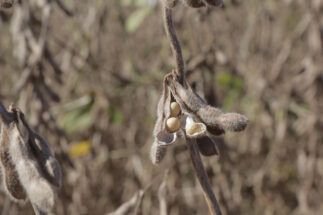
The unreliability of the rains needed to irrigate Brazil’s vast soybean plantations is driving the race to genetically engineer seeds that are more resistant to water stress. Producers have little hope of stopping climate change and deforestation, which researchers have identified as being a factor behind water shortages, so instead they are turning to technology to avoid further losses.
The increase in frequency and duration of the so-called “veranicos”, as Brazilians call the dry spells that occur during the rainy season, caused delays in last year’s crop production. Producers would normally plant seeds in early November, but only began doing so in December.
“[We have] had much less rain than in recent years,” said Endrigo Dalcin, president of the Instituto Soja Livre and owner of a farm in Nova Xavantina, in Mato Grosso, in November. “We delayed planting by at least 15 days, but the rains haven’t regularised until today, we have been waiting for 10 days.”
In the same region, a transition area between the Cerrado, the Brazilian savannah biome, and the southern edge of the Amazon, Leeds University researcher David Galbraith has documented a considerable increase in high temperatures and a reduction in rainfall in recent years.
“According to the climate data from this region, the increase in heat waves and high temperatures is quite remarkable,” he said. He said the number of days on which the temperature exceeds 40 degrees has increased over the last decade.
Technology to mitigate the impacts of rainfall failure
The scientists working to develop drought resistant seed species is one of the main strands of work tackling the challenges of the summer season. In Brazil this work is primarily led by the Brazilian Agricultural Research Corporation, or Embrapa, in Portuguese.
Alexandre Nepomuceno, a researcher dedicated to studying species resistant to hydric stress for decades, stepped up as head of the National Soy Research Center of Embrapa, in September, in response to the worsening situation.
“I don’t even need to talk about the importance of this work. We are seeing the climate variations, we are seeing all the delay that the lack of water is causing in the soy plantations all over Brazil”, Nepomuceno comments.
If before I would lose 50% of the crop, from now on I will lose only 20% or 30%
The head of Embrapa Soja explains that, in short, his team’s goal is to create new varieties of soy capable of holding a flower or vegetable alive longer periods without rain. He says it is difficult to define how many days a plant could endure without rain, but that preliminary results already show that tolerance is significant.
“If before I would lose 50% of the crop, from now on I will lose only 20% or 30%”, he explains. “These species are already being planted, but not commercially”.
The aim is to demonstrate the effectiveness of the seeds, in order to secure government authorisation to market them, a process that all transgenic varieties must go through.
In the work, the researchers used genes from the plant Arabidopsis thaliana, a species native to Europe and Asia that belongs to the same mustard family. The results, according to Nepomuceno, have been excellent so far.
“Biotechnology is going to be one of the great tools in the coming decades to deal with the issue of climate change,” he says.
Parallel research conducted by Embrapa’s National Center for Genetic Resources (Cenargen, in Portuguese), also working on developing species more resistant to water shortages.
The group’s researcher, Maria de Fátima Grossi, explains that the work is still in the intermediate phase. One of the research strategies, she says, is the “silencing” of genes more susceptible to drought and the over-expression of genes more tolerant to water shortages. The technique is known as Crispr.
With this technique researchers manipulate the genes of the plant itself to make them more resistant, without having to bring genes from other plants, effectively replicating in the laboratory a natural mutation of the gene. 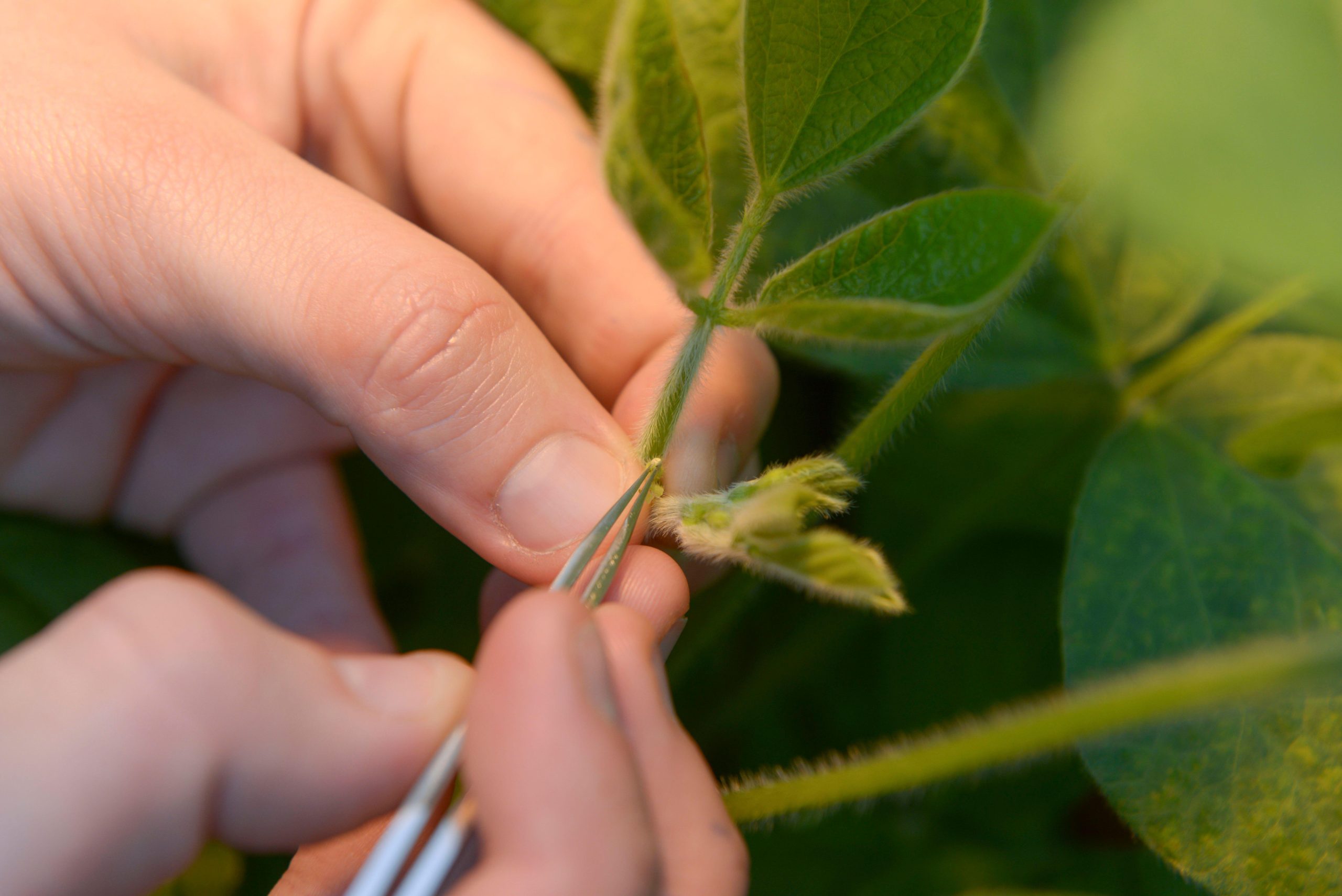
“Since field analyses have not yet begun, it is not possible to say with certainty what the behaviour of improved soybean varieties will be in response to climate change, but in theory, the response is believed to be positive,” says the researcher.
While promising, genetic improvement alone is not enough
Embrapa has solved similar problems in the past. Over the last three decades, the company has created varieties of weather-resistant crops in the Cerrado, which led to a revolution in agricultural production in states such as Goiás, Mato Grosso, and Mato Grosso do Sul – which environmentalists have blamed for much of the deforestation in the biome.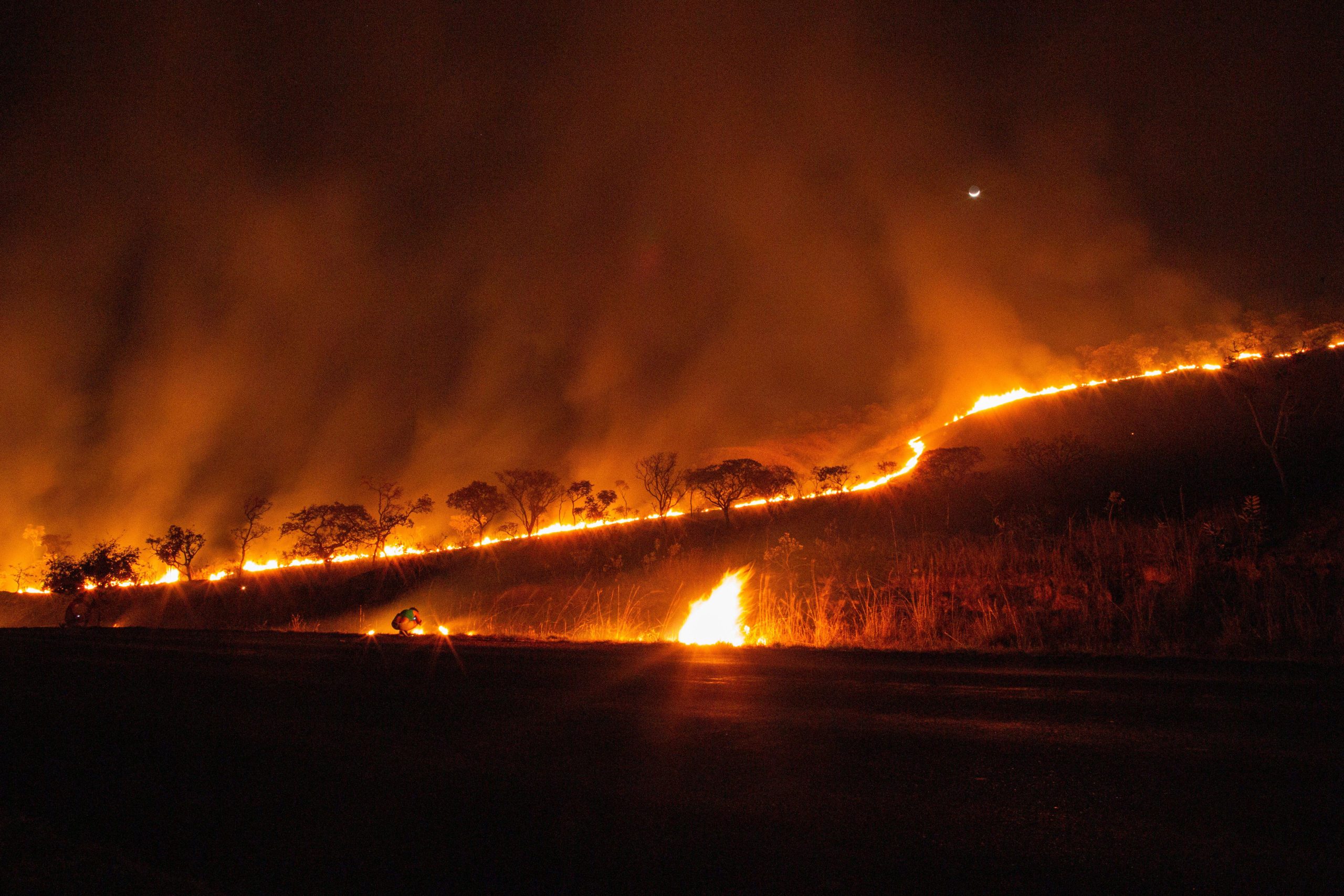
Researchers such as Marimon and Galbraith argue that rainfall variations can no longer be explained by natural climatic phenomena, such as El Niño or La Niña. Because of this, they argue, it is difficult to predict where and when it will rain less or more on the continent – and therefore how intense of a water stress a new variety of soybean would need to endure.
Did you know...
Genetic improvement was key for the advance of soybeans through the Brazilian Cerrado
“This race against climate change is already beginning to show signs that it may not be won by genetics, we can already say that we have no guarantees because the speed of climate change has increased and become difficult to predict,” he says.
For Marcos Norio Matsumoto, consultant for GDM Seeds, the leading soybean company in the country, decision makers need to think of a path in the middle, that responds both to climate and agribusiness demands.
“We need to walk together. Stopping what is done today will not be the best solution, but going ahead without looking to the other side will not help either”, he says. “I am sure that if this union takes place the result can be extremely interesting for both sides”.
But so far, pressure from the productive sector has weighed more on technological advances than on the protection of ecosystems. Ben Hur Marimon and David Galbraith, who work in partnership, argue that part of the response to droughts needs investment in policies that restrict the forest destruction that has dried up rains, such as the 2006 Soy Moratorium which stopped trading companies from buying soy from recently deforested areas in the Amazon.
Both researchers fear that advances in technology are incentives not to prevent the destruction of climate-regulating ecosystems.
“The advances in Brazilian biotechnology are great and remarkable,” says Marimon. “But we are not doing anything for the climate.”
![Tsering standing on an outcrop observing her pashmina goat flock [image by: Stanzin Dorjai Gya]](https://dialogue.earth/content/uploads/2021/02/DSC07391-300x200.jpg)