Deep in the Ecuadorian Amazon, a silent but powerful movement is flourishing in the hands of Indigenous women. Faced with the advance of climate change and deforestation, members of the Shuar community of San Luis Ininkis in Morona Santiago province have decided to sow life: they are reforesting with native species, protecting water sources and passing on their ancestral wisdom to new generations.
Editor’s note
This article is part of Dialogue Earth’s Indigenous Voices fellowship. The eight fellows are Indigenous journalists and storytellers from across the Global South. The fellowship aims to foreground not just Indigenous issues, but also the storytelling, reporting and insights of Indigenous journalists themselves.
This has not been easy. Although their actions are vital for the protection of the tropical forest, Shuar women face a series of barriers that limit the dissemination and recognition of their practices. These include tensions with state conservation policies, gender stereotypes that persist even within their communities, and a lack of equitable access to resources and decision-making.
Guardians of the forest
Clareth Ankuash, 47, is a Shuar woman from San Luis Ininkis. From childhood, she learned from her mother and grandmothers to recognise the power of plants. “My mother taught me to talk to plants. To listen to the jungle,” she says in a quiet voice. Today, she leads a community nursery called Siembra Vida, meaning Sow Life, or Iwiakma Araatá in the Shuar language. This is where native species used for both reforestation and traditional medicine are grown. Her role has been key to the success of this space, which not only provides trees but also hope.
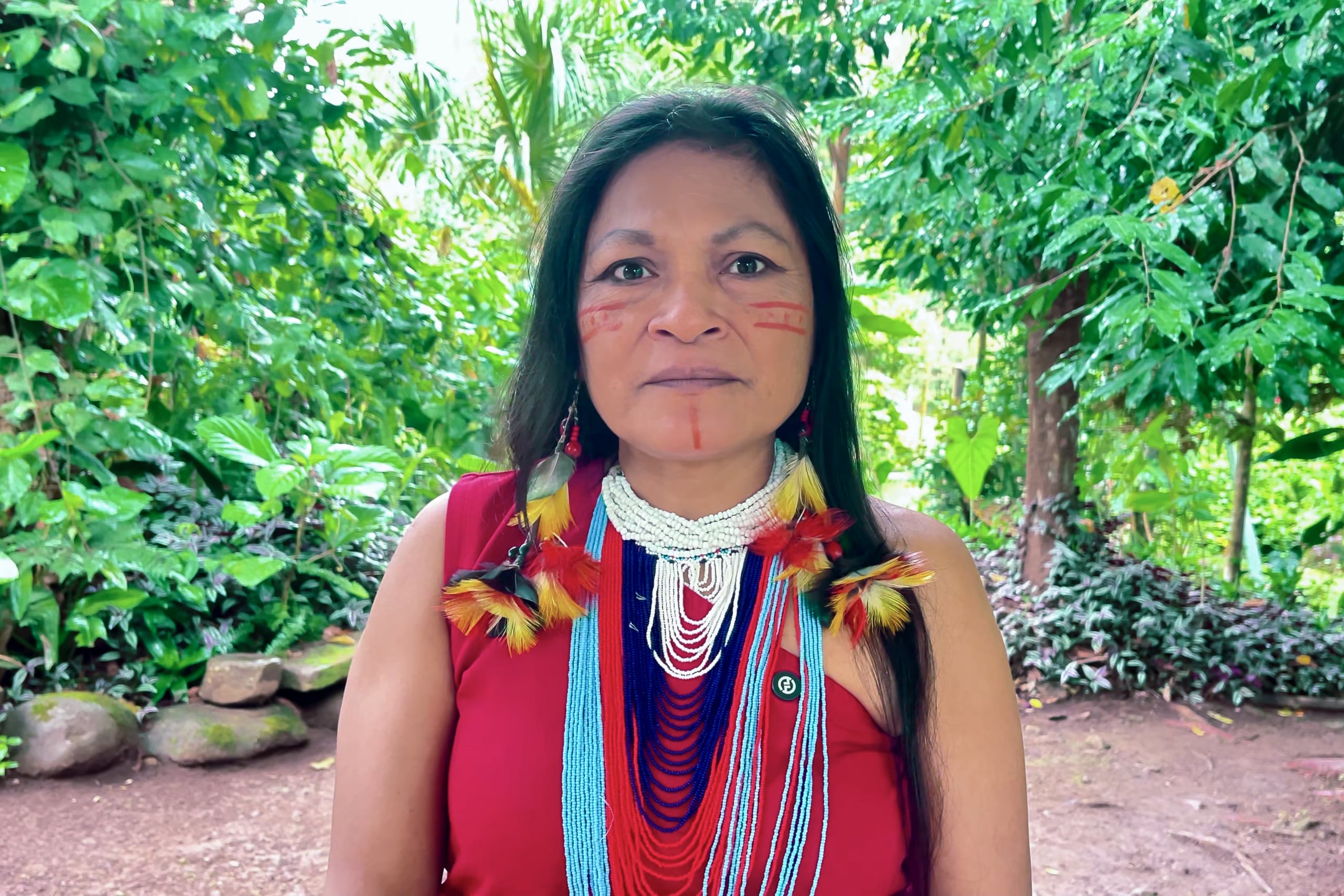
Currently, 10 people work in the nursery. Most are women, although some men also participate, such as Ankuash’s husband, Antonio Jimbicti, and occasionally other members of the community.
This nursery has a family feel: Ankuash’s daughters also help her to run it, providing training to other women in the community: five women are learning about seed selection, germination and the care of native species.
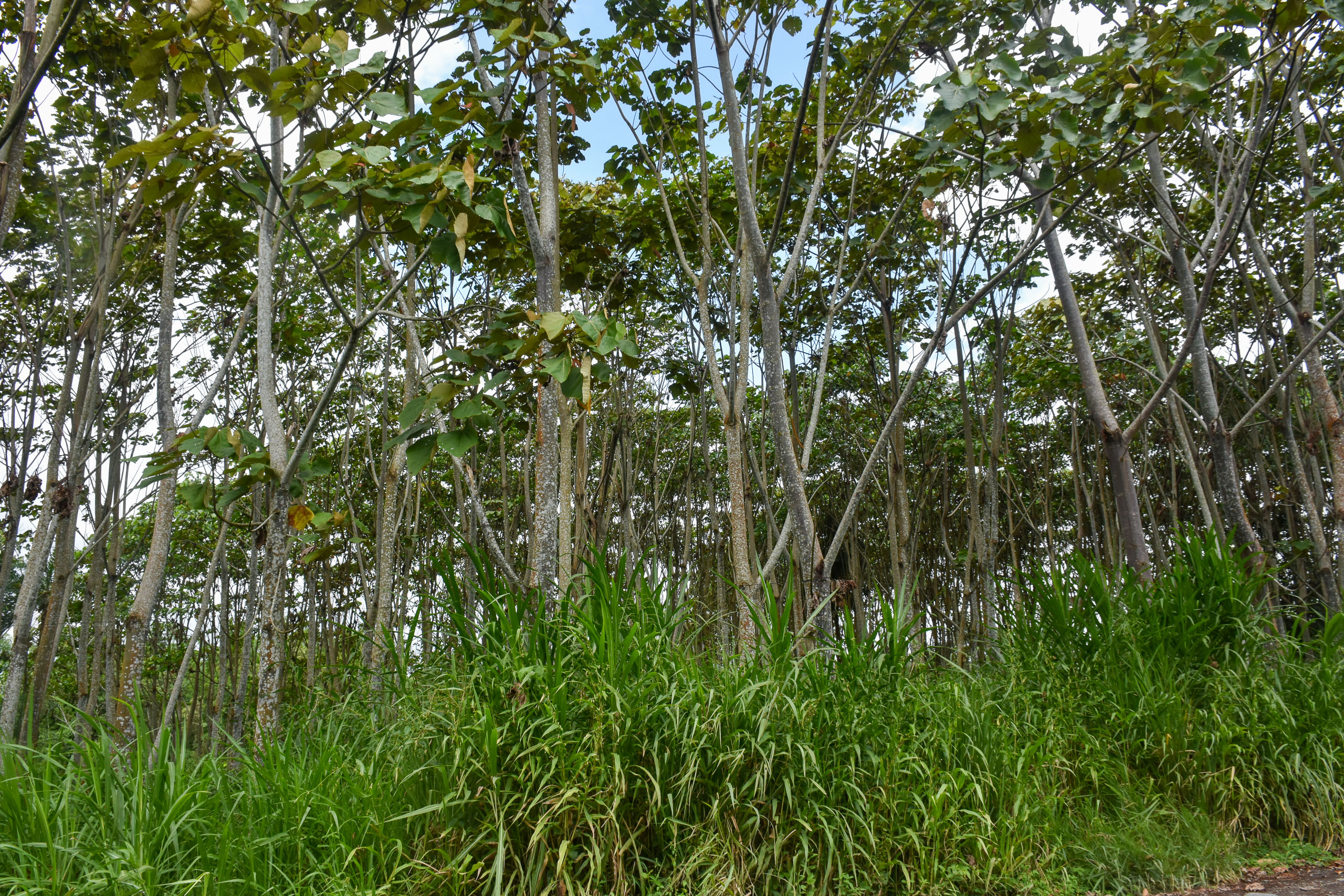
Ankuash opened the nursery six years ago. She works with other women from the community on the selection, germination and planting of species such as balsa (Ochroma pyramidale), cedar (Cedrela odorata), chonta (Bactris gasipaes) and guayusa (Ilex guayusa). These plants not only help to restore the forest, but also strengthen the Shuar cultural identity, as they are deeply linked to their worldview. Reforestation, in this context, is also a form of cultural resistance.
Living knowledge versus external models
This traditional wisdom has survived for centuries, but it is at odds with conservation models promoted from outside the community. State policies and NGO programmes working with communities often impose western approaches to environmental management, without recognising the deep knowledge that communities already have. “Sometimes, the technicians come and want to teach us how to take care of the forest, but they don’t know what it’s like to live here, they don’t know our plants, our stories,” explains Ankuash. This imposition of external knowledge creates tensions and, in many cases, weakens the autonomy of communities.
Reactions to these situations have been mixed. Some communities have rejected projects that do not respect their worldview or that arrive without real prior consultation. On more than one occasion, they have decided to stop working with certain NGOs or government institutions, especially when they seek to impose their methodologies without listening to local voices.
However, there have also been processes of dialogue and negotiation. In certain cases, communities have managed to make technicians and officials understand the importance of incorporating their cultural and territorial perspective into environmental programmes. This has happened when there is openness to intercultural dialogue and political will to build together.
For example, in San Luis Ininkis, the community nursery is not part of a state or NGO programme. It was started by the community itself. They have occasionally received visits from technical experts but have only accepted collaboration when respect is given to their way of working. This is based on oral tradition, spirituality and knowledge shared within the community.
Women have a very special bond with the land, but we also have to break down many barriers to be heard, both outside and within our communitiesYadira Kasent, Shuar woman and deputy mayor of the canton of Morona
“It’s not about saying ‘no’ to everything from outside,” Ankuash clarifies, “but about being listened to first. We do want support, but with respect. We are not recipients, we are guardians of the forest, and we also know how to teach.”
Despite these limitations, Shuar women remain committed to their own ways of conservation, based on oral tradition, spirituality and daily practice. “We don’t just plant plants, we plant memories,” Ankuash says firmly.
Gender and territory: A double struggle
The women face difficulties within their own communities, too, where their role in these initiatives has not always been recognised. Even though they are the ones who protect the seeds, cultivate the gardens and heal with plants, their work has historically been invisible or relegated to the domestic sphere.
Yadira Kasent is the deputy mayor of Morona, a canton of Morona Santiago province. She is also a Shuar woman and has experienced these tensions first-hand. At 34, she is an environmental leader who promotes environmental care projects from within the institutional framework. “Women have a very special bond with the land, but we also have to break down many barriers to be heard, both outside and within our communities,” she says.
In her local authority role, Kasent has promoted the inclusion of an intercultural and gender perspective in cantonal environmental policies. She has led discussions between Shuar communities, environmental technicians and authorities, seeking to have ancestral practices – such as the planting of medicinal plants, the use of the lunar calendar in crop cultivation and rituals of gratitude to the earth – recognised as valid tools for environmental management.
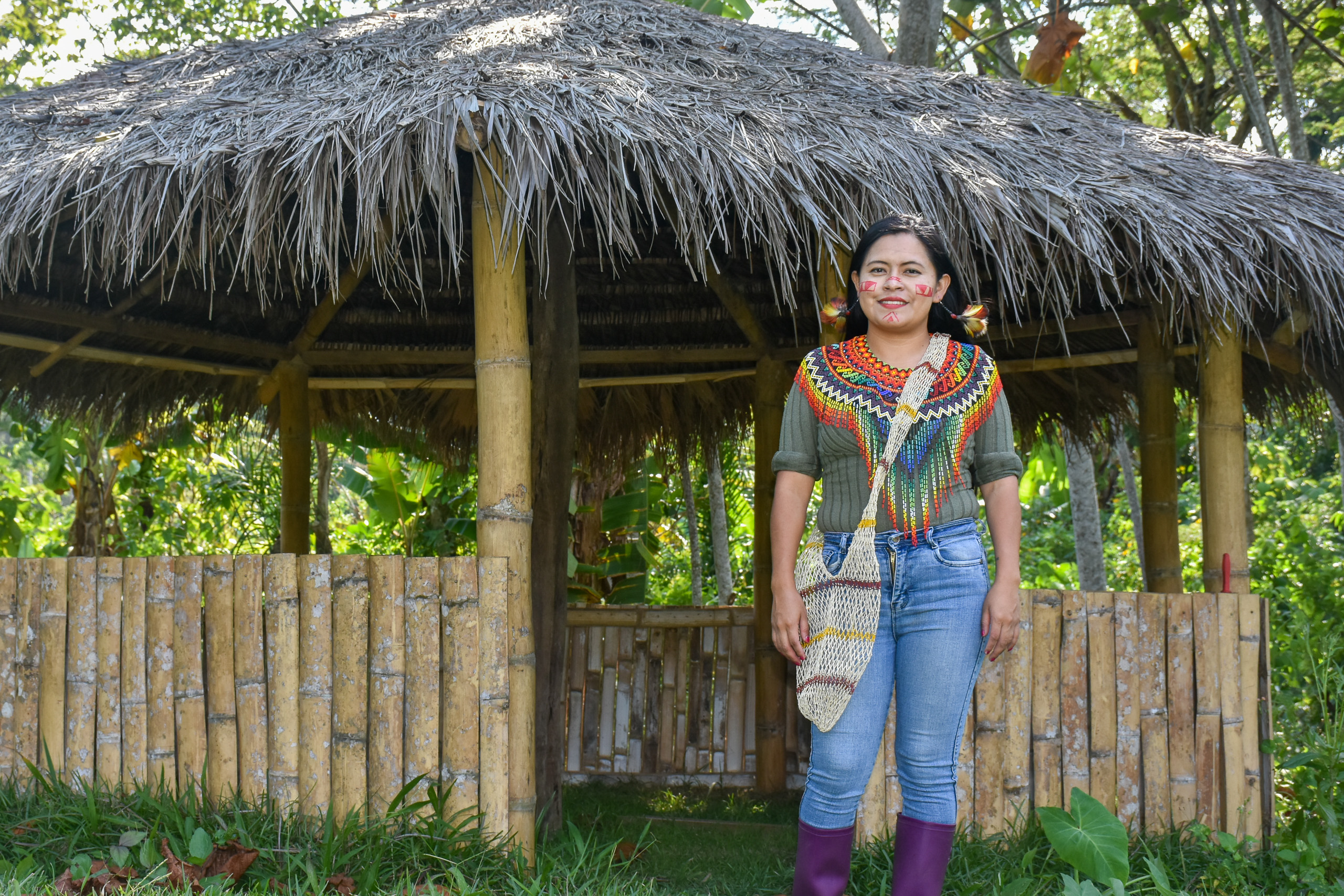
One of the projects she has promoted, in coordination with women leaders from several communities, is the creation of small community nurseries run by women. These initiatives not only encourage reforestation with native species, but also strengthen the family economy, women’s leadership and food sovereignty. In some cases, women have managed to receive technical assistance through an intercultural approach adapted to their own ways of learning.
In addition, Kasent has proposed a cantonal ordinance that seeks to declare ancestral knowledge as intangible heritage and the basis for local environmental planning. The proposal has been shared with community elders and suggests that reforestation and conservation plans include practices such as the identification of mother plants, the use of songs and rituals during planting, and respect for the natural cycles of the forest.
Although these initiatives still face resistance, especially in institutional spaces dominated by technical or patriarchal views, they represent a firm step towards a more just, inclusive ecology rooted in Indigenous wisdom. As Kasent says: “We want our girls to grow up knowing that they can be wise women of the forest, but also leaders, technicians, councillors. We don’t want them to have to choose between the ancestral and the modern, but to be able to walk with both forms of knowledge.”
Barriers to recognition
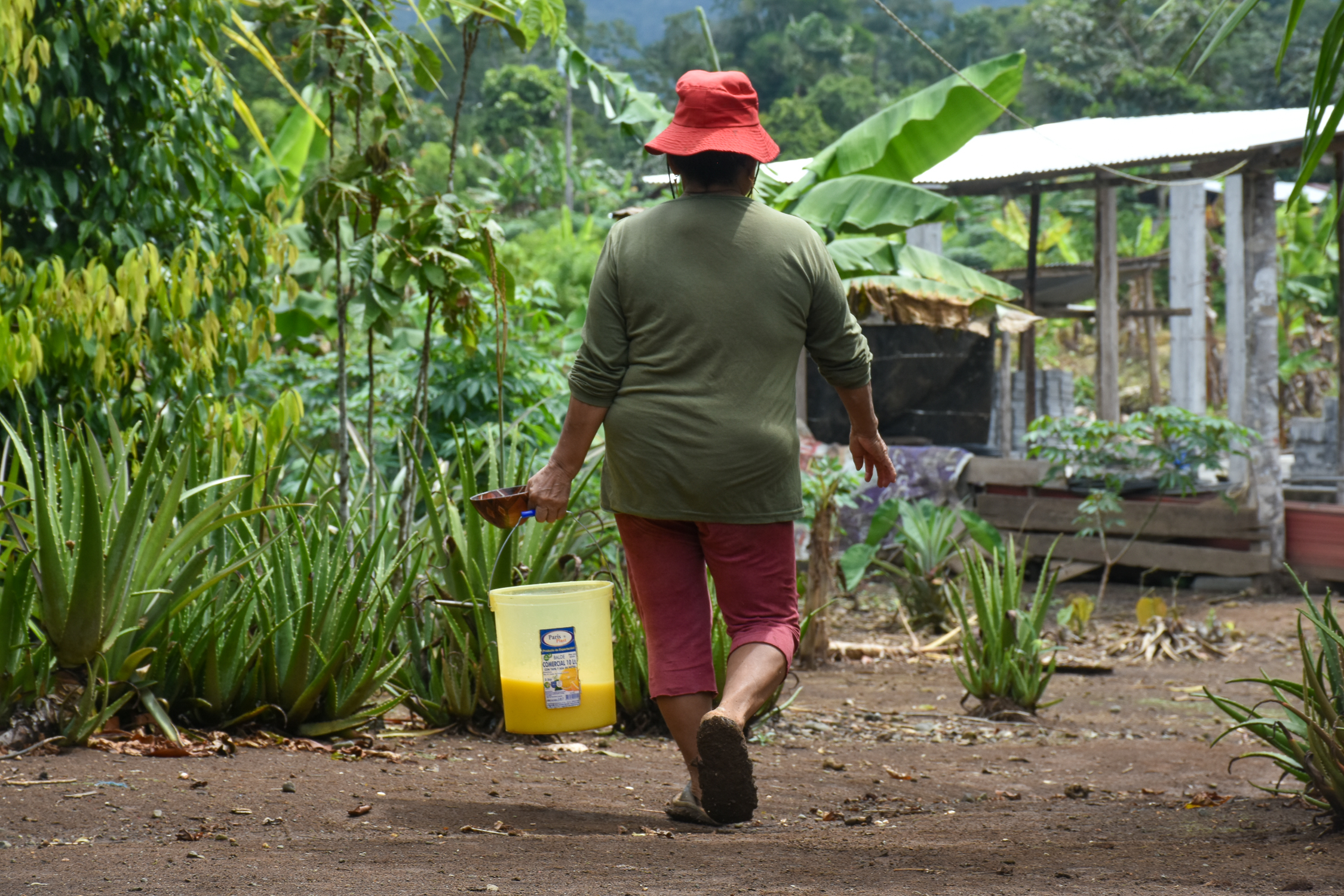
One of the main obstacles faced by Shuar women is the lack of access to resources: secure land, technical support, financing for their nurseries and training tailored to their realities. For example, only 25% of agricultural production units in Ecuador are run by women, and less than 30% of land titles in the Ecuadorian Amazon are held by women.
Another barrier is the limited dissemination of their knowledge in academic, media and educational spaces. According to a Unesco report, less than 5% of educational content in Latin America includes references to Indigenous knowledge as part of the formal curriculum. Although many women like Ankuash have a deep understanding of the environment, they are rarely recognised as experts. Instead, Indigenous knowledge continues to be treated as “complementary” or “alternative” to the dominant western scientific approaches, she says.
Pathways to environmental and cultural justice
Despite these challenges, Shuar women continue to make progress. In the community of San Luis Ininkis, the knowledge of the elderly women has begun to be documented in audiovisual formats and written down, so that new generations can learn from them.
Intercommunity exchanges are also underway. Networks between the communities of San Luis Ininkis, Pastaza and Morona Santiago facilitate the exchange of native seeds, cultivation techniques and experiences of resistance. A project supported by Ibercocinas, a programme of the Ibero-American General Secretariat, strengthened 10 ancestral bio-gardens led by Shuar women. The project also included training in agroecology and community economics.
Reforesting the future from the roots
The stories of Ankuash, Kasent and so many other Shuar women expose problems in the fight against climate change. It is not just about technology or international agreements but also about valuing the practices that have cared for the environment for centuries. As they have shown, there are lessons to be learned from these women if structural barriers are broken down.
Climate justice cannot be achieved without gender justice and without the recognition of ancestral knowledge as the basis for a sustainable future. This is also the view of the Intergovernmental Panel on Climate Change, which highlights in its sixth report the need to integrate local and Indigenous knowledge to achieve effective solutions to climate change.
Shuar women are not only reforesting the forest: they are reforesting the future, from their own roots, with wisdom, strength and love for the land.