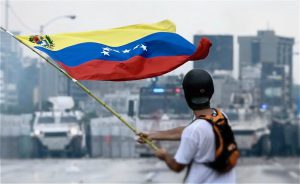
With an abstention rate of 46% and opposition candidates refusing to recognise the results, Nicolás Maduro’s re-election as President of Venezuela for the 2019-2025 term with two thirds of the vote further intensifies the sense of instability facing the country.
The international community – led by the US, the European Union and Latin American countries forming the Lima Group, which consists of regional opponents such as Brazil and Argentina – is embarking on a new phase of pressure, which in this case would involve sanctions on the hydrocarbon sector.
Within state oil company PDVSA (Petróleos de Venezuela), there is concern that Donald Trump’s government could ban Venezuela’s purchase from the US of the 136,000 barrels of oil-related products that includes diluents that enable Venezuela to process extra heavy crude oil from the Orinoco Belt. It also imports gasoline for vehicles and diesel for thermal power generating plants.
Such action would constitute a second phase of restrictions imposed by the Trump administration, given that only last August it restricted any new financing to projects linked to PDVSA.
Possible US sanctions along with the recent notable drop in production levels, carries the risk that the Maduro government may not be able to maintain its commitment to repay its debt to China. The balance of which is estimated to be US$23.6 billion. This should include a 2018 payment of US$5.5 billion on the capital and interest, according to calculations by the consulting firm Ecoanalítica.
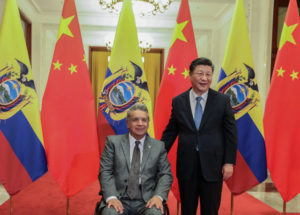
Earlier this week, Lu Kang, a spokesman for the Ministry of Foreign Affairs of China, stopped short of congratulating Maduro on his re-election and stressed China’s policy of not interfering in the domestic affairs of other countries.
The tabloid paper, the Global Times, the international arm under the auspices of the Communist Party’s the People’s Daily, wrote that Venezuela’s oil reserves – the largest in the world – will guarantee repayment and that cooperation between China and Venezuela goes far beyond oil and money.
International concern
PDVSA’s shipments to the US – its main market – have declined steadily since April 2017. In just one year, the average export to the US has decreased by 33%, dropping to 502,000 barrels per day. This figure is a quarter of total shipments compared to 20 years ago, when the self-declared process of ‘revolution’ began under Hugo Chávez.
The fear in Europe is that the sanctions would also affect its oil and gas companies operating in Venezuela, such as ENI, Repsol, Total, Statoil (now Equinor) and Shell, since they aim to halt financing, investment and trade.
The main investment in hydrocarbons during Maduro’s first six-year term that began in 2013 was the US$1.5 billion Cardón IV natural gas project by ENI and Repsol. Production is around 540 million cubic feet per day. It is slated to enter a new phase of production of 1.2 billion cubic feet.
The search for capital is a challenge for the Venezuelan government, as it tries to become an exporter of natural gas to Caribbean countries and to compensate for the fall in oil production, which has been dropping steadily since mid-2016.
Production problems
In the past year, official figures indicate that oil production has decreased by 31%, reaching a low of 1.5 million barrels per day. This is 20% below the quota assigned to Venezuela within agreements established with members of the Organisation of Petroleum Exporting Countries (OPEC) along with observer nations Russia and Oman.
The Centre for Energy and Environment of the Institute of Advanced Administrative Studies (IESA), the main business school in Venezuela, has warned that the average production drop is 30%, which means it is not managing to produce the number of barrels of oil needed to compensate for the natural decline of deposits, which has historically been around 24%.
Repayment of the debt with China is honoured by shipments of crude oil and fuel to the tune of of 400,000 barrels per day. This amount is not reported as net income to PDVSA, which is in any case expected to be lower this year, despite the fact that the price of oil has increased – in Venezuela’s case to above US$60 per barrel – just over US$15 more than it cost in 2017.
Ecoanalítica’s calculations indicate that the income from oil exports will be US$24.7 billion in 2018, a decrease of US$3.3 billion compared to 2017, and that decrease is due exclusively to the fall in production and to fewer exports.
Studies undertaken by PVDSA’s transnational partners in joint ventures, as well as by the IESA, are unanimous in identifying the reasons that explain the fall in oil production. These include:
- A lack of financing. US$20 billion for maintenance, and another similar amount are needed annually for new production, according to IESA’s calculations;
- Delays in the purchase or importation of supplies and machinery;
- The exodus of qualified personnel in the oil field;
- The Venezuelan Prosecutor’s Office arresting PVDSA’s management personnel for alleged cases of corruption, without these charges having been substantiated;
- The centralisation of procurement within PVDSA without the delegation of operational flexibility to foreign partners;
- Problems of insecurity (theft and robbery) involving both personnel and within the confines of the oil installations.
These problems are threatening Venezuela’s oil revenues – it’s lifeblood. With production crashing and increasing fewer options for generating revenue to repay its main creditors, it seems there is no way of reversing the current, troubling trend.