Despite agreeing a roadmap for cooperation over the next five years, Chinese President Xi Jinping’s visit to Argentina ended without advancing many strategic goals, casting doubt on the future of several key infrastructure projects, including a controversial nuclear plant.
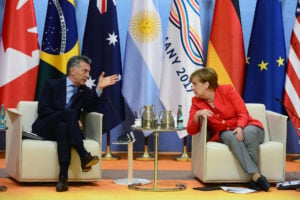
Xi travelled to Buenos Aires for the G20 leaders’ summit last week and tacked on a state visit. He and counterpart Mauricio Macri signed a joint five-year action plan (2019-2023) but did not secure Argentina’s participation in China’s Belt and Road initiative. A slew of Latin American countries, including Argentina’s neighbour Chile, have signed up to the mega-infrastructure programme recently.
While the new document signals continuing cooperation between China and Argentina, it comes amid rapprochement from the South American country with the European Union and the US, who questioned the “predatory” Chinese economy in Latin America at the G20.
“There is a change of perspective in Argentina, with a much closer relationship to the US and Europe. Trump realised that he must have a better approach to the region and asks countries to contain China’s advance,” said Sergio Cesarín, coordinator of the Asia Pacific and Indian Studies Center at the National University of Tres de Febrero (UNTREF).
New agreements
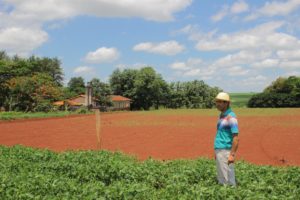
Xi and Macri’s meeting resulted in the signing of 30 agreements, including on the export of agricultural products from Argentina such as cherries, honey and sheep and goat meat.
China will also grant US$1 billion in finance to small and medium-sized companies in Argentina and increase funds to renew the San Martín freight train line. The two countries will also seek to increase tourism exchanges.
The visit will help increase trade and bring us closer to China, our second biggest trade partner
At the same time, Argentina signed a memorandum of understanding with China on environmental protection, committing to conserve biodiversity, work on climate change and waste management, among other issues.
“In times when it is difficult to get financing for projects, China accompanies and cooperates with us. The visit will help increase trade and bring us closer to China, our second biggest trade partner,” said Ernesto Fernández Taboada, executive director of the China-Argentina Chamber.
Argentina has an “integral strategic alliance” with China, a high diplomatic status the latter reserves for only a few countries. The relationship between the two was strengthened by the government of former president Cristina Fernández de Kirchner, who signed more than 20 treaties.
In the last decade, Chinese products went from accounting for 5% to 20% of Argentina’s imports. Argentina’s exports to China did not grow at the same rate, increasing from just 8% to 10%.
This has led to a record trade deficit of more than US$5 billion between the two countries. The gap has grown wider since Macri’s inauguration in 2015, after he eased restrictions on imports.
Flagship projects
Despite the new agreements, expectations the two countries would decide the fate of a series of stalled projects were high. The Argentine president pledged to review deals signed by his predecessor on taking office.
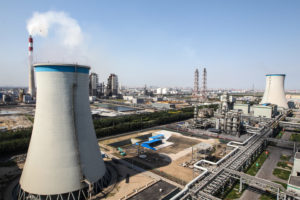
In 2015, Argentina agreed to build two nuclear power plants with China, with investment of US$14 billion. The plan contemplated the use in one plant of CANDU nuclear technology, which is based on natural uranium, a type of technology that Argentina has, and enriched uranium, which China uses, in the other.
The plant that would use Argentine technology was initially cancelled owing to cost. The second was put under review. The expectation from a number of those watching the deals was to relaunch it at the bilateral meeting, with construction set to begin in 2022.
Prior to Macri’s meeting with Xi, a group of former environment ministers lobbied the Argentine president not to proceed with the nuclear project. They argued the money would be better spent on renewable energy projects.
With no advance at the meeting, the project’s future and clarity on its benefit for Argentina hangs in the balance.
“China has money to finance projects and a surplus capacity to nuclear energy at the domestic level. Argentina already has an advanced development in the area and could find synergies with China,” said Mark Hibbs, specialist of the nuclear policy program at Carnegie Endowment.
Argentina is avoiding taking a concrete decision in many aspects with China
With no advance this time, Macri and Xi also failed to secure Argentina’s accession to the Belt and Road initiative, which China has promoted since 2013 to develop infrastructure and international trade networks. Uruguay was the first country in South America’s Southern Cone to join the initiative, with Chile recently following. However, Argentina, Brazil and Mexico, the largest economies in Latin America, have not yet signed-up.
“Not participating is a political decision to make and makes the deployment of Chinese capital more difficult. Argentina is avoiding taking a concrete decision in many aspects with China,” said Gustavo Girado, director of the postgraduate course in Contemporary Chinese Studies at the National University of Lanús.
G20 role
As well as attempting to advance the groups agenda at the G20 leaders’ summit in Buenos Aires, Argentina sought closer engagement with the US. Macro considers President Donald Trump a friend. The US also helped Argentina obtain new loans from the International Monetary Fund (IMF). While the China nuclear project stalled, Argentina signed a framework agreement for energy cooperation with the US. The countries will cooperate in joint investments in renewable energy, oil and natural gas, mostly using US technology.
In a meeting with President Trump, Macri signed a wide range of agreements, following which, the US published a press release claiming the presidents discussed China’s “predatory influence” in Latin America.
China reacted by cancelling press conferences and side events on the first day of the G20, but without responding to the comments publicly. Meanwhile, Argentine government officials rejected the US’ statement. After his meeting with Xi, Macri said: “the more China develops the better Argentina will perform.”