Today, government representatives from across the Americas and beyond are gathering in Guayaquil, Ecuador, for the annual meeting of the Inter-American Development Bank Group (IDBG, which includes both the IDB and its private sector lending arm, IDB Invest).
Readers could be forgiven not knowing about the meeting, originally slated to take place in Chengdu, China, in March but which was dramatically cancelled following a row over who should represent Venezuela. As a result, this year’s event is shaping up to be a more private affair.
The press release for this year’s event makes no mention of welcoming business and civil society community members, a deviation from the pattern of previous years and even the announcement for the original meeting.
Private affair
The IDB’s cautious approach is perhaps an understandable reaction to the highly public disagreement that led to the cancellation of the original 2019 meeting in China. That meeting – commemorating the institution’s 60th anniversary and China’s 10th as a member – was announced with much fanfare.
The IDBG meeting is perhaps more important today than in any recent year
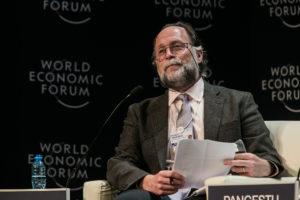
But the meeting was cancelled amidst a disagreement over whether Nicolás Maduro’s representative, who is recognised by China and several other IDBG members, or Ricardo Hausmann of Juan Guaidó’s opposition, who is also a vocal critic of Chinese finance in Latin America, should attend.
The disagreement escalated amidst a reported threat by the US to band with its regional allies and “pull quorum” if Hausmann was not invited. The IDBG cancelled the meeting. After such a dramatic failure to convene, the IDBG could reasonably be expected to seek a subdued atmosphere this week to quietly get back to the business of development finance.
However, civil society participation in the IDBG meeting is perhaps more important today than in any recent year since this year IDB and IDB Invest are revising their environmental and social safeguards. Unfortunately, public consultation in this process is relatively limited.
120
the number of days the IDBG's safeguard policies will be open to review
In comparison, when the World Bank recently revised its own safeguard policies, the adoption took over three years and included multiple rounds of public consultation. IDBG has planned just one 120-day review period. The annual meetings are scheduled to take place during this period. Yet, IDBG declined a request from a coalition of civil society groups for a consultation in Guayaquil.
Transparency and engagement are crucial
Arguably, today’s development bank safeguards owe their very existence to civil society intervention. In the early 1980s, the World Bank lent over US$400 million to Brazil for the Polonoroeste project, later called the “paradigm case” of problematic development finance.
Polonoroeste, an Amazonian highway and agricultural expansion program, attracted half a million settlers into newly accessible forests, driving dramatic deforestation and displacement of traditional communities.
After intensive, transnational mobilisation by civil society and academics, in 1985 the World Bank suspended its support and the IDB declined to offer support. In the wake of this international pressure, both the World Bank and IDBG began to adopt the predecessors to today’s safeguards.
Since then, civil society engagement has been crucial to safeguard development and success. Among the most important reforms introduced by the World Bank and IDBG have been guarantees of free, prior and informed consent (FPIC) and its weaker form, prior consultation (PC), with affected indigenous communities.
Research shows significant forest clearing during the IDB-financed paving of Bolivia’s Montero-Yapacaní highway, despite explicit rules against it
Even though PC and FPIC may be considered “social” safeguards, they have important environmental benefits too. For example, my own research shows that PC guarantees are associated with a significant decrease in project-related deforestation in Amazon-basin countries. Incorporating the voices of affected communities is an indispensable part of ensuring the environmental and social sustainability of development lending.
The IDBG’s 2019 safeguard reform began promisingly. It emerged from a valuable, unflinching self-evaluation of current safeguards by the bank’s Office of Evaluation and Oversight. The evaluation recommends revised safeguard frameworks that emphasise cohesion, clarity, and implementation of their ambitious – but often unenforced – standards.
These findings echo joint research by Boston University, FLACSO-Ecuador, and INESAD (Bolivia), and the Universidad del Pacífico (Peru) that show that IDB standards are ambitious in nature, but in practice they have often been unable to prevent harm to communities and ecosystems.
INESAD research shows significant forest clearing during the IDB-financed paving of Bolivia’s Montero-Yapacaní highway, despite explicit IDB rules against it. Among the main reasons for performance shortcomings – in projects by the IDB as well as its peers in development finance – is that affected communities are consulted too late for effective input and are often cut out of the oversight and enforcement processes because institutions are insufficiently transparent.

Concerns over transparency are not limited to the IDB. This issue surfaced as one of the most important points in all development bank case studies in Ecuador, Bolivia, and Peru.
It also emerged as the top recommendation for Chinese infrastructure finance in the Amazon in a major collaborative project, with input from stakeholders across the Amazon basin. Our research shows that the development finance sector as a whole is in need of greater, not less, transparency.
Quieter without being closed?
Given the crucial role that NGOs and affected communities have played in the establishment and success of IDBG safeguards, it is disheartening that the IDBG has declined to meet with representatives over their proposed reform in Guayaquil.
While a private affair may be the right choice for getting back to business after the high-profile tension between China and the US over Venezuela, it is important to stay open to public discussions.
Fortunately, NGOs are still working toward active engagement on IDB safeguards this week. The Bank Information Center, for example, has issued a direct call for a “robust, meaningful, and inclusive consultation” surrounding the adoption of the revised standards.
A coalition of groups will also hold a public forum on the new safeguards that coincides with the IDBG meetings. The IDBG would be wise to seize the opportunity and send a representative. Once the new safeguards have been approved, the IDGB will surely want to be able to say that in the wake of all the controversy and its turn toward quiet practicality, that it learned lessons and embraced open dialogue.