On March 26, 1991, the heads of state of Argentina, Brazil, Paraguay and Uruguay gathered to sign a treaty formally establishing an economic integration initiative named the Southern Common Market, better known as Mercosur.
Now, 30 years after that treaty, the model of integration is being discussed afresh. The presidents of the four countries celebrated the anniversary of Mercosur last week with an online summit, in which the opposing views regarding the future of the bloc became visible.
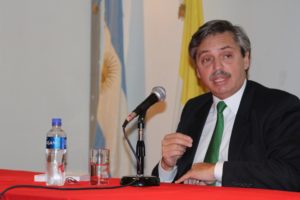
Jair Bolsonaro (Brazil), Luis Lacalle Pou (Uruguay) and Miguel Abdo Benítez (Paraguay) asked for Mercosur to negotiate further trade agreements with other countries and to reduce the bloc’s tariffs. The request was rejected by Argentine President Alberto Fernández, who now holds the pro-tempore presidency of Mercosur.
Bolsonaro called for the “modernization” of Mercosur and said the bloc should join the world’s “fourth industrial revolution.” He asked for the regional economies to “further participate in the regional and global value-added chains, especially now so as to overcome the large damages caused by the pandemic.”
Echoing his comments, Lacalle Pou said Uruguay “needs to move forward on the global arena” and proposed a formal discussion on changing the bloc’s rules. “Almost all presidents spoke about pragmatism, I want to echo that concept. Mercosur shouldn’t become a burden for our regional commerce,” he added.
Fernández replied by saying Argentina “doesn’t want to be a burden” for the rest of the Mercosur members and even threatened to leave the bloc. He acknowledged the four countries currently lack a shared view over the priorities for Mercosur and asked that “the necessary time” be taken to implement new trade agreements so as not to negatively affect the industrial sector at the local level.
Disagreement between the four countries has escalated over the years and is now more pronounced given the more protectionist stand by the Fernandez administration in Argentina. In 2019, the bloc was able to agree in principle to a free trade agreement with the European Union (EU) but negotiations on that have been stuck since then.
Uruguay has repeatedly affirmed its desire for an alliance with China through Mercosur or an agreement with China that bypasses Mercosur. Brazil has also discussed the possibility of signing a bilateral deal with China as well as with the United States.
Nevertheless, bilateral trade deals by Mercosur members are currently not permitted under the bloc’s rules, specifically by what’s known as “Decision 32,” agreed 20 years ago. Changing it would mean overhauling and transforming the bloc from a customs union to a free-trade zone, something Argentina rejects.
A limited trade bloc
Trade experts describe Mercosur as one of the least-effective entities in the world, both in terms of trade between its members and with external partners. Argentine trade consultant Marcelo Elizondo estimates that, of all trade blocs, Mercosur exports the least in the world in relation to its Gross Domestic Product (GDP).
“Mercosur was built to boost trade between its members but with no incentives to develop trade relationships with the rest of the world,” Elizondo and Uruguayan trade expert Ignacio Bartesaghi wrote in an op-ed last week. “It seems inevitable that Mercosur must face a new era in which it should reflect the national interest and the international trends.”
Mercosur is currently in open negotiations with South Korea, Singapore, Canada, Lebanon and the European Free Trade Association (EFTA). It is also finishing the final details of a trade deal with the EU.
International relations experts Julieta Zelicovich and Magdalena Bas have argued in an op-ed that the balance of the 30th anniversary is negative from the point of view of Mercosur being a mechanism to create trade relationships with the rest of the world.
“Over the last three decades, the trade bloc signed a very limited number of agreements that have very limited relevance in terms of market share,” they argued. “The agreement with the EU was presented as the last chance for Mercosur to react as an international player. But the current resistance to the agreement puts a death sentence to it.”
With almost 300 million inhabitants over an area of nearly 15 million square kilometers, Mercosur has a total economic output of US$2.4 trillion. China, the United States and the European Union are the main export and import destinations. Soybeans, crude oil and minerals are the main exported products.
In a recent report, the Argentine economic consultancy Abeceb called for Mercosur to “look beyond” its four members to avoid the bloc continuing to lose relevance. The consultancy also highlighted the growing relevance of China for Mercosur, moving from accounting for just 3% of its exports 30 years back to being the main export destination today.