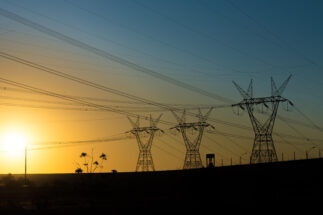
Over the past decade, state-owned enterprises (SOEs) from China have carved out a niche as owners and operators of electric utilities in South American countries through acquisitions of energy grids. As SOEs shift from their previous role as mostly builders to investors in large energy assets, policymakers in South America and in Washington should consider the implications of having these companies at the helm of such services.
Countries should assess the risk of Beijing directing its SOEs to use their positions as leverage in the event of a diplomatic conflict. Under these circumstances, SOEs could increase the cost of energy, and go as far as to disrupt services.
Although such measures might constitute an extreme response, China has been willing to exert commercial power in disputes with other countries, as a recent episode with Australia has shown.
Furthermore, energy grids are increasingly interwoven with the digital infrastructure of cities – providing an opening for China to introduce backdoors into critical infrastructure. As a result, South American leaders may be less willing to reject Beijing’s claims in international bodies on myriad issues, ranging from the origins of covid-19 to human rights, if basic services hang in the balance.
US$ 24.4 billion
the total value of energy grids owned by Chinese SOEs in South America
From Washington’s standpoint, China’s growing role as a service provider could improve perceptions of its economic engagement in the region, paving the way for stronger relationships with South American countries and edging out the US.
This could generate more support for Beijing’s broader policy objectives. US policymakers should engage South American countries to safeguard their energy grids by communicating these potential risks and taking on more leadership in infrastructure development in the region.
China’s firms enter South America through non-competitive means
Despite occasional hype, the Communist Party of China (CPC) has largely refused to cut excess capacity in SOEs. One alternative has been to encourage them to pursue international contracting – first through the ‘Going Out’ policy and later with the Belt and Road Initiative (BRI).
Supported by cheap state financing, SOEs can participate in projects that for-profit firms cannot compete with. Beijing also supports SOEs efforts to capture market share, often irrespective of commercial gains, in sectors that it deems strategically important.
Firms such as State Grid have an impressive track record of building energy grids in developing countries, particularly in Sub-Saharan Africa and in West Asia, outcompeting other firms through Beijing’s subsidies.
Through this work, SOEs have amassed a wealth of experience working in tough environments, making them attractive partners for Latin American countries that may have unreliable energy grids. Today, SOEs own nearly US$24.4 billion in energy grids in South America, with US$8.9 billion in deals closing or reaching a sale agreement in 2020 alone.
SOE energy grid investments in South America do not yet include any greenfield projects. They are all acquisitions. For example, in June 2020 State Grid announced its acquisition of a 100% stake in Chilquinta Energía S.A., the Chilean arm of San Diego-based Sempra Energy, as well as two additional companies that provide electric construction and maintenance services for Chilquinta.
The acquisition strategy enables China’s firms to enter the market more easily, relying on existing systems and know-how. It also may provide State Grid – and by extension the state – insight into the operations of US energy companies such as Sempra.
China’s evolving interests in South America
China is taking on a new role in the region as a service provider through its recent investments in energy grids. Historically, economic engagement in South America fits with the China’s long-standing pursuit of commodities and export markets globally.
Beijing’s international engagement is shaped by its partner regions. Rich areas like the US and the EU generally draw larger amounts of investment, while developing regions like Sub-Saharan Africa and Western Asia draw greater construction activity.
China’s approach in the region to date has relied on carrots rather than sticks. However, the pandemic is shifting dynamics worldwide
Since 2005, however, South America has hosted US$54 billion in construction contracts and received US$129 billion in investment. The lion’s share of the investment has focused on the extraction of commodities, such as oil in Venezuela and copper in Peru. Yet, with the investment in energy grids a new trend is emerging.
China’s approach in the region to date has relied on carrots rather than sticks. However, the pandemic is shifting dynamics worldwide.
China’s trade retaliation for Australia’s endorsement of an investigation into the origins of Covid-19 demonstrates that Beijing is willing to leverage commercial tools in diplomatic conflicts. Australia is home to over US$100 billion in investment from China and, like South America, is a major supplier of commodities.
As Beijing’s global ambitions grow, cultivating allies in South America could prove beneficial. Already, the CPC has dangled economic engagement and used infrastructure cooperation to entice Latin American countries into severing ties with Taiwan.
Responding to China’s new presence in the region
Policymakers in Washington are grappling with how to respond to the BRI and China’s broader economic engagement in developing countries. An immediate step should be informing other countries of the risks of doing business with entities from China through diplomatic exchanges and open-source intelligence sharing.
Furthermore, the US, which has long viewed foreign involvement in strategic sectors in Latin America as a potential threat to its own national security, should determine which sectors and countries are of high priority to narrow the China’s gains in those markets.
Most countries treat electrical grids as key assets, limiting foreign investment in the sector. South American countries may welcome the investment from China now, but they would do well to better understand the specific risks that come with it. Subsequently, the US should lead in developing the region’s critical infrastructure, ultimately safeguarding stability in the Western Hemisphere.


![Indian father riding on at electric three wheeler with his child [image: Suman Kumar / Alamy]](https://dialogue.earth/content/uploads/2021/05/2BHEFB6-300x200.jpg)