Latin America’s wind and solar energy additions rose by 50% in 2021, as energy markets came back to life after a pandemic-induced slump in 2020, a new report by Bloomberg New Energy Finance (NEF) has shown. The trend is expected to continue this year, as governments prepare to hold new renewable project tenders to help meet their respective clean energy targets.
17.5 GW
The capacity of wind and solar power added across Latin America in 2021, according to BloombergNEF
“Latin America Market Outlook” reviewed developments in the region’s renewable energy market and found that a total of 17.5 GW of wind and solar photovoltaic (PV) energy capacity was added in 2021. Wind and solar together accounted for over 10% of power produced in each of Argentina, Mexico, Brazil and Chile, while US$18 billion in new capital for these energy sources was deployed across the region.
“Brazil was the main market responsible for the growth of renewables in Latin America last year. We saw a booming activity of small-scale PV, but utility-scale wind and PV projects also reached record additions,” said Natalia Castilhos Rypl, lead author of the report. “Chile had a great year too, as the country hit records for wind and solar net additions.”
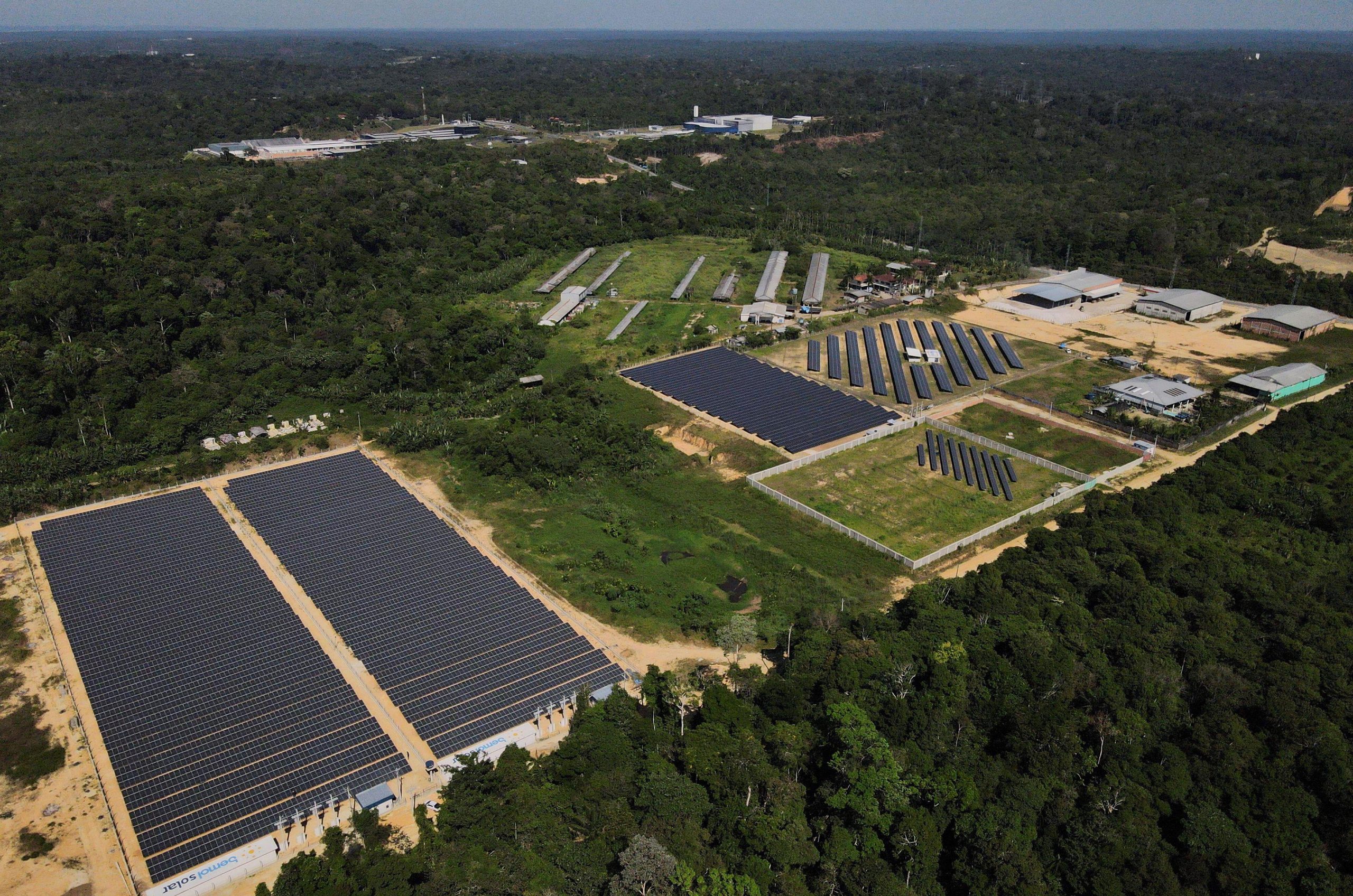
Brazil notched record additions for all three main clean energy technologies: onshore wind (3.6 GW), utility-scale PV (1.7 GW) and small-scale PV (5 GW). These technologies added 10.3 GW in total, double their capacity in 2020.
Brazil remains the most attractive market for clean energy investment, which rose 27% compared to 2020 – again, largely thanks to the small-scale solar sector. Of all renewable investments in the Latin America region, 65% were concentrated in Brazil. Chile ended the year as the second most attractive market, but with a decline in investment compared to 2020.
Wind and solar additions hit record highs in Chile, with over 800 MW and 1.4 GW, respectively, built during the year, the report found. The growth allowed solar to become the second largest source in Chile’s electricity mix, accounting for 18% of power generated, second only to hydropower (21%). Still, Chile continues to rely on fossil fuels for much of its energy, especially coal.
“Chile has a fast-evolving and competitive renewable energy market that could adapt well to the conditions imposed by the pandemic,” said Dario Morales, research director at Chile’s renewable energy association (ACERA). “We are going through a deep transformation of our energy mix thanks to the phase-down of coal and the expansion of renewables.”
The laggards in the renewable market in Latin America
While things moved fast in the renewable energy markets of Brazil and Chile, it was a different story for Argentina and Mexico last year, BloombergNEF’s report showed. A mix of regulatory changes and economic crisis presented barriers to further expansions of wind and solar in both countries, which heavily rely on fossil fuels.

In Mexico, wind and solar remained essentially at the same level as 2020. President Andrés Manuel López Obrador (AMLO) proposed to carry out an energy reform that would see greater state control over the country’s energy generation and supply, changing laws that had previously boosted renewables. The reform was recently rejected in the country’s congress, but has nonetheless generated continued uncertainty among energy investors.
“Mexico has been facing a lot of regulatory uncertainties in the energy sector. We don’t expect that to go away during AMLO’s government,” Castilhos Rypl said.
Fossil fuels continue to dominate in Mexico, accounting for 66% of the energy mix, while renewables (including hydropower) stand at 32% and biomass at 2%. Mexico had aimed to generate 35% of its energy using clean sources by 2024, but decided last year to push the target to 2030, in line with an updated climate pledge largely regarded as unambitious.
Clean energy investment in Argentina has been falling drastically since 2018
Meanwhile in Argentina, economic crisis remained a barrier to the country attracting significant clean energy financing. The country completed 1 GW in solar and wind projects in 2021 – but also added 900 MW of natural gas, oil and diesel power-generating capacity. Thermal power accounts for the bulk of generation capacity.
Over the past two years, Argentina made progress towards its target of 20% renewable energy by 2025, but is still falling some way short. “Clean energy investment in Argentina has been falling drastically since 2018, however, we still saw a decent amount of wind farms commissioned last year, as these had already secured financing,” said Castilhos Rypl.
BloombergNEF doesn’t expect the country’s wind and solar capacity to grow much more until macroeconomic conditions improve. There are over 90 already approved projects that remain in a legal limbo because of a lack of finance.
The way forward
BloombergNEF forecasts that Brazil will continue to lead the Latin America renewable energy market this year, with its solar sector driving most of the net additions. The country’s current tax breaks for distributed generation will end in 2023, incentivising consumers to access the market this year.
By the end of the year, solar will be the largest source of electricity in Chile, with the country set to reach another record for clean energy additions, according to the report. Over 80% of the megawattage that will become operational in Chile this year will be from solar or wind energy.
Elsewhere, BloombergNEF anticipated that Colombia will enter a multi-year renewable energy boom that will see over 4 GW added in the next four years. Renewable energy currently represents 7% of the country’s installed capacity. The government recently introduced a plan to install its first offshore wind farm, with a 200 MW installed capacity.
“There’s a long way to go, but we’ll have a much stronger role for renewables in our energy mix in the future,” said German Corredor, head of SER Colombia, the country’s renewable energy association. “Solar and wind projects greenlighted in 2019 will become operational this year, while construction will begin on those assigned last year.”
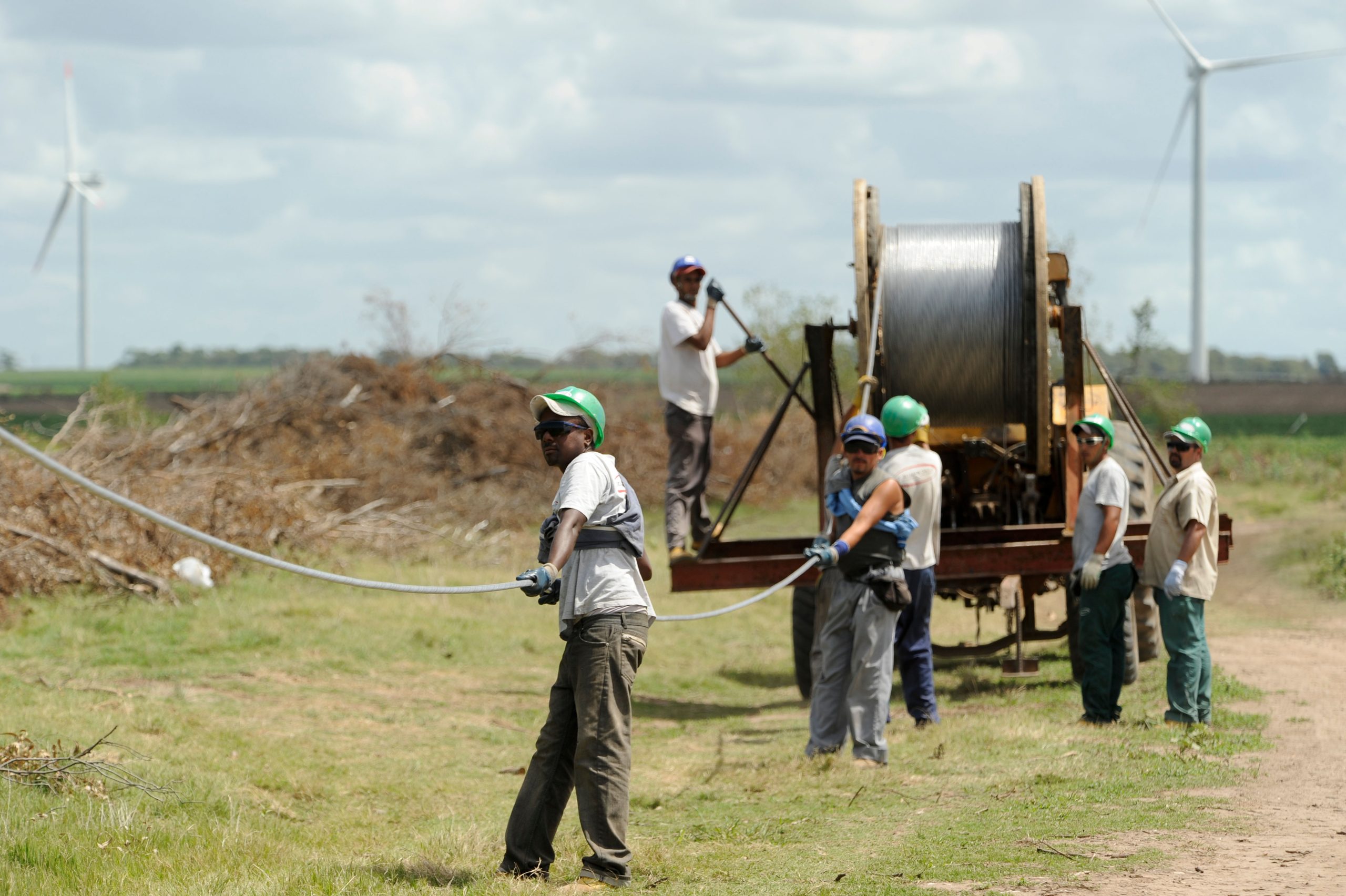
Such an expansion of renewable energy also brings hurdles that Latin American governments will have to address, BloombergNEF argued. Electricity grids need to keep pace with renewables development, and Colombia, Chile and Argentina, among others, are facing transmission bottlenecks, needing major investment in infrastructure to allow the clean energy sector to continue to grow.
Many countries in the region are currently pushing towards the decarbonisation of their energy sector and have set diverse targets for the coming years. Renovables en Latinoamérica y el Caribe (RELAC), a government initiative that groups 15 Latin American countries, has the objective of reaching at least 70% of energy generated by renewables in its countries’ electricity mixes by 2030.
However, this comes amid the parallel and continuous expansion of the fossil fuel sector, especially natural gas, framed by governments as a transition fuel from coal and oil. In response to the Covid-19 pandemic, less than 6.9% of the funds used to support the recovery of region’s economies were used towards green initiatives, according to UN figures.