Benjamin Creutzfeldt, a specialist on China’s relations with Latin America and the US at the John Hopkins University, thinks that China, despite recent reports on taking over from the US in Latin America, is not only unprepared for such a role but does not event want it.
Nor can China be accused of stealing US jobs, as president Donald Trump has claimed, according to Creutzfeldt.
In an interview with Diálogo Chino, Creutzfeldt explains that many of the jobs in China that Trump is complaining about are there because developed countries took advantage of the lack of social and environmental controls and low wages paid to the Chinese to outsource production.
Diálogo Chino (DC): How is China taking advantage of US’ retreat from Latin America?
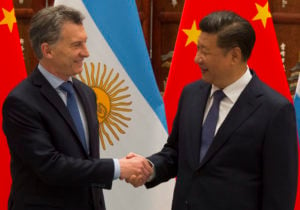
Benjamin Creutzfeldt (BC): China is still new for all of us. Let’s look at it in perspective. For now, it is just a small investor compared with European countries, the US, and even Latin American countries among themselves. I do not believe that China will simply take over from someone else. In recent years, with the annual visits of important Chinese political leaders to countries in Latin America, China has become important. But China itself is not prepared to take the place of the US. Of course it will change a bit. China will become a model to guide some countries, but I don’t believe that China wants to or can replace or lead the way the US did and does, continuing to be the largest military and economic force in the region.
DC: Trump says that the US lost 60,000 factories since China joined the World Trade Organisation. But a study by Oxford Economics says that investment and trade with the Chinese kept 2.6 million jobs in the US. What is the reality of this relationship?
BC: I’m not sure if those are the numbers. But it is true that since the 1980s, developed countries like the US and Europe have outsourced production. They took advantage of limited social and environmental controls and, of course, the much lower wages in China. People blame China for stealing jobs when in fact, it is the multinational companies that used this trend to benefit consumers and domestic markets in developed countries. It is true that tens of thousands of jobs are in China, but they were not stolen. Nor is it unfair. It is part of the nature of globalisation, and cannot be stopped.
DC: What would be the costs and benefits for Latin America to have China as its main trading partner?
BC: It creates a new dependence. It is a fact that China is already the largest or second-largest trading partner with every country in Latin America and the Caribbean. Furthermore, China influences what can be exported, not only in terms of prices, but the products that can be exported and therefore produced by each of these countries. So China is very important. Now, it can be a threat or an opportunity. It depends on each country. In Peru, for example, China’s presence was very positive. It was able to export agricultural products, and very soon other types of products. In Ecuador, Chinese loans were used to build infrastructure and science centres, although not everything there is positive. But it depends on how Latin American governments know how to take advantage of and use the business relationship. China is doing what it is advantageous for itself. And this leads to concerns. The key is the government and the business community knowing how to take advantage of the opportunities.
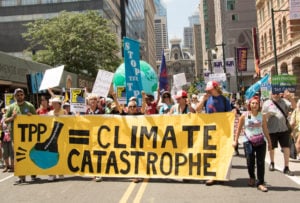
DC: The US and China ratified their commitment to the Paris Accord last year. Trump has said he does not believe in it. Should China take the lead in this area?
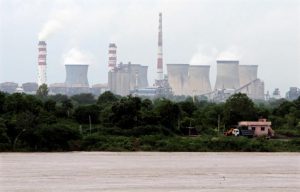
BC: China is quite independent in this sense. Today, it is the leading producer of renewable energy with solar panels. For China it is a huge opportunity. It is not as successful as in California, but if China does not have a market for electric cars, neither will the world. China is a colossal consumer and has its own pollution problems so many of these issues are a priority, even more than for other countries. I don’t know if it will be the leader because it lacks transparency and leadership capacity, especially for the more sceptical European countries. But China can lead as a business opportunity in innovation. And the one who would lose across the board would be the US.