The first half of 2025 saw the highest engagement ever for a six-month period under the Belt and Road Initiative (BRI), China’s flagship global infrastructure programme, a new report has shown.
The total USD 123 billion of deals breaks down into USD 66 billion in construction contracts and USD 57 billion in investments, finds the latest Belt and Road investment report from the Green Finance and Development Center at Fudan University.
This included a record USD 9.7 billion of engagements in green-energy sectors, including wind and solar, at a time when Chinese clean-tech manufacturers are increasingly seeking overseas markets amid biting domestic competition.
However, as China’s overall energy-related activities reached USD 42 billion – more than for any other six-month period since the BRI’s inception in 2013 – oil and gas were the driving forces, accounting for some USD 30 billion of the total. Coal-related investments also remain active, despite Chinese leader Xi Jinping’s 2021 pledge to end overseas financing for the energy source.
Some 150 countries are signed up to the BRI and the record engagement has been driven by Africa, Central Asia and the Middle East, which have attracted over two-thirds of it so far in 2025. Nigeria’s Ogidibgen gas-centred industrial park alone accounted for USD 20 billion of investment.
For Latin America, however, it has been a different story. Following two years of declining BRI engagements, the 21 countries in the region to have signed up to the initiative received just 1.14% of construction engagement and 0.4% of investment in the first half of 2025.
The figures reflect the ongoing recalibration of Chinese investment in Latin America this decade, as the vast loans from China’s state-owned policy banks that defined BRI engagement in the 2010s have faded to almost zero. The large-scale infrastructure projects that such financing supported have also declined.
Such engagement brought new roads, railways, dams and ports to the region, but investments were not always met with universal approval in host countries. Several projects attracted criticism for environmental and social concerns, and this is said to be among the factors prompting a rethink for Chinese investors.
“Chinese companies and banks have sought to minimise risk, whether by pursuing smaller projects or avoiding potentially problematic ones,” Margaret Myers, managing director of the Institute for America, China, and the Future of Global Affairs at Johns Hopkins University, told Dialogue Earth. “It is indeed possible that Latin America is viewed as a more difficult destination for certain types of projects, whether because of local conditions, political shifts, a watchful US eye on the region, or any other number of reasons.”
Myers added that the notable uptick in engagement in other regions, such as the Middle East and Central Asia, may indicate a “continued reliance on BRI-era logic” from Beijing, that is, pursuing domestic growth targets by finding new demand for Chinese companies.
Parsifal D’Sola, executive director of Fundación Andrés Bello, a Colombia-based think-tank focusing on China, told Dialogue Earth that under the BRI, Beijing has tended “to favour state-to-state relations, which facilitates the entry of projects and financing in countries where decision-making is concentrated in a small group and the market plays a secondary role.”
Chinese companies and banks have sought to minimise risk, whether by pursuing smaller projects or avoiding potentially problematic onesMargaret Myers, Johns Hopkins University
But despite the negligible figures for BRI engagements, analysts consulted by Dialogue Earth agreed that the China-Latin America relationship remains robust, with the region still a significant focus for Chinese investors and stakeholders, notably in trade. They also sought to highlight key emerging areas of engagement in green tech, energy, critical minerals and other innovative sectors.
Belt and Road figures belie strong engagement
The BRI, and the broader role of China in Latin America, has rarely remained far from the headlines and political debates in the past year.
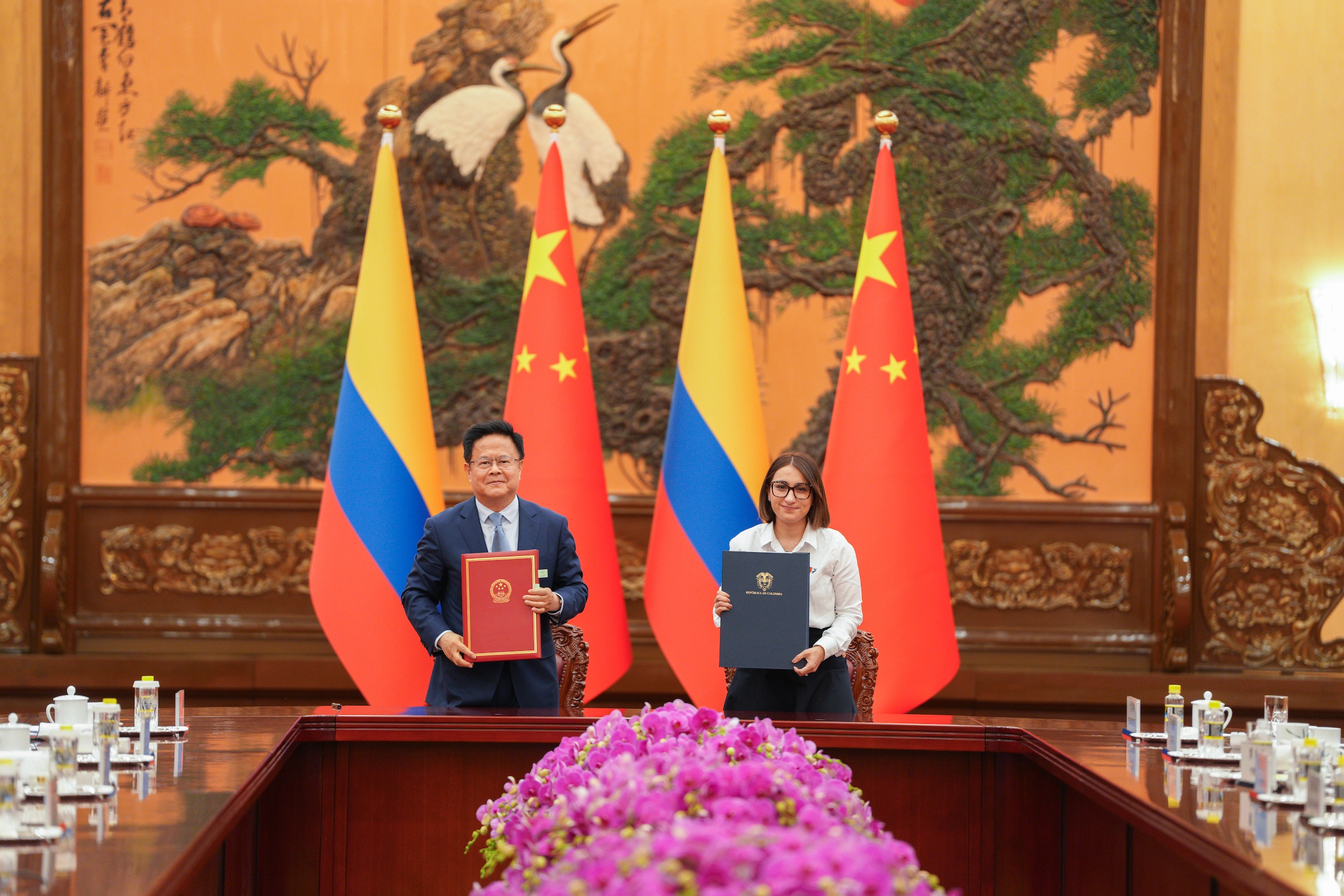
Most recently, Colombia signed up for the initiative in May. Brazil, having seemed to finally be warming up to the idea of membership under the current Lula government, once more wavered on signing on in late 2024. Panama, meanwhile, has become the first Latin American country to exit the BRI, under pressure from the new Trump administration in the US.
But a focus solely on the BRI belies the scale of Chinese engagement in Latin America, including in construction and investment outside the initiative. Both D’Sola and Rebecca Ray, a senior academic researcher on China in Latin America at the Boston University Global Development Policy Center, highlighted the absence from the BRI – and therefore related data – of the region’s two largest economies, Brazil and Mexico, which together account for 60% of GDP.
In particular, Brazil – already established as China’s most significant trade partner in the region – has recently welcomed significant investments from Chinese companies in electric-vehicle and wind-turbine manufacturing, its grid infrastructure and, more controversially, in oil.
“Even though Brazil is not formally part of the Belt and Road, we are, in many ways, very much aligned with its spirit,” said Tulio Cariello, director of content and research at the Brazil-China Business Council (CEBC). “We’ve been receiving investments in infrastructure for quite some time now – especially in the energy sector – but also in ports, storage, logistics and more.”
Looking beyond investment and construction under the BRI, all analysts consulted sought to emphasise instead the role of trade as the primary driver of the China-Latin America relationship.
In 2024, total trade between China and Latin America and the Caribbean (LAC) reached USD 518 billion, according to China’s Ministry of Commerce (MOFCOM). This places China as the region’s second-largest trading partner overall, and the largest for South America alone (excluding the Caribbean and Central America).
“Latin America remains of critical interest to China, though for many of the same reasons that it attracted Chinese attention in the early 2000s,” said Myers. The region, she added, “factors prominently in China’s food and energy security calculus, as a primary supplier of agricultural goods and the metals and minerals that have enabled China’s massive domestic infrastructure development over the years and that now feed its high-tech industries.”
South America exports vast quantities of soy, copper, lithium, iron ore and oil to fuel China’s industrial economy, while importing machinery, electronics and, increasingly, electric vehicles and green technologies. Countries such as Brazil, Chile and Peru have become deeply integrated into China’s value chains.
However, D’Sola raised frustrations with this relationship as entrenching a continued dependence on raw material exports. “Rather than acting as an agent of productive diversification, China has functioned as a force for ‘reprimarisation’ in line with the region’s historical economic dynamics: the export of a limited portfolio of primary products,” he said. Reprimarisation is when an economy slides back towards reliance on resource extraction after having diversified into manufacturing or services. “This pattern, which has served China’s commercial interests, reinforces its role as a commodity buyer rather than a transformative investor,” D’Sola added.
The director’s comments reflect growing demands from nations such as Chile, Brazil and Argentina for support from their export partners to add domestic value to their raw materials, and help them move up value chains.
New areas of focus
A growing share of Chinese engagement in Latin America is driven by strategic investments in new sectors, including EVs, critical minerals and renewable energy, often led by private companies, rather than the state-owned enterprises that dominated contracts in the early BRI era.
The EV sector is a clear example. In Brazil, Chinese carmaker BYD, the world’s largest EV manufacturer, has begun production in the north-eastern state of Bahia, taking over a former Ford plant with aims to serve both domestic and regional markets. The company is also working on EV infrastructure, such as charging stations and battery recycling, while other brands such as GWM and Chery are also setting up facilities in the country. Meanwhile, Costa Rica, a leader in the region for EV uptake, has seen growing interest from Chinese EV exporters, benefitting from the country’s early adoption of clean mobility policies.
At the same time, Latin America’s role as a global supplier of critical minerals, including lithium, copper and rare earths, has placed it at the centre of China’s interests. Chile and Argentina, along with Bolivia, make up the so-called ‘Lithium Triangle’, a region where Chinese firms such as Tianqi Lithium and Ganfeng Lithium have deepened stakes in recent years. In Peru, Chinese companies continue to invest heavily in copper mining, while Brazil is seeing increased interest in both its lithium and nickel resources.
On renewables, the push is currently led by commercial players pursuing joint ventures and acquisitions. In Brazil, for example, Chinese wind-turbine maker Goldwind is investing in local production to serve the well-established Brazilian market, and easing expansion across South America.
Even if [BRI] investment figures in Latin America have decreased, I believe the relationship between China and Latin America remains very promisingTulio Cariello, Brazil-China Business Council (CEBC)
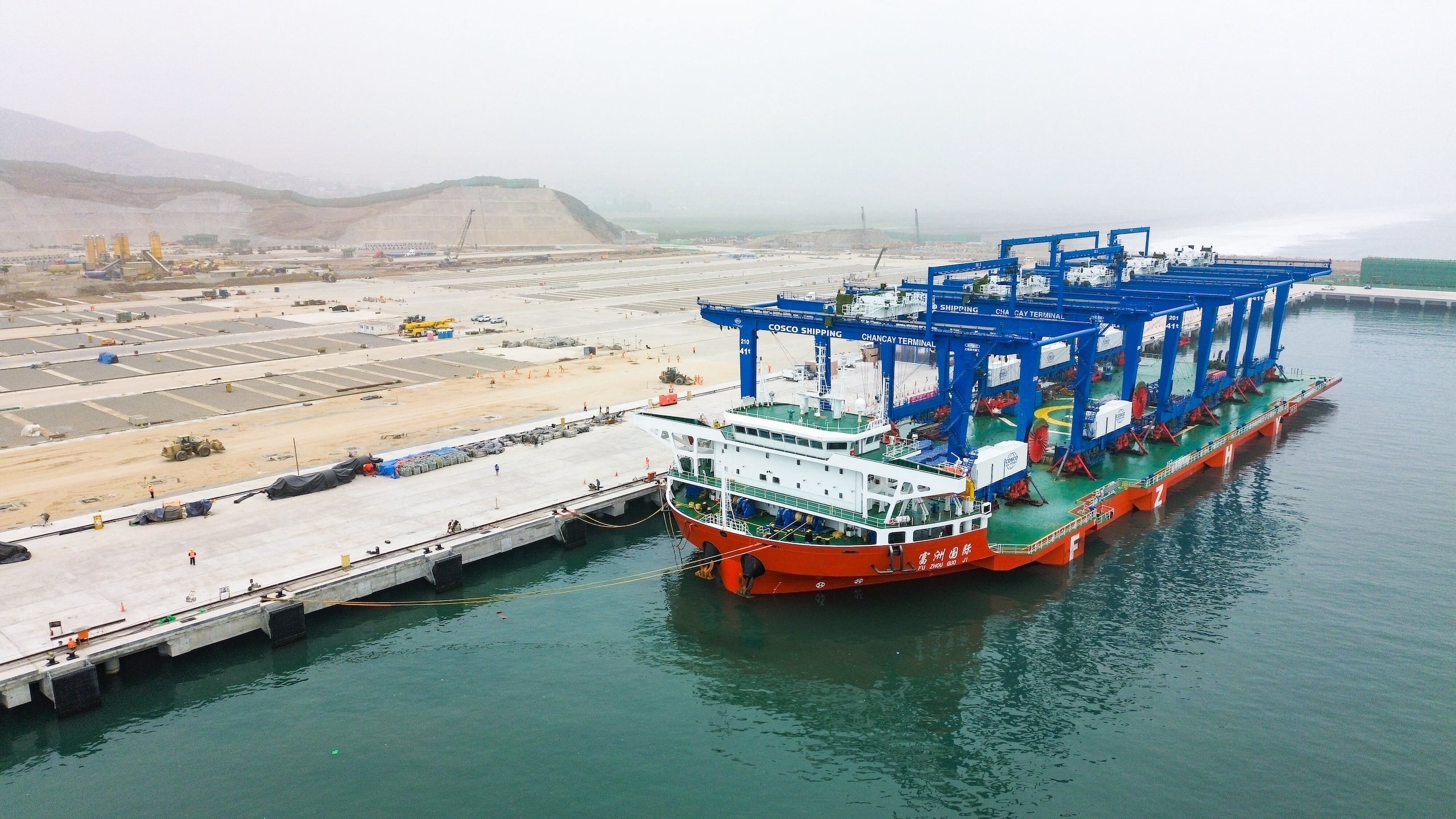
Ray cautioned that while the region has seen significant announcements in recent years, such as the opening of the Chancay port, there have also been setbacks, highlighting the intention of BYD and metals giant Tsingshan to cancel lithium industrialisation plants in Chile: “This type of flagship project is inevitably vulnerable to changing market landscapes, and so observers would be wise to use caution when interpreting governments’ and firms’ announcements of major new projects.”
At the diplomatic level, the scale and importance of relationship on both sides of the Pacific was emphasised at the May summit between China and Latin American and Caribbean states in Beijing. In addition to calls to expand cooperation on clean energy, artificial intelligence and the digital economy, the meeting also saw President Xi personally announce pledges to provide USD 10 billion in new credit to the region.
“Even if investment figures in Latin America [under the BRI] have decreased, I believe the relationship between China and Latin America remains very promising. There’s a strong complementarity,” said Cariello.
“It is clear that Chinese investment in the region isn’t ending but rather shifting in notable new directions,” Myers concluded.
Flávia Milhorance contributed reporting for this article.