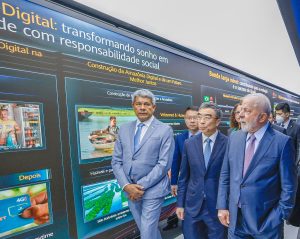
In late March 2023, days before Brazilian president Luiz Inácio Lula da Silva visited China, China resumed its beef imports from Brazil, lifting a temporary ban due to an earlier discovery of a case of mad cow disease. Brazil quickly bounced back as the top exporter of beef to China, a country hungry for it.
With the continuous growth of China’s economy and population, its urbanisation, and increasing income levels, there has been an increased demand for high-protein foods. Among these, beef has become a highly sought-after delicacy. Since 2012, China has transitioned from a net exporter to a net importer of beef, primarily relying on countries like Brazil.
However, this delectable choice comes with significant environmental impacts. Beef production is an industry that emits significant amounts of greenhouse gases (GHG). Worldwide, livestock and manure emissions contribute to roughly a third of agricultural GHG emissions, mainly in the form of methane. In Brazil, livestock farming is a major contributor to the destruction of the Amazon rainforest, one of the world’s largest carbon sinks.
Some major beef-producing countries such as Brazil, Uruguay, and Australia have begun introducing certifications for “carbon-neutral” beef, which means the producers are deemed to have undertaken sufficient carbon offsetting measures. Such certifications can create new markets and offer a potential path for supporting carbon neutrality in agriculture and livestock. As the world’s top beef importer, accounting for around a third of global beef imports, China adopting carbon-neutral beef labelling could expand this nascent market and be a climate mitigation game-changer. Introducing such beef products into the Chinese market will need more consumer education, policy support, and investments.
Carbon labelling in the Chinese market
Carbon labelling for food and mutual recognition of standards in the Chinese market are gradually developing. China piloted a carbon footprint label in 2018, and since 2020, the government has been developing standards and plans for carbon labelling, particularly related to energy use.
Currently, carbon-labelled foods mainly include rice and miscellaneous grains, fruits and vegetables, seafood, meat, and eggs, among other categories. However, the market size for these products is relatively small, mainly targeting more high-end consumers. Existing carbon labels fall into categories such as official Chinese carbon labels, regional carbon labels, domestic third-party carbon labels, and international third-party carbon labels. Labels vary in covering carbon disclosure, carbon neutrality, or items deemed to be “carbon negative”.
Regarding the recognition of carbon labels in the Chinese market, international experience shows that traceability systems and carbon neutrality certification have been successful in Europe and some other countries. In China, domestic certification bodies such as the China Environmental United Certification Center and international organisations like Carbon Trust have successfully registered with the State Administration for Market Regulation and have started offering “carbon-neutral” labelling services. This trend provides favourable support for the entry of carbon-neutral-labelled beef products into the Chinese market.
Consumer attitudes and willingness to pay in China
Results from a 2022 survey of restaurant consumers in Beijing and Shanghai indicated that Chinese consumers generally have a positive attitude towards carbon labelling. But, as it true in other countries, there is a gap in their willingness to pay a premium for carbon-neutral–labelled beef. Particularly among consumers in mid- to high-end restaurants, there is a disparity in the willingness to pay a premium for carbon-labelled beef, and some consumers underestimate the carbon emissions of beef. However, consumers with a high level of concern for climate change are more willing to support carbon-labelled beef, are willing to pay a premium, and may even reduce or abstain from beef consumption.
Internationally, there have been some successful precedents for carbon-neutral-labelled beef. In January 2022, Uruguay successfully exported its first batch of reportedly carbon-neutral beef to Switzerland. The beef is said to have undergone the strictest international standards review by Uruguay’s carbon footprint certification and verification organisation LSQA, passed carbon neutrality inspections, and entered the European market. This indicates that carbon-label certification organisations in exporting countries following international standards have gained recognition in the consumer markets of importing countries.
Recommendations and prospects for the Chinese market
The feasibility of introducing beef products labelled as “carbon-neutral” into the Chinese market is promising, but the current market situation and challenges must be fully considered. To achieve this goal, actions can be taken in four main areas:
• Strengthen communication with beef-producing countries. For example, working with government, corporate, and farming stakeholders in Brazil to help them understand the pathways to achieving carbon-neutral certification. Also key are providing these stakeholders with guidelines on how to improve Brazil’s carbon-neutral product labelling system and mutual recognition standards.
• Establish a cross-border traceability system for beef product supply chains. Some states in Brazil are developing state-level traceability systems for carbon-neutral–labelled beef, such as the Green Seal in Pará state and the Green Passport in Mato Grosso state. During a recent visit to Brazil in late 2023, I learned about the imminent launch of a national-level traceability system, the AgroBrasil+Sustentável platform. China should actively participate in discussions at the state and federal levels in Brazil to quickly establish an efficient national-level cross-border traceability system, ensuring the accuracy and transparency of agricultural product traceability information.
• Strengthen outreach and education to raise consumer awareness. China needs to conduct targeted publicity and educational activities, including through media and social platforms, to increase consumer awareness of “carbon-neutral” beef. Well designed and concise promotional materials highlighting the environmental value of carbon neutrality could help inspire consumers’ willingness to support environmentally friendly products. China’s Ministry of Education recently mandated environmental education guidelines for schools. There is also an opportunity for the Chinese government, universities and NGOs to help develop environmental education materials on “carbon-neutral” beef for schools, thus cultivating consumer awareness of more sustainable consumption.
• Provide financial support and tax incentives. The Chinese and Brazilian governments could create funding and tax incentives to guide businesses in importing carbon-labelled beef, promoting the formation and development of a less carbon-intensive beef industry chain.
This article by Peng Ren is adapted from an earlier version published by New Security Beat.