During last November’s COP26 climate change conference, the president of Costa Rica, Carlos Alvarado, signed an agreement that will see US$20 million flow towards the conservation of the country’s forests, funds earmarked to increase protection and help avoid deforestation.
This new financing comes from the LEAF Coalition, a partnership between the governments of the USA, UK and Norway, alongside some of the world’s largest companies, including Amazon, Nestlé, BlackRock and Walmart. Half of the allotted funding is set to arrive through the coalition, with the remaining US$10 million part of a private arrangement between Norway and Costa Rica.
On announcing the agreement, the nation’s environment minister, Andrea Meza, said it signified “the beginning of great advances in climate finance”, even as LEAF and its big-name sponsors faced accusations of corporate “greenwash”.
For Costa Rica, however, this welcome stream of finance is the latest success for a small nation that has garnered much praise for its conservation efforts, including a reversal of deforestation over the past few decades. It is just one of several such agreements it has struck in recent years, as it leverages an ever-stronger reputation for successfully implementing conservation initiatives despite economic challenges.
Costa Rica pioneers conservation in fiscal deficit
Historically, the Costa Rican conservation model has been successful because it primarily operates with domestic resources. But at times of high economic pressure, such as the ongoing Covid-19 pandemic, international funds for conservation provide relief to the country, explained Roger Madrigal, a forestry researcher at the country’s Tropical Agricultural Research and Higher Education Center (CATIE).
“Ultimately, Costa Rica is a middle-income country with a limited budget for investments in nature. These cooperation funds have historically been very important in the total budget,” indicated Madrigal.
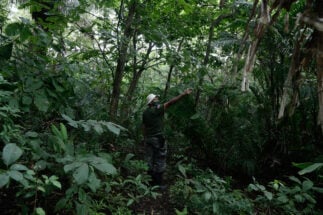
Maintaining this funding is vital to Costa Rica, which has come to be seen as a conservation success story, for example, as the only country in Latin America to reverse deforestation, after having had high rates up until the 1980s.
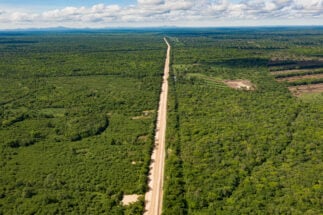
At the beginning of the 20th century, Costa Rica had focused its economic development mainly on agricultural activity, enacting laws that encouraged deforestation to turn land to agriculture, such as the land and colonisation law of 1961. As a result, the country lost half of its mature forest between 1940 and 1980, according to a 2016 report from the REDD+ initiative. Several factors led to a change of mentality towards forest in the country, the report adds, including a growth in tourism during the 1980s.
As a result, Costa Rica began to implement stricter environmental regulations, new conservation policies and changes in the agricultural market. These factors halted net deforestation and allowed forests to regenerate. Currently, 59% of its territory is covered by forests, after having fallen to as low as 40% in 1986.
Graphic: Diálogo Chino
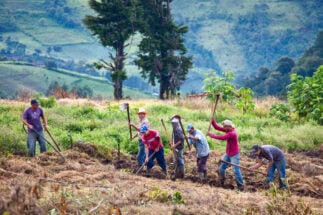
Another important component to this achievement was a programme of payments for environmental services (PES). The Costa Rican PES system has had a simple but proven principle: the state pays private farmers to protect the forest on their land, with the funding mainly coming from fuel taxes.
This has worked well for decades, but recently crises arising from the Covid-19 pandemic have put severe economic pressure on the conservation system, both in PES programmes and in protected areas. On the one hand, the pandemic led to lower tax incomes and restrictions on vehicle use meaning lower fuel consumption. This, in turn, left the PES system with fewer resources to pay farmers and a hole in the budget of around US$1.5 million in 2020, according to official data.
On the other hand, the Legislative Assembly of Costa Rica made strong cuts in 2020, with deputies slashing more than a third of the budget for protected areas.
“An important part of our work has been locating sources of financing, identifying requirements and trying to get resources to enter as soon as possible,” explained Jorge Mario Rodríguez, director of the National Forest Financing Fund (Fonafifo), the institution that administers the PES programme.
Payments for nature
In the last two years alone, Costa Rica has secured agreements for more than US$135 million in payments for nature – an achievement driven by its successes in restoring forests.
The potential for trees to capture carbon emissions through photosynthesis seems crucial to the recent upsurge. This brings benefit for the entire planet, but its economic benefits have not historically been recognised or easy to value – something Costa Rica has made efforts to change, of late.
According to official data, between 1986 to 2013, Costa Rica’s forests drew down 107 million tonnes of CO2. “Nobody recognised us for this – this is a gift that Costa Rica has given to the world,” said Rodríguez.
Recently, the country has attempted to better measure this capture of emissions, by more precisely calculating its hectares of forest and estimating how much carbon they can absorb. In this way, it hopes to stop simply ‘giving away’ these benefits – and start pricing them instead.
Nobody recognised us for capturing carbon emissions – this is a gift that Costa Rica has given to the world
These attempts have gone some way to help Costa Rica gain recent financing for its nature. In 2020, for example, the country received US$54 million from the Green Climate Fund, in recognition of proving to have captured 14.7 million tonnes of CO2 between 2014 and 2015.
That same year, Costa Rica reached another agreement, a US$60 million deal with the World Bank, for similar reasons, “purchasing” emissions reductions of 12 million tonnes to be achieved before 2025. And then, most recently, came the COP26 announcement of a further US$20 million through the LEAF Coalition and the Norwegian government.
Conditions vary between these agreements. For example, the Green Climate Fund granted the country non-reimbursable funds, which will be used to strengthen PES programmes, prevent forest fires and finance indigenous territories. These initiatives must be executed before 2026.
The conditions of the LEAF Coalition funding, meanwhile, correspond to a “letter of intent” submitted by Costa Rica, which specifies the emissions that the country is going to capture between 2022 and 2026. That means the funds will not arrive for several years, since the capture of emissions has not yet happened.
Graphic: Diálogo Chino
Rodríguez explained that in order to achieve these recognitions, a crucial step is to create robust monitoring systems. In this way, the country can negotiate based on stronger data and with more exact figures on the capture of emissions.
Costa Rica has also managed to receive funds with slightly more flexible mechanisms. In 2021, the country was the first winner of the Earthshot Prize, an initiative driven by the UK’s Prince William that seeks to highlight successful cases of conservation. It was chosen due to the success of the PES system in recovering the nation’s forests, and awarded a prize of US$1.3 million.
In this case, as funds are more flexible, they will reportedly be used to create a marine PES system, as a way to pay coastal populations to protect the ocean. The exact mechanism is still unclear, as it is in the very early stages of design.
Debt-for-nature swaps in Costa Rica
The country has also experimented with other ways to finance the conservation of its forests, such as debt-for-nature swaps. In short, these allow countries to exchange their external debt for funds for nature conservation, which are frequently distributed through a third organisation, such as an NGO.
These mechanisms were popular during the 1980s, following the Latin American debt crisis, but ones which countries in the region are once again considering amid current difficulties. In 2007 and 2010, for example, Costa Rica carried out its first debt-for-nature swaps with the United States. The first allocated US$26 million for conservation in communities surrounding protected areas, while the second contributed US$27 million directly to funding protected areas.
Graphic: Diálogo Chino
At that time, the country did not have an NGO capable of managing the funds. For this reason, the Costa Rica Forever Association was created, with the explicit purpose of filling this void and managing both sides of the exchange in swaps, as the organisation’s conservation programmes manager, Pia Paaby Hansen, explained.
“The most positive thing [about this mechanism], and what facilitates the execution of the funds, is the type of governance it has. It allows us to handle funds in a transparent way,” Hansen told Diálogo Chino.
In short, the association responds to an oversight committee that features, in these cases, representatives of the US government, the government of Costa Rica, and representatives of other NGOs. This committee is important for negotiation and applying pressure on eventual projects, as well as clarifying financial conditions, Hansen explained.
We have been very active in identifying needs and financial gaps in order to achieve effective conservation
The funds created from these swaps have facilitated the planting of more than 60,000 trees, the creation of 10 brigades to fight forest fires, and the purchase of lands for conservation for more than US$2 million.
“The important thing is that we have been very active in identifying needs and financial gaps, in order to achieve effective conservation,” said Hansen.
Debt-for-nature swaps may feature more prominently in finance discussions at this year’s segment of the COP15 conference on biodiversity, where Costa Rica’s successes in conservation – and its ability to leverage such successes to bring in further finance – are likely to be highlighted once more.