A year on from President Trump’s announcement that he will withdraw the United States (US) from the Paris Climate Agreement, the global momentum to fight climate change is still strong, says Christiana Figueres, the former executive secretary of the UNFCCC.
“From an economic perspective I don’t think, frankly, that this is going to have a huge effect because decarbonisation, both from a technical and a financial perspective, is entrenched. It may not be moving forward fast enough but it is nonetheless entrenched. We now have a path that is irreversible and unstoppable,” she told chinadialogue.
In recent years China has increasingly acknowledged the benefits of taking strong action on climate, evident in its domestic policy and internationally, through partnerships with other countries.
“The US-China partnership was very important leading up to the Paris Agreement but now we have it, I don’t think it is that critical anymore to China. China will continue on its own for its own domestic benefit,” said Figueres
She said that China sees these benefits particularly in public health and the competitiveness of its economy.
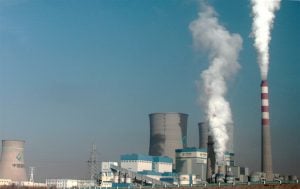
“The air pollution in China is world famous, not across all of China but in its cities. The fact that there is already civil society unrest and a push to clean up the air is very important. Even more important is that the government is paying attention and closing down coal power in cities.
“China’s leadership has been clear that it wants to lead the world into an ‘ecological civilisation’. That has to be done through greening the economy and the financial structure.
“China wants to be the world leader in solar technology, not just in domestic installation but for export products and technologies. It’s the same with batteries. China has invested in five to seven mega factories for batteries because it understands that this is going to be a huge market,” said Figueres
But capping and reducing China’s emissions over the next few decades is an unprecedented challenge, as shown by research that China’s emissions are expected to rise this year due to strong economic growth.
With little prospect of action on climate from the Trump administration, Figueres is pinning her hopes on subnational actors such as businesses, cities and states.
“A lot of attention is moving to cities, provinces and states for several reasons. The first is that what the world needed to do on climate change at the national level was substantially completed with the Paris Agreement.
“It was a legal framework where only national governments could negotiate with each other, sub-national governments could not. Now, it’s about executing that plan and drilling down into the Paris Agreement, that really does involve other levels of government, the public and private sector corporations.
“So it’s a natural devolution down to that level of work, where the day-to-day decisions are being made. There is no surprise that that is where conversation is focused now, which is why we are supporting the Global Climate Action Summit in September.
“For national governments to derive the necessary level of confidence to come back to the table next year at the United Nations, to increase their commitments (which is what they need to do according to the Agreement); they need to come back to the table every five years and that will be in 2020. They need to finalise the process of their intended ambitions, before the review of what they did under Paris starts next year,” said Figueres.
The “Profiles of Paris", was launched on May 31, a collection of perspectives from international leaders and "changemakers" on how the Paris Agreement was achieved and the lessons that can be drawn from the process.