When it comes to the environment, Brazilian president Jair Bolsonaro believes he is spearheading a settling of accounts.
“Brazil owes nothing to the world with regard to environmental preservation,” he argued during a visit to Chile soon after Brazil’s decision to refuse an invitation to host COP25, the main United Nations summit for negotiating climate change. “We are concerned with development.”
But outside the government, environmentalists, officials at the Ministry of the Environment, and other observers believe that the president is relinquishing the only area in which Brazil has been a global leader.
Brazil’s good reputation in the environment dates back to 1992, when the country hosted the Eco-92 summit. It has allowed the country to act as a voice for other nations, especially developing countries with tropical forests and neighbouring ones that share the Amazon basin.
“Within the scenario of international diplomacy, Brazil is only a leader in negotiations on these issues. It is with regard to the environment, biodiversity and climate that the whole world waits to hear what the country has to say before taking their own positions”, says Adriana Ramos of the Instituto Socioambiental (ISA). “As an environmental power, it has the prerogative to make the agenda and state the rules”.
Despite not having gone forward with more controversial proposals to withdraw from the Paris Accord and even the UN, the Bolsonaro government has engaged in other controversies besides cancelling COP25.
Brazil’s distancing from multilateral environmental negotiations could lead to negative consequences in the medium and long term for its economy.
Brazil did not send representatives to a conference on forestry and agriculture organised by the UN Development Programme in Peru in May. The government has also backed out of a UN National Voluntary Review session, to look at progress towards the sustainable development goals, scheduled for July. And it has cancelled Climate Week for Latin America and the Caribbean, another UN event scheduled for August in Salvador, Bahia.
Antônio Carlos Magalhães Neto, mayor of Salvador opposed the cancellation.
A few days later, the Ministry of Environment reversed its decision and again stated its support for the conference.
Economic consequences
Brazil’s distancing from multilateral environmental negotiations could lead to negative consequences in the medium and long term for its economy.
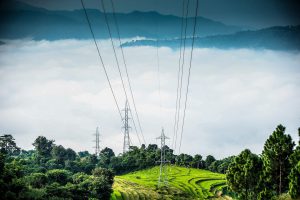
These meetings serve to guide how countries develop their economic policies. For example, if discussions progress on the need to avoid building thermoelectric power plants in order to reduce greenhouse gas emissions, the energy grids in countries that sign the agreement must be planned without these energy sources.
The same applies to rules affecting agribusiness, since several countries (particularly in the European Union) have goals for importing food products that come from production chains proven to have low environmental impacts.
The worldwide trend to link environmental issues with trade is reflected in standards adopted by private companies, environmental labelling requirements, and product origin certifications. The rules guide the purchases made by countries and even by supermarket chains.
So in exiting international conventions on the environment, Brazil allows other countries to define the rules it will have to follow later on in order to negotiate exports of its products.
For environmentalists and economists, conservation goals will increasingly be used as a way to impose trade restrictions on countries that do not meet multilateral objectives to contain global warming, especially if temperatures continue to rise in the coming years.
“Retaliations in the modern world are made through trade,” says Fabiana Alves, a climate change expert at Greenpeace Brazil.
A potential increase in restrictions on Brazilian exports because of environmental issues is on the radar of big business in the country. Since October 2018 when the election season was in full swing, the Coalition Brazil group had already positioned itself in favour of the Paris Accord and the development of a low-carbon economy.
The group also publicly opposed Bolsonaro’s plans to do away with the Ministry of the Environment and were against legislative changes to the Forest Code, which create harsh sanctions for those who clear native forests. This coalition unites 190 representatives from agribusiness, academia and environmentalists, including some of Brazil’s largest exporters of commodities.
On another front, the Brazilian government criticised the governance of the Amazon Fund and removed its manager, who had worked in a state-run company. The fund has been the main source of resources against deforestation in the Amazon since 2009, and is financed by Norway and Germany, which are among the world’s most sustainable countries.
The Norwegian Embassy in Brazil countered the criticisms made by Bolsonaro’s team and expressed its satisfaction with the management.
Deforestation in the Amazon last month moved faster than it has in a decade, reaching the equivalent of 19 football fields per hour.
Questioned by newspaper O Estado de São Paulo, Salles blamed previous governments and said that there has not yet been time for his policies to have an effect.
Deconstruction of public policies
During his first five months in office, the president did not limit himself to withdrawing Brazil from global negotiations. He also interfered in domestic public policy, blocking resources dedicated to combating climate change and cutting resources for Ibama, the country’s main environmental oversight agency.
Meanwhile, deforestation in the Amazon last month moved faster than it has in a decade, reaching the equivalent of 19 football fields per hour.
At the Ministry of the Environment, the atmostphere is uncomfortable. One employee who asked not to be identified to avoid retaliation, said that while Brazil is giving up its leadership in this area, China is investing to become a role model in the sector and achieving goals to reduce its carbon emissions and air pollution by 2030.
China will host the UN Convention on Biodiversity in 2020. The country has large solar farms and targets to reduce its use of coal, finance green economy projects, and implement urban areas of sustainable development according to the UN objectives for 2030.
“China is already a global leader in clean technology,” says a February 2019 report from the International Energy Association. The report highlights that the country’s accelerated transformation is in line with the goals of the Paris Accord agreement to limit climate change, and that the solutions found by China may benefit “countries around the world — including those in development, which will see a rapid increase in energy demand in the coming years.”
For Alves of Greenpeace Brazil, the nationalist discourse against multilateralism dates back to a polarised, Cold War past that does not fit with today’s society.
“Bolsonaro won the elections with this, but out there it is unrealistic,” she said. “He is moving away from the international agenda, and this means stepping back from international trade.”