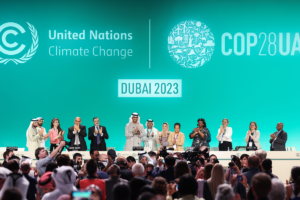
The recent COP28 climate summit saw a number of contentious moments spark concern among some observers, with perhaps the most surprising coming from the conference president, Sultan Al Jaber of the United Arab Emirates, who commented that a phase-out of fossil fuels would “take the world back into caves”. While his remarks may be controversial, there is still considerable debate over how to reach net-zero emissions while also promoting economic development in poorer countries, left behind by the age of fossil-fuelled growth.
But what if Latin America and the Caribbean – a region with a higher level of income inequality than any other in the world – could gain from reaching net-zero? Our new study shows that the region could derive a whopping US$2.7 trillion in potential benefits over the next 25 years, even after accounting for the costs of decarbonisation.
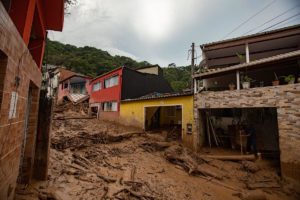
While old carbon-based development patterns may feel familiar for regional leaders, they have not proven to be particularly effective or equitable in Latin America and the Caribbean. These paths have led to poor air and water quality, highly congested cities, damaged landscapes and ecosystems, and societies that serve the interests of a few at the expense of many. There is growing recognition that a better path embraces liveable cities, preserves ecosystems, provides healthier food for all people, and meets climate goals to boot.
Our study, a collaboration between the 2050 Pathways Platform, RAND Social and Economic Well-Being, Tecnológico de Monterrey and the Inter-American Development Bank, is the first to estimate the economic difference for Latin America and the Caribbean between a traditional development path and one that pursues net-zero emissions throughout the economy. We considered a broad scope of actions, from improving the energy efficiency of industrial plants, to capturing biogas from waste and farming, to shifting agricultural patterns towards lower-carbon foods.
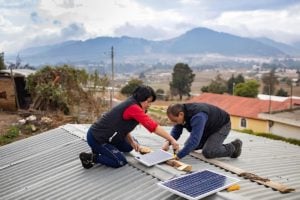
While there are many specific paths countries in the region can take toward economic development, three areas of change are critical for any decarbonisation pathway: producing electricity and hydrogen from renewables; electrifying transport; and returning the land to a net carbon sink, by protecting forests and shifting agricultural practices to support afforestation.
With an approach that focuses on these three areas of action, we found that benefits could potentially be as high as $4 trillion – from energy cost savings throughout the economy, avoided pollution, productivity and health gains, ecosystem services, and a host of other benefits. The benefits would also eclipse the $1.3 trillion in estimated investment costs, for a net gain of $2.7 trillion. Critically, these economic benefits were found to be robust to uncertainty. Across a thousand decarbonisation scenarios we analysed, 90% of our scenarios resulted in positive net benefits, with a median benefit of $1 trillion.
Given these findings, it is logical to ask why such transformations are not occurring at a pace that the tremendous benefits might warrant.
Unfortunately, a host of fiscal, regulatory and information barriers, among others, stand in the way of changes that would lead to greener development. These range from fossil fuel subsidies to urban environments that favour private vehicles over walking and biking, to a lack of financing. In addition, many of the largest costs are borne upfront by the people who have to make changes – the owners of factories and farms, for example – while many of the benefits such as fuel cost savings accrue over time or, like cleaner air and water, are enjoyed diffusely by wider society.
It seems clear from our research that there needs to be a different debate, and more ambitious discussions than those that took place at COP28. These must focus on how can countries break down regulatory barriers, secure climate financing, and engage leaders, stakeholders and citizens at every level to dispel the false choice between a cleaner future and a more prosperous one.