In western Colombia’s Valle del Cauca, around 100 kilometres from the Pacific coast, lies the small industrial city of Yumbo. Amidst the violence that has blighted the region and wider country for over 50 years, Yumbo has been something of a refuge, with thousands of displaced citizens settling here: between 1975 and 2015, the city had the one of the highest rates of population growth in Colombia – higher than the capital, Bogotá, or the major cities of Medellín and Cali.
The city’s industry and commerce – its factories produce cosmetics, construction, stationery and food products – has generated high revenues. But this has largely failed to benefit its 111,000 inhabitants, with four out of 10 Yumbo residents estimated to live in poverty. Meanwhile, the pollution from its factories is so intense that the city is said to have developed a microclimate: according to Oswaldo López Bernal, an architecture professor at the Universidad del Valle, researchers found that pollution generated by Yumbo’s factories raises the temperature by an average of five degrees higher than the nearby neighbourhoods in Cali, to the city’s south.
These paradoxes have demanded much imagination and perseverance from environmentally conscious residents of Yumbo. In the midst of poverty, pollution and neglect, some have begun to engage in alternative ways of living, spurred on by another common factor: climate change. Among the city’s population, reforestation, urban vegetable gardens and water reservoirs in public parks are just some of the initiatives gaining ground.
Reforesting reality
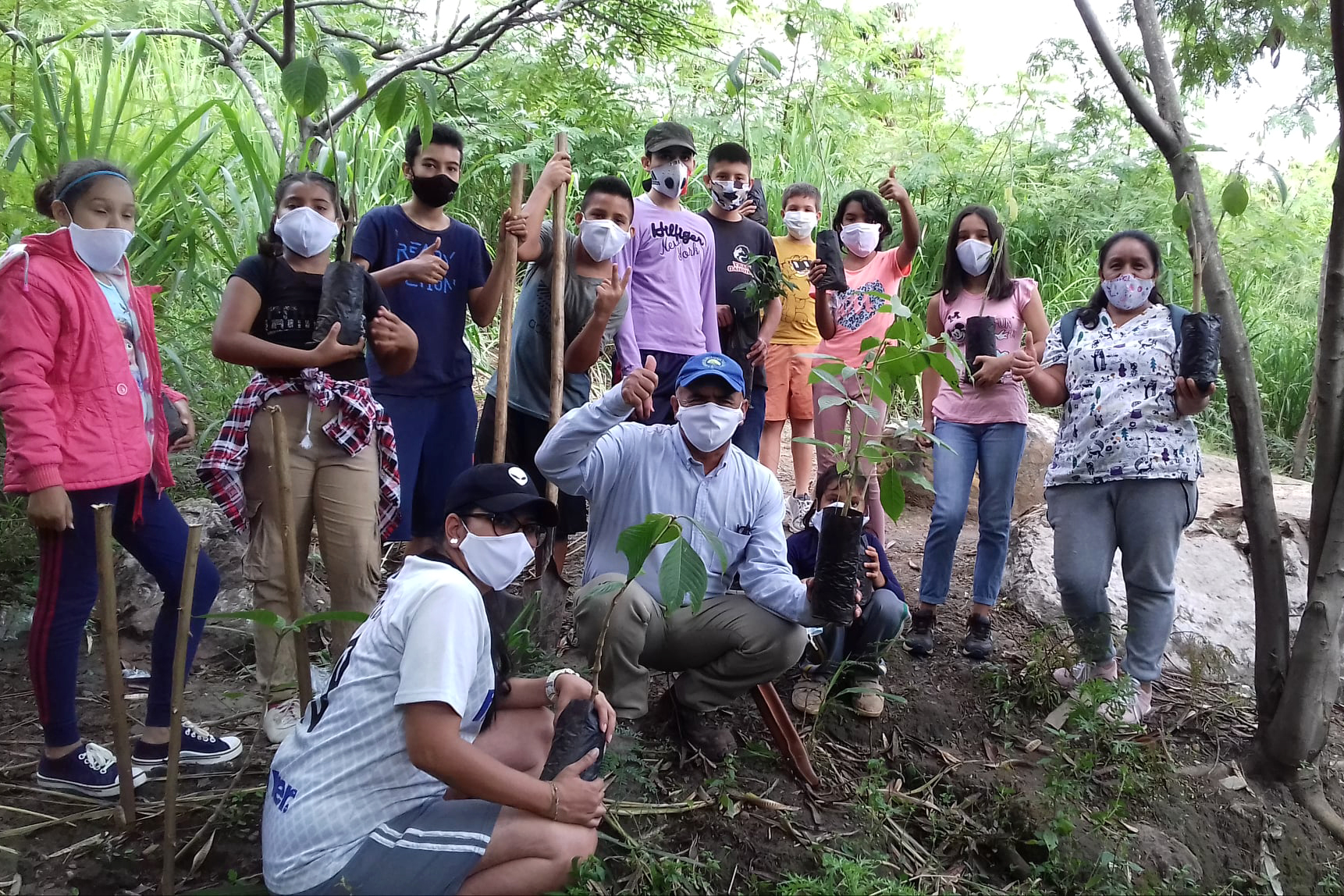
Panorama is an informal neighbourhood in the north of Yumbo. Up until even the late 1990s, it was yet to be recognised in official land-use plans, notes local resident Miguel Ledesma. This meant that basic services such as electricity supply, drinking water and sewage disposal were not in place. Ledesma remedied this situation with a group of fellow residents, bringing public services to the community before the local administration managed to, and established Panorama’s Community Action Board in the process. “After this, we focused on becoming an environmental foundation,” recalls Ledesma. By 2014, the Fundación FACY, a neighbourhood nature conservation organisation, was established. FACY reflects Ledesma’s belief that more action is essential in confronting climate change and its consequences for his city.
FACY’s main project is the reforestation of the La Estancia hill in Panorama. This area is a fundamental feature for the neighbourhood, where hundreds of houses have been built, and its populous community. Since 2017, a communal forest in the neighbourhood has begun to emerge among the factories due to FACY’s actions. The foundation created a green path – a 500-metre-long strip of preserved land that serves as an environmental protection zone. Locals tell Diálogo Chino that this zone soon gained significance for the community as one of the neighbourhood’s few surviving areas of vegetation.
However, several months into the La Estancia reforestation project, impoverished families, desperate for living space, occupied an area of the land, pulling down reforested vegetation. Many of the project’s trees were felled. “They damaged everything we had achieved,” Ledesma recalls of the area. “Practically everything was affected.”
Undeterred, and building on the farming knowledge that many of the participating families already possessed, FACY shifted its focus to vegetable patches and created community gardens. To facilitate its activities, FACY obtained financing and labour from the Municipal Planning Secretariat, companies in the Yumbo Business Alliance and community action boards in areas surrounding the project. It also collaborated with international movements including Adapto, which supports informal settlements in small and medium-sized cities and works to integrate their climate adaptation initiatives into public policy.
According to Adapto and researchers from the Universidad del Valle, the reality in Panorama is that of Latin America writ large: the region’s urban infrastructure is largely unprepared to cope with the impacts of climate change. Insufficient sanitation, storm drainage systems, clean water access, waste management, energy supplies and public transport are among some deficits severely affecting communities living in informal settlements such as Panorama.
In the face of these deficits, people in this area of Colombia have been taking matters into their own hands, developing mechanisms to combat climate change and improve the quality of life for themselves and future generations.
Getting creative with solutions
To the west of Panorama is the neighbourhood of Las Américas. Here, various groups have come together in attempts to deal with flooding caused by heavy rains. With the support of Urban Intervention Laboratory, a group of research professors from Universidad del Valle working on community processes related to climate change, local residents and leaders devised two drainage mechanisms: a low-cost sustainable urban drainage system (SUDS) and a filtration system, based around a rainwater collector. Completed in 2021, both aim to reduce the risk of flooding while supplying water to Panorama’s community gardens.
For the rainwater collector, the team got creative, building special bleachers around Las Américas’ football pitch. “The solution consisted of an urban drainage system through filtering bleachers and a water collection system that, when it starts to rain, turns the bleachers into a filter that retains the water,” explains Professor López, who is also a member of the laboratory. The drainage system was installed underground, then paved over. This green and cost-effective approach allows stormwater to be gradually filtered into the ground, rather than overloading the soil and sewage system. Surrounding the football pitch, it also functions as a pedestrian pathway, improving the quality of the public space.
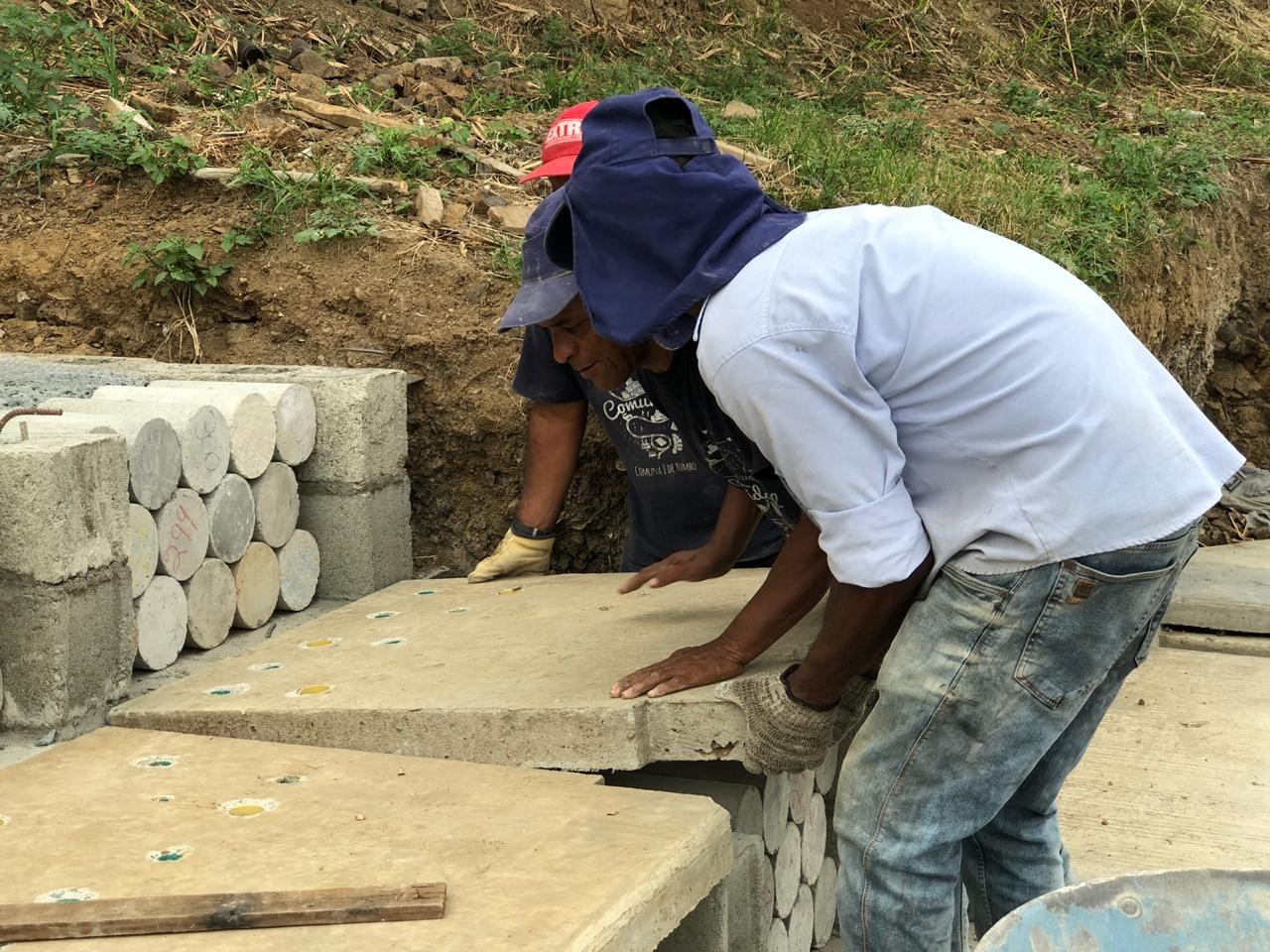
The team was able to obtain a patent for their invention and hopes it will be replicated in similarly deprived areas in the future.
Sowing awareness
Forty-year-old Viviana Marín is a nursing student who has lived in the Panorama neighbourhood since she was nine. She participates in the community gardens initiative, which also supported the reforestation of La Estancia hill. The initiative seeks to combat food insecurity and raise community awareness about the importance of environmental conservation through training sessions and the creation of home gardens.
With aims to foster food autonomy, the initiative also facilitates composting systems and waste management, and promotes food that has cultural value. Marín has planted cabbages, coriander, carrots, and medicinal and aromatic herbs. She says her father, a farmer from nearby Cauca, to Panorama’s south, taught her the basics, and the project has allowed her to improve her techniques.
What would our life be like without all these trees? We would have pure pollutionViviana Marín, Panorama resident
For families involved, it has helped to bring important improvements in quality of life. “Let’s not lie to ourselves: the salary we have is not really enough,” says Marín, a mother of two and grandmother. “The garden helps us to cope.”
Marín’s garden has also provided plants for the green path that Ledesma looks after on La Estancia’s hill. This collaboration has cultivated in Marín a strong awareness of Yumbo’s environment: “What would our life be like without all these trees? We would have pure pollution.”
Felipe Cárdenas, who directs the Ibero-American Observatory of Sociopolitics, Culture and Environment at the Universidad de la Sábana in Bogotá, believes that environmental issues and efforts to mitigate climate change must be seen as a part of reality for communities, and something which they have a real stake in mitigating.
“Environmental issues are a dimension of reality: it is not simply that we carry out an environmental action, but it is a vision… that is enriched with contributions from diverse knowledge,” the professor tells Diálogo Chino.
Cárdenas says it is not academics who set this course, but rather, a population’s environmental knowledge – whether that is derived from the local farming culture, Indigenous networks or ancestral inheritance. “The environmental issue in Colombia and Latin America has been generating a whole epistemological structure that comes from the grassroots,” he says. “There is a whole mental universe and a structure to be discovered and strengthened.”
This article was produced with the support of Voces Climáticas, an initiative of the International Development Research Centre, LatinClima, the Tropical Science Centre (CCT), Claves 21, the Climate and Development Knowledge Network, and Fundación Futuro Latinoamericano.