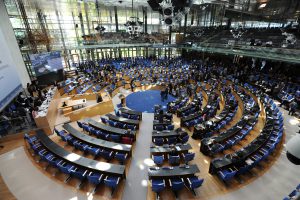
The delegate from Russia was incensed. He was on his feet, holding his country’s signboard aloft, waving it, gesticulating wildly. He was shouting too, though only those who understood Russian knew what he was saying because the interpreters would not translate his remarks unless he was given the floor by the chair.
But Patricia Espinosa would not give him the floor, she would not even acknowledge him. Mexico’s former foreign minister kept her head turned firmly to her right so she would not have to look at the Russian delegate, who threatened to undo the consensus Espinosa had worked so hard to build.
Instead, she gavelled the resolutions through in haste, declared that all decisions had been taken by consensus and proclaimed the 2010 Cancun climate summit a success. Espinosa recieved a standing ovation then.
More than five years later, she has been selected by UN secretary general Ban ki-Moon to head the United Nations Framework Convention on Climate Change (UNFCCC), the collective of 194 countries tasked to coordinate the fight against global warming.
Normally, the general secretary's choice must be approved by an 11-member UN bureau that represents groups of governments around the world, currently led by French environment minister Ségolène Royal. However, there is no record of the bureau having ever challenged the Secretary General’s choice, so the approval is seen as more of a formality these days.
“Patricia is precisely the right person at the right time for this job … The journey ahead will require an ample supply of commitment, ingenuity, purposefulness and a deft human touch, attributes she has often displayed in her many diplomatic roles,” said Andrew Steer, CEO of the World Resources Institute, in a statement.
Guy Edwards, co-director of the Climate and Development Lab at Brown University and a specialist on Latin American climate policy, said Espinosa’s appointment is recognition of her diplomatic efforts at the Cancun talks.
"Her leadership stood out for its adept management of the complex and delicate negotiations," he added.
There had been intense lobbying for the post of the UNFCCC executive secretary after incumbent Christiana Figueres announced that she was stepping down soon after last year’s Paris summit. Shortly after, the group of Least Developed Countries had said in an open meeting that it should be the turn of one of their representatives to head UN’s climate body.
Because Figueres is from Costa Rica, some veteran UNFCCC watchers expected the job to move away from Latin America.
Neither has happened, and the difficult job of cajoling governments to transition from economies based on fossil fuels to those based on renewable energy has gone to the 57-year-old former foreign minister of Mexico, who is currently her country’s ambassador to Germany.
The climate agreement reached in Paris last December was seen as a huge diplomatic success. But, as Figueres herself has repeatedly pointed out, the deal she helped broker in the French capital falls far short of keeping average global temperatures within the 2C rise that governments have agreed to work towards.
Instead, if the current pledges are carried out in full, average temperatures will rise anything between 2.7C and 3.4C by the end of this century.
Scientists are warning of the catastrophic impacts that will take place unless greenhouse gas emissions are reined in more effectively than has been the case. As the person slated to oversee the implementation and possible strengthening of the Paris climate deal — which comes into effect in 2020 — Espinosa has her work cut out.
With additional reporting by Robert Soutar