More than 80 countries have joined a call for a “roadmap” for the phase-out of fossil fuels, aiming to put the issue back on the table as negotiations at the COP30 climate summit reach a crunch point.
At COP28 in Dubai in 2023, countries committed for the first time to “transitioning away” from fossil fuels, the main driver of rising greenhouse gas emissions and climate change. Such a transition is fundamental to meeting the target of the 2015 Paris Agreement to limit global warming to 1.5C above pre-industrial levels.
Since then, discussions on how to implement that target have stalled, with planned expansions of coal, oil and gas by 2030 exceeding the levels consistent with the Paris Agreement by more than 120%. However, at the ongoing COP30 climate talks in Brazil, there could yet be hope for a change in momentum.
At the summit’s opening, Brazilian president Lula da Silva asked countries to agree on a roadmap to transition away from fossil fuels. In practical terms, this would mean ending COP30 with an agreed mandate from countries to start building this roadmap, Brazil’s environment minister Marina Silva said during a panel event at the summit, which is taking place in Belém.
The idea has so far gained support from 82 countries, including Colombia, the United Kingdom and Denmark, according to estimates by countries leading the initiative. While the roadmap is not formally on the agenda of the COP, Brazil included it in a draft “cover decision”. These are political statements that are not tied to the agenda but which, like the agenda, require consensus among states to be adopted.
If approved, the roadmap process would be voluntary for those governments that wanted to participate, and “self-determined,” as Silva told The Guardian: “We cannot sell false hopes. Raising the subject is courageous, and I hope [to see] this courage from all, from producers and consumers.”
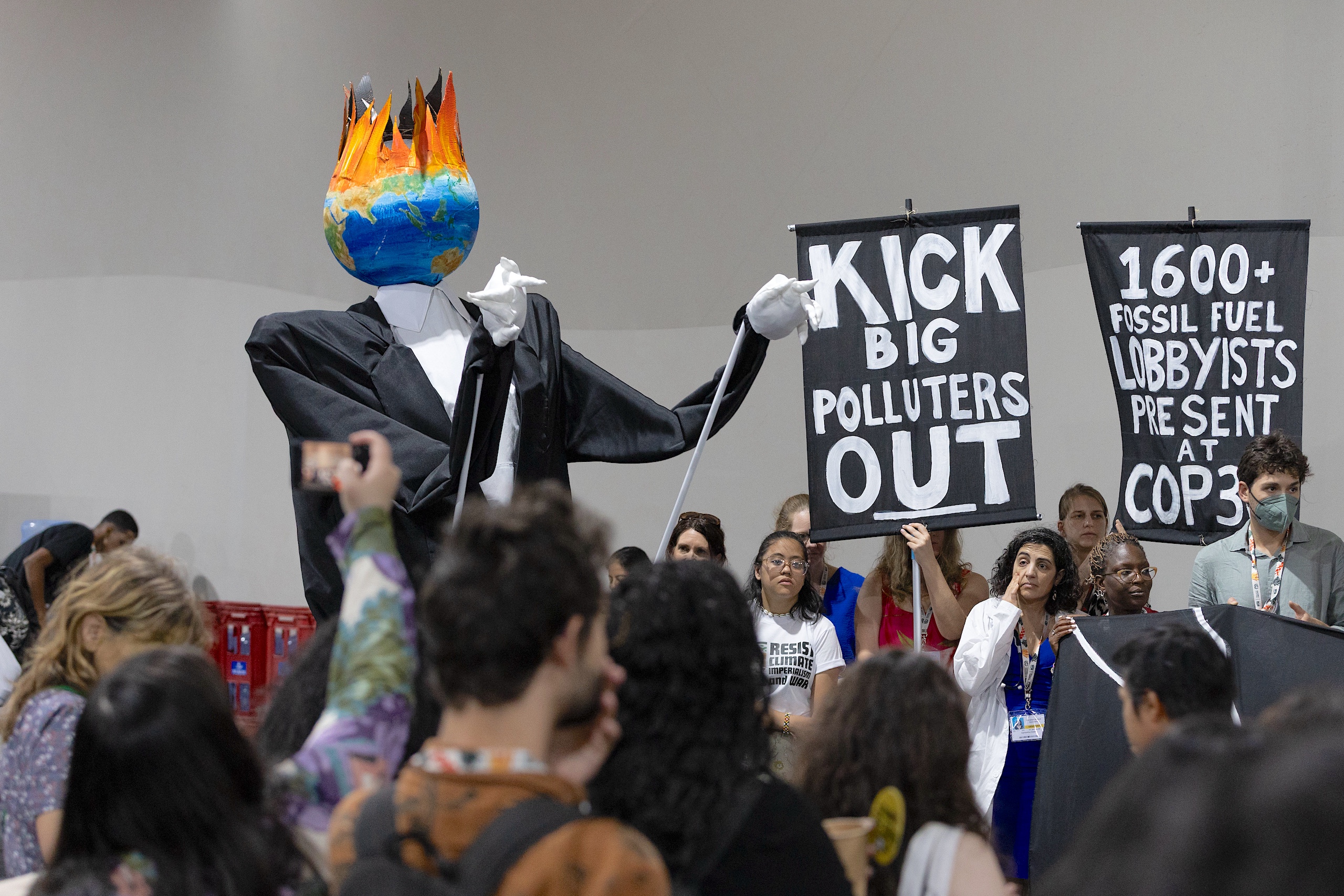
On Tuesday, ministers from many of the participating nations gathered at a press conference in support of the roadmap. The event was so well attended that they struggled to fit on the stage. The ministers, among them representatives from Colombia, Germany and Denmark, said they supported a just, orderly and equitable transition.
Earlier in the week, Antonio Hill, an advisor for the Natural Resources Governance Institute, spoke with Dialogue Earth at COP30. He said discussions were moving fast: “Everyone here understands that the phase-out of fossil fuels will happen sooner or later. What remains is to agree on how to manage an orderly and fair exit from that market.”
Ilan Zugman, director for Latin America at 350.org, agreed: “We had fossil fuels on top of the agenda at COP28, but then countries didn’t progress at COP29. Now, many support including the mandate for the roadmap in a cover decision. It will then take a few years to produce the actual roadmap.”
An alternative proposal
While discussions on the roadmap continue at COP30, which is scheduled to finish at the end of this week, Colombia is taking the lead in promoting an alternative, or complementary, strategy to tackle fossil fuel phase-out: the Fossil Fuel Non-Proliferation Treaty.
This is a proposed international agreement to halt the expansion of new coal, oil and gas projects and equitably phase out existing fossil fuel infrastructure, complementing the Paris Agreement. It has already been supported by 18 countries since its launch in 2020, and is based on three pillars: non‐proliferation, a fair phase‐out and a just transition.
“It’s a process outside of the UN. Rules of procedure here are too difficult to advance on something like this,” Alex Rafalowicz, director of the initiative, told Dialogue Earth at COP30. “We have several inspirations, such as the Ottawa Treaty to eliminate anti-personnel landmines. Countries tried to do it in the UN and couldn’t, so they called for an independent process. The same could happen here.”
At COP28, Colombia announced it would join the proposal, making it the first large fossil fuel producing and exporting country to do so. President Gustavo Petro has been a strong advocate on the phase-out of fossil fuels, pledging to stop approving new exploration contracts for oil, gas and coal in his country. However, this process has not been straightforward.
In April, Colombia will host the first international conference for the phase-out of fossil fuels, which could mark the formal beginning of the treaty-making process. The government has also kickstarted the drafting of a declaration on fossil fuel phase-out at COP30, seen by Dialogue Earth: it currently calls for a “just, orderly and equitable” transition, and the advancement of dialogue at the meeting in April.
Susana Muhamad, Colombia’s former environment minister and an adviser to the non-proliferation treaty, told Dialogue Earth the treaty seeks a “pragmatic” approach to the phase-out of fossil fuels.
“The conference will form a coalition of countries willing to find solutions that are not blocked by the rules of procedure at the UN. Countries can’t ditch fossils by themselves – the treaty wants to help with that, providing a roadmap,” she said. “The situation is dramatic. We are not [yet] replacing fossil fuels with renewables; we are increasing both.”
This story was produced as part of the 2025 Climate Change Media Partnership, a journalism fellowship organized by Internews’ Earth Journalism Network and the Stanley Center for Peace and Security.