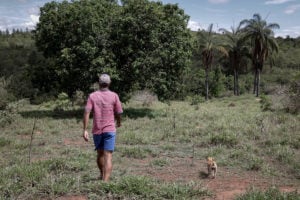
Miguel Martinez learned his trade pulling hake, cachema and pámpano from the sea off the Peruvian coast.
These Pacific waters are home to a rich diversity of species. According to some estimates they provide half of the fish eaten in the country.
The 61-year-old Martinez was born in Tumbes, the northern Peruvian coastal region bordering Ecuador. He is one of 88,000 artisanal fishers working along Peru’s extensive coastline and rivers to meet local demand.
But since the waters warmed as the El Niño weather pattern set in last year, before being officially declared in June, he and many of his colleagues have been fearing for their livelihoods.
“There are species that are no longer seen, and there are others that are beginning to be seen more. There are others that are moving far away,” Martínez, who is leader of a regional artisanal fishing group, tells China Dialogue Ocean. “We have to spend more money on fuel, and days away from home, to be able to come back with something.”
Rain brings pain
El Niño is an occasional climate phenomenon characterised by the weakening of trade winds that normally push warm water from South America west towards Oceania. This disrupts the cold Humboldt Current – which flows from south to north off the western coast of the continent – changing ecosystems at sea, and often producing heavy rains on land.
This time, despite predictions of extreme rainfall and large changes in sea temperature, northern Peru had experienced a relatively mild El Niño until mid-February, when rain began to fall, causing flooding in some areas. Experts say the rainfall will remain at moderate intensity until April.
This has nonetheless caused major changes in the sea, with currents altering the migratory patterns of some fish, leading to a major contraction in fishing, according to official government data and data from fishermen and researchers on the ground.
Small-scale fishers on the northern coast say they have been left to weather the economic impacts alone, and are growingly increasingly frustrated with a lack of government support.
Fish flee warmer waters
As sea temperatures change, some species move to find their preferred conditions. Rising temperatures, alongside frequent and unpredictable El Niño events, mean the distribution and supply of fish traditionally sought by Peru’s artisanal fishers are in a constant state of flux, says Santiago de la Puente, a researcher at the Norwegian Institute of Aquatic Research.
As a result, these fishers, many of whom were already struggling to catch enough due to overfishing, must spend more time and money in search of their target species.
“This means they can’t know how much they will earn or spend,” says De la Puente. “All they know is that they will have to go into debt to pay their bills.”
The researcher worries that for the fishers, this stress will only increase as the current El Niño phase continues. A lack of research on the problem makes it challenging to quantify the damage.
“We also don’t have much information on how much fishermen are affected by the impacts of El Niño or climate change,” he says. “And this gap is serious, considering that fishing in Peru represents 1% of GDP. This is no small thing.”
Seeking flexibility for fishing
Changes brought on by El Niño may have driven away some of the animals targeted by Peru’s artisanal fishers, but they also bring in new candidates. These include species that prefer warmer waters, such as mahi-mahi, tuna and bonito, says Gino Passalacqua, a Peruvian oceanographer at the University of California, San Diego.
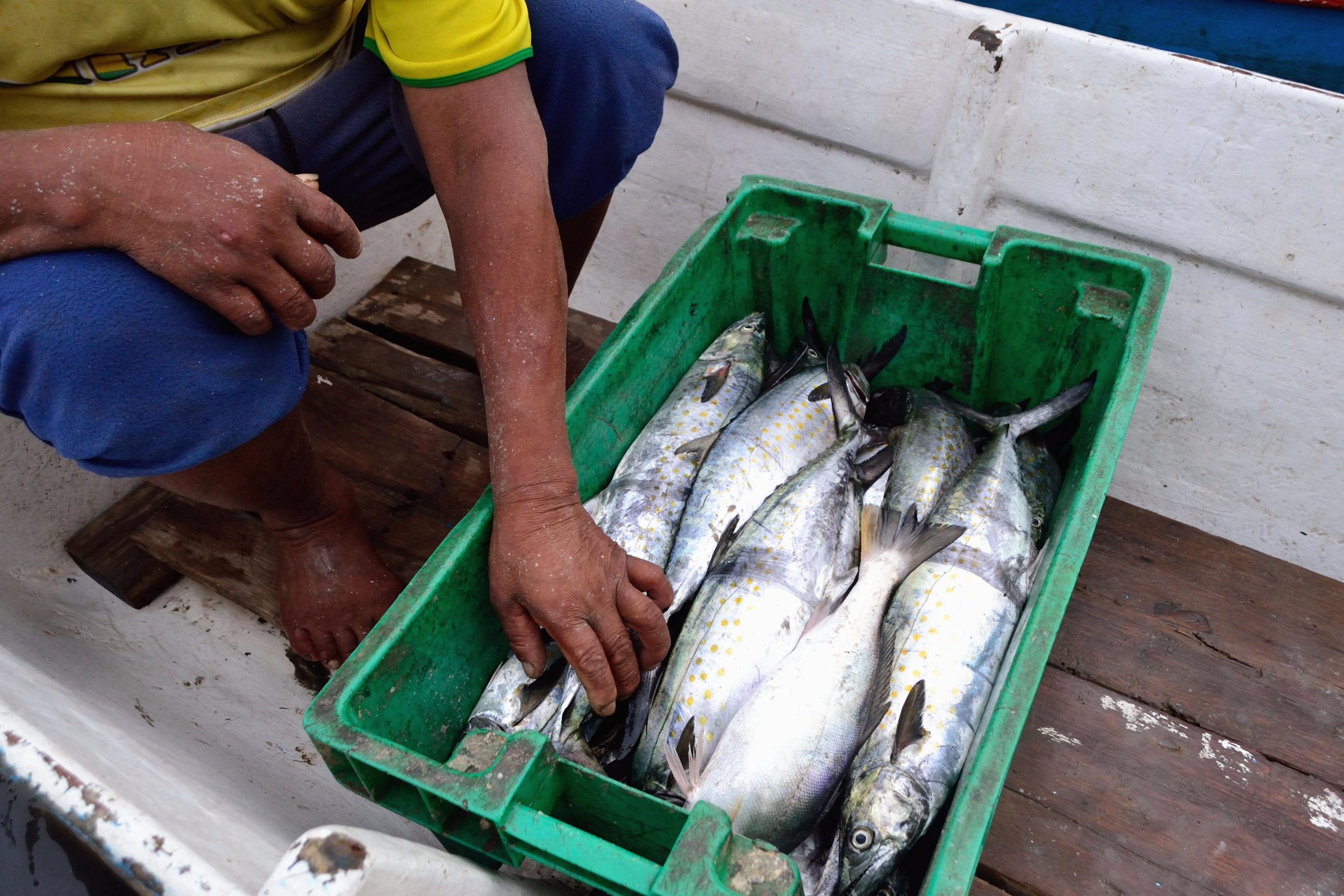
However, this is only good news for local people if they are allowed to catch the new arrivals, which may require new permits. Often, fishers won’t know when to expect an outcome on applications for such permits, leaving them with significant uncertainty. “Changes in the behaviour of tropical species are so spontaneous that while the new fishing permit to catch them is being processed, these species are already gone,” explains Passalacqua.
Fishers “must have the power to react”, he adds, and researchers and the government “must anticipate these situations“.
Seeking change has proven difficult in Peru. Martínez is keen to keep fishing and wants better facilities, regulation and financial support. But he says it is hard for voices like his to reach policymakers.
“The big problem is that regulations are made from a desk, hundreds of kilometres away. They ignore us,” he says. “Now we need them to give us a financial bailout, because we small-scale fishers can’t meet our loans. We live in debt.”
Small help for a big problem
The government has offered some assistance, says Martinez. “They gave us a bonus of 700 soles (US$185) at the end of 2023,” he tells China Dialogue Ocean. “That is not enough.”
The government has given this aid to 47,000 fishers who have suffered over the past year. But there have been issues with the rollout: “The list of beneficiaries is badly done; we have found deceased people on it,” notes Martinez. “We have complained, but they don’t listen to us.”
Juan Carlos Sueiro, an economist and director of fisheries for the NGO Oceana Peru, is also worried, particularly because fishers already struggle to balance their finances.
“This is a high-risk economic activity. You never know how much [fish] you will come back with,” he says.
While their problems may seem to be at sea, Sueiro says fishers’ lives could be improved with changes on land.
Better ports to land their catch, cold chains to preserve it, and upgraded roads to get it to customers, would all help, he says.
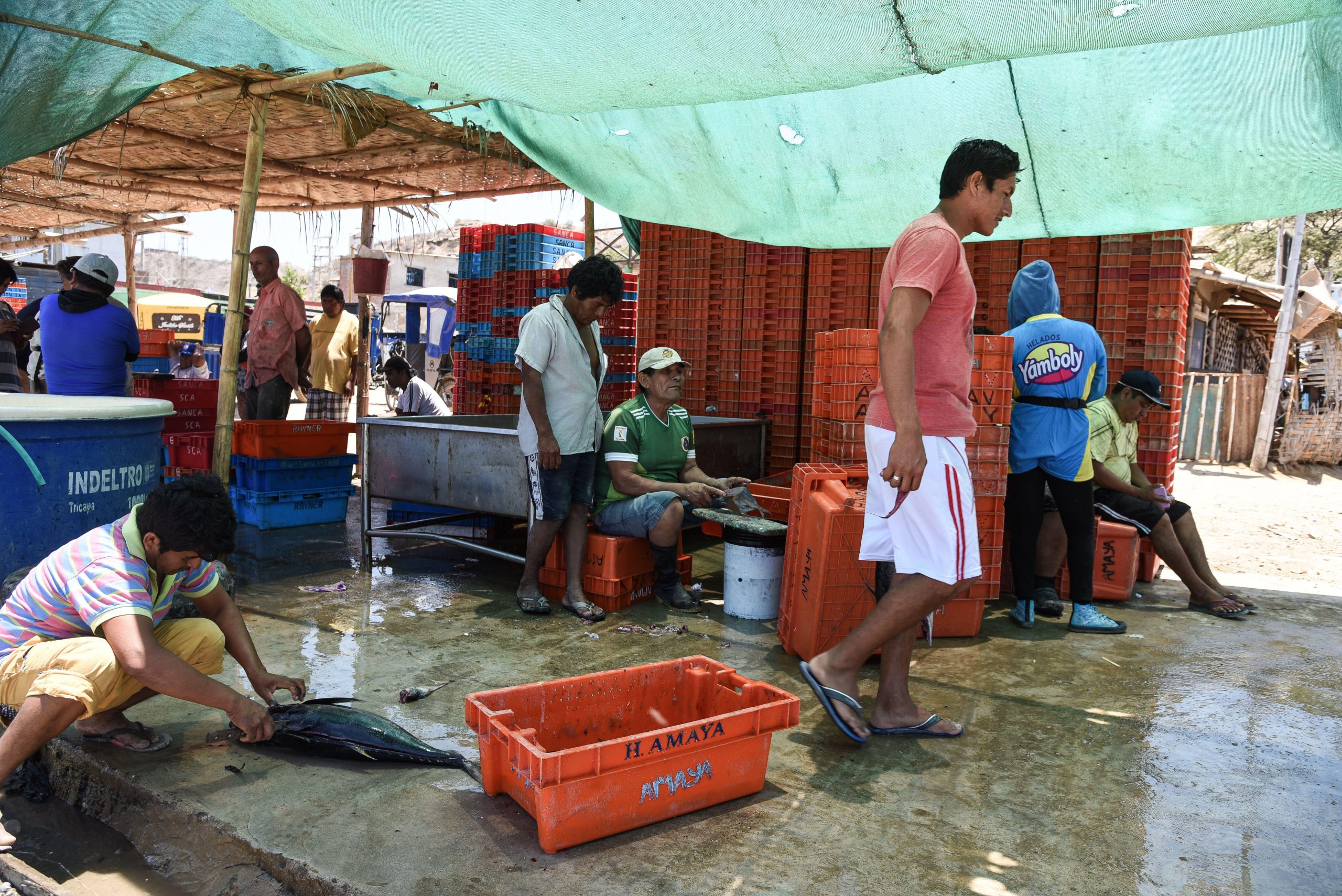
“When El Niño comes, the problem is the destruction of the surrounding area,” explains Sueiro. “The roads are destroyed and there is no way to communicate, and the fishermen have no way to store or process their resources. Whatever they can catch goes to waste or is sold far below their usual prices… We know that an El Niño is always going to come, and we are never prepared.”
Planning for disasters, in Peru and Chile
Peru’s leaders have found some money to combat the effects of El Niño.
At the end of last year, the economy minister said over 7 billion soles (US$1.8 billion) would be spent stockpiling food and equipment, and preparing rivers to cope with floods. But the problems of artisanal fishers appear to have been ignored, say experts interviewed by China Dialogue Ocean.
Mariano Gutierrez, a researcher at the Humboldt Institute of Marine and Aquaculture Research in San Isidro, says there is a lack of political will to address the problem that has existed for decades: “The state is not doing its job.”
Gutiérrez is about to publish a roadmap to improve artisanal fisheries, calling for an expanded and updated list of species fishers can catch, better loans and financing for the sector, and more monitoring and enforcement, with tougher penalties for illegal fishing. He hopes this might help local people weather future shocks, which are only likely to increase as climate change leads to more extreme and variable weather.
What we thought we were going to experience in 2050, we are experiencing nowGino Passalacqua, a Peruvian oceanographer
Neighbouring Chile has brought in changes to fishing laws to try and conduct decision-making on a more scientific basis, and improve the recovery of marine stocks and their resilience to climate change.
In 2015, its government developed a Climate Change Adaptation Plan for Fisheries and Aquaculture to help identify priorities and provide tools for climate change adaptation.
The plan promoted measures to improve the resilience of ecosystems and fishing communities, and emphasised the need for further research. The plan is crucial for Chilean fisheries because, despite efforts to manage fish stocks scientifically, several are still overfished. This makes them highly vulnerable to climate change, according to a 2021 study by researchers at Dalhousie University in Canada.
As climate change increasingly makes itself felt off the coast of Peru, finding a way to deal with changing oceans is becoming more urgent. “What we thought we were going to experience in 2050, we are experiencing now,” says Passalacqua.
But the challenging impacts of climate phenomena on lives and livelihoods have made many in the country wary, and tackling such issues will not be an easy task. “Historically, in Peru, saying ‘El Niño’ scares, frightens, and paralyses,” Passalacqua adds. “Adequate plans are not made, and every time El Niño comes, the same thing happens.”
If that does not change, thousands of Peruvian fishers like Martinez may continue to struggle to feed their people.
This article was updated on 27 February to reflect the fact that by the middle of the month rain and some flooding had occurred in northern Peru.