It is the stuff of legend in Mexico: In 1938, president Lázaro Cárdenas nationalised US and Anglo-Dutch oil companies and called on Mexicans to “furnish the necessary moral and material support” to pay the debt that newly-created Petróleos Mexicanos (Pemex) had acquired.
Thousands of Mexicans, inspired but unsure quite how to support the new venture, queued up outside the presidential palace with donations ranging from chickens to jewellery.
Eighty years later, as Mexico prepares to elect a new president on Sunday, it is in the process of reforming its energy sector, opening it up to foreign investment following congress’ approval of the Energy Transition Law in 2014.
A new wave of resource nationalism comes as Mexico develops new international partnerships, including with China.
As well as choosing a president, the country must also decide whether to use the process, which has attracted billions of dollars in foreign investment, to transition away from fossil fuels towards renewables.
Meanwhile, the issue of who controls Mexico’s natural resources remains a divisive and emotive one.
“My vote will be for whoever makes a public commitment to reverse the constitutional reforms on energy,” prominent politician Cuauhtémoc Cárdenas, Lázaro Cárdenas’ grandson, said last month.
A new wave of resource nationalism comes as Mexico develops new international partnerships, including with China. Chinese companies won big in both fossil fuel and renewable energy auctions.
Will the next president of Mexico, a country with a reputation for acting swiftly in the international climate change arena, embrace the opportunity to take Mexico down a more sustainable development path?
Mixed messages
No serious presidential candidate is likely to heed Cárdenas’ call for re-nationalisation. Even veteran leftist and overwhelming favourite Andrés Manuel López Obrador, known as AMLO, of the National Rejuvenation Movement (MORENA) has pledged not to halt the reform.
AMLO has said there may be a larger role for the state in the oil sector under his watch but no new expropriations. The former mayor of Mexico City and two-time presidential runner-up’s position on climate change is less clear.
He has pledged to “accelerate the energy transition” but at the same time to “rehabilitate thermoelectric power plants”.
“AMLO and the other candidates put environment last,” says Yolanda Trápaga, a researcher at Mexico’s National Autonomous University (UNAM), adding that the winner will find an environmentally “devastated” country as a result of open-pit mining and badly-managed infrastructure projects.
Trápaga suggests that AMLO’s eventual stance on environment will depend on his team. This contrasts with second- and third-placed candidates Ricardo Anaya and José Antonio Meade, both of whom approved the energy reform, the latter in his former role as interior minister, she adds.
David Shields, an energy consultant based in Mexico City, told the Latin America Energy Advisor that AMLO’s team has “exciting ideas about getting people involved at the community level in renewable energy projects”. These form part of a more holistic development policy that integrates jobs, health, education and the environment, he said.
Javier Flores Durón Lizoala, director for North America, Europe and Asia, at Mexico’s energy ministry (SENER), told Diálogo Chino that Mexico already works with international partners to foster the development and deployment of clean technologies. These include Denmark, Germany, France, the US and the UK, and multilateral fora such as NAFTA.
Mexico also recently signed agreements with China on developing small hydro power through the exchange of information and experts, Flores Durón Lizoala added.
New China partnerships
The energy auction has offered an entry point into Mexico for China, in the wake of strained relations following the cancellation of two major projects. Chinese company Jinko Solar won contracts for two solar projects in the states of Jalisco and Yucatán, which will generate a combined 170 megawatts.
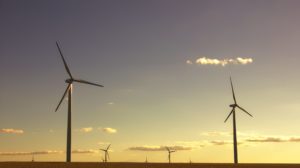
Chinese Envision Energy International, in consortium with the Mexican company Vive Energía, won the first two auctions and will develop two wind farms in Yucatan.
Trápaga said that buying Chinese technology could assist Mexico’s environmental objectives, which include reaching 35% generation from ‘clean’ sources by 2030.
However, she doesn’t believe that the energy reform offers opportunities for China to support sustainable development as long as the country’s vision for development is based on extractive industries and infrastructure building. The country’s “grow first, protect the environment later” approach is a problem, she says.
Furthermore, investment in renewables pales in comparison to hydrocarbons, which has attracted around US$150 billion.
The opportunity to participate in Mexico’s oil sector for the first time in nearly 80 years brought companies from all over the world, including China National Offshore Oil Corporation (CNOOC), which won two significant blocks in early auctions.
Tabaré A. Currás, honorary member of the Climate Change & Renewable Energy Commission at World Peace Builders, recently told the Latin America Advisor that the election is an opportunity to move Mexico in a new direction.
“Mexico’s fossil-based economy must transition faster to a decarbonised energy paradigm, one that would surely bring about positive results to all stakeholders,” he said, adding; “candidates should not lose the chance to put forward a compelling case for this much-needed transformation.”
Most parts of the world will generate electricity from wind and solar cheaper than they will from coal by 2023
The World Bank Group’s International Finance Corporation (IFC) estimates that Mexico represents a US$75 billion opportunity for renewable energy investors between now and 2030.
Of all Latin American countries only Brazil has greater potential, according to an IFC report on “climate-smart” investment in the region.
Renewables prices tumble
By the time the next Mexican president completes his 6-year term (Margarita Zavala, the only remaining female candidate, dropped out of the running earlier this month) the way the world generates and stores energy may have changed dramatically.
Most parts of the world will generate electricity from wind and solar cheaper than they will from coal by 2023, according to a recent report by Bloomberg Energy Finance.
The drop in cost is in part attributable to falling prices for lithium batteries, an increasingly popular method of storing energy, but is also driven by cheaper Chinese manufacturing of renewable technologies.
“The economic case for building new coal and gas capacity is crumbling,” Elena Giannakopoulou, head of energy economics at BNEF, told Bloomberg.
According to Lisa Viscidi, director of the energy programme at US think-tank the Inter-American Dialogue, Mexico’s leadership in international climate talks – it was the first developing country to submit a climate plan to the UN – is ahead of renewable energy generation.
Mexico generates less than a quarter of energy from renewables, according to the International Energy Agency, well below the Latin America average of 50%.
However, the reform process’ creation of a wholesale energy market and a system of issuing clean energy certificates is promising for renewables growth, Viscidi told the Advisor:
“Energy reform has created a strong framework and important incentives to increase renewable energy in Mexico.”



![Under Narendra Modi, there has been a renewed focus on building large dams and diverting rivers [Photo shows the Brahmaptura by: INDIA-ACTED-SAMISIVA-130]](https://dialogue.earth/content/uploads/2017/11/37440237726_e8fd1aa6d6_k-300x199.jpg)