In 2019, the new presidents of Mexico and Argentina announced plans to lift their struggling economies: ambitious oil projects that would boost state revenues.
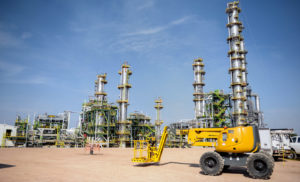
For Mexico, it centred on state-owned oil company Petróleos Mexicanos (Pemex) and the controversial Dos Bocas refinery. In Argentina, Vaca Muerta, one of the world’s largest deposits of shale oil and gas, was touted as the saviour of the country’s economy.
60%
the fall in oil prices since January
Then came the Covid-19 pandemic and with it, a severe price crash in the crude oil market. Oil prices have plummeted 60% since January to below US$30 a barrel — an 18-year low. It started with a crisis in demand as the Chinese economy slowed. But the slump is mainly the consequence of a price war between Russia and Saudi Arabia that will likely flood the international market with oil, making investment in the sector much less attractive.
The investment crash will not only impact Mexico and Argentina, but other oil-producing nations in Latin America region, such as Venezuela, Brazil, Colombia and Ecuador.
Edmar de Almeida, an economics professor who studies the energy sector at the Federal University of Rio de Janeiro, said the demand and price crises will likely hit investment in oil projects, as companies try to preserve their cash.
“This means reducing investment in exploration and postponing projects. I don’t see oil as a driver for boosting the economy now,” he said.
Oil: crashing prices and hopes
Mexican president Andrés Manuel López Obrador was so eager to use oil to lift the economy that one of his first measures as president was to change Pemex’s motto. Now it reads: “For the recovery of sovereignty” above its Mexican eagle logo.
Questions over Pemex’s ability to drive Mexico’s economy were already mounting as it struggled to pay off debts of over US$105 billion, according to Reuters. Some revenues were saved through a massive sale of its production through future contracts, shielding it from the slump.
The future of the US$8 billion Dos Bocas refinery López Obrador promised also looks uncertain. In January, Chinese ambassador Zhu Qingqiao announced that two Chinese banks would invest $600 million in the project, but withdrew after the Mexican government denied the deal as it sought to maintain what it called sovereignty over the project.
The refinery would be a massive investment for a struggling company to make, especially by itself. But the Mexican government still backs it.
Vaca Muerta is now like a patient with a fever
“At a time when oil prices are so low, such as today, the most convenient and the best business is to refine,” claimed Mexico’s Energy minister Rocío Nahle in a recent interview with El Financiero TV.
Meanwhile, in Argentina, many have come to terms with the fact the government’s plans to further develop Vaca Muerta, in the southern Patagonian province on Neuquen, will probably have to wait longer than expected — crushing news for a government in need of more funds as it deals with a debt restructuring process.
“Argentina was putting most of its future hopes on Vaca Muerta and now that’s under discussion,” Jorge Lapeña, a former energy secretary, said.
As it stands, Vaca Muerta plays a major role in the domestic market, supplying 3% of the country’s gas and 19% of its oil. Nevertheless, only 5% of reserves are exploited. For it to be profitable, the price of a barrel of Brent crude must be above US$40, way above current levels.
Sustaining Vaca Muerta’s planned growth in production means developing about 300 unconventional hydrocarbon wells per year, requiring investment of between US$5 billion and $7 billion annually, according to a report by business consultancy Abeceb.
“Vaca Muerta is now like a patient with a fever, we have to follow the evolution of international markets. If prices remain low, investments will be delayed and production will drop,” said Gerardo Rabinovich, vice president of the General Mosconi Energy Institute.
No customers
Investments are not the only concern in Latin America, as many countries depend on oil revenue to pay the bills. China is one of the main clients for crude produced in the region.
Almeida says Brazil has a strong internal market that could help state-owned energy company Petrobras weather the crisis. But the company announced it was cutting investments from US$12 billion to $8.5 billion due to the crisis, and slowing production, especially in shallow waters. Almeida says the cuts shouldn’t affect long term investments, as these are planned to run for several years.
Did you know...?
Colombian oil exports to China doubled between 2017 and 2018
But the scenario is especially stark in Colombia, where oil represents almost 80% of exports to China. The country doubled sales to China between 2017 and 2018. However, in February, as it struggled to address the Covid-19 crisis, China slammed on the breaks on purchases of Colombian oil.
Colombia’s president Iván Duque knew the country’s dependence on oil exports would become a problem. In August, he pledged to diversify Colombia’s exports to China during a state visit to Beijing. Nothing has changed so far.
“We have to prepare for an expensive dollar, lower revenue from exports and, further ahead, lower tax revenue because of oil,” said former minister Mauricio Cárdenas, adding that the country needed to boost domestic consumption of the oil it wouldn’t sell to other countries.
A bump for renewables?
As lower oil prices become the new normal, many are wondering what that means for investment in renewable energy. Some say lower oil prices mean renewables are less competitive, while others argue that the slump actually means investors will grow less interested in crude and venture to other energy projects.
André Ferreira, the director of the Brazilian Energy and Environment Institute (Iema), said it’s premature to make predictions about the outcomes of the crisis for renewables.
It’s a window of opportunity to talk about urban mobility
But, as pollution levels fall, and people watch the skies turn blue in Latin America’s biggest cities, Ferreira does see a window of opportunity for electric vehicles and prioritising public transport.
“I don’t see how, in the long run, this will be a push for renewables,” he said, but added; “it’s a window of opportunity to talk about urban mobility.”