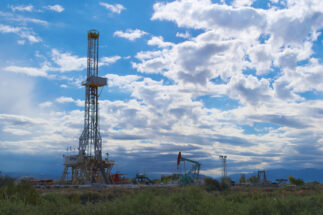
For the Argentine government, oil and gas extraction at Vaca Muerta, the vast geological formation in the western province of Neuquén that is home to some of the world’s largest shale deposits, presents an opportunity to solve the country’s energy supply problems, to boost foreign exchange and to create jobs.
In the first six months of the year, Argentina spent over US$6 billion on energy imports, 50% more than in the same period in 2021, an increase that is partly explained by disruptions in the energy sector due to Russia’s war in Ukraine. This has taken a toll on the country’s foreign currency reserves, which now stand at US$42 billion, having dropped by US$100 million in October alone.
“The project can become one of the most important commodity generators in the country, something that is urgently needed,” said Lara Bernstein, a researcher at the consultancy firm Economía y Energía. In other words, exploiting Vaca Muerta could tackle some of Argentina’s pressing problems. But the window of opportunity is closing fast amid the climate crisis, and the country’s commitments to confronting it.
Cecilia Nicolini, Argentina’s climate change secretary, has described Vaca Muerta as a solution for the short and medium term, but not for the long haul. The government is making the case for natural gas to be used as a necessary transition fuel, instead of leapfrogging to renewables, an argument that has been repeatedly rejected by environmentalists and climate experts.
“Developing gas will allow us to stop importing liquid fuels, and to export it to countries with polluting energy mixes, such as Chile, which still uses coal,” Nicolini said in a recent interview with Diálogo Chino.
But while activities at Vaca Muerta may offer short-term opportunities to boost the national coffers, the country faces a balancing act as it targets its longer-term energy transition. With the oil and gas fields having attracted thousands of migrants from across Argentina with the promise of employment, experts are warning of the need to ensure a “just transition” that provides sustainable opportunities for those whose fossil fuel sector jobs may disappear.
Jobs at Vaca Muerta
After Argentina’s oil and gas production reached its lowest levels in 2017, the unconventional shale deposits of Vaca Muerta were seen as a leading substitute for conventional hydrocarbons in the country.
“The volume of production has been maintained at Vaca Muerta, both in oil and gas, and non-conventional hydrocarbons have an increasing share [of the overall output],” Bernstein said. “We estimate that by 2025, we could be producing one million barrels a day.”
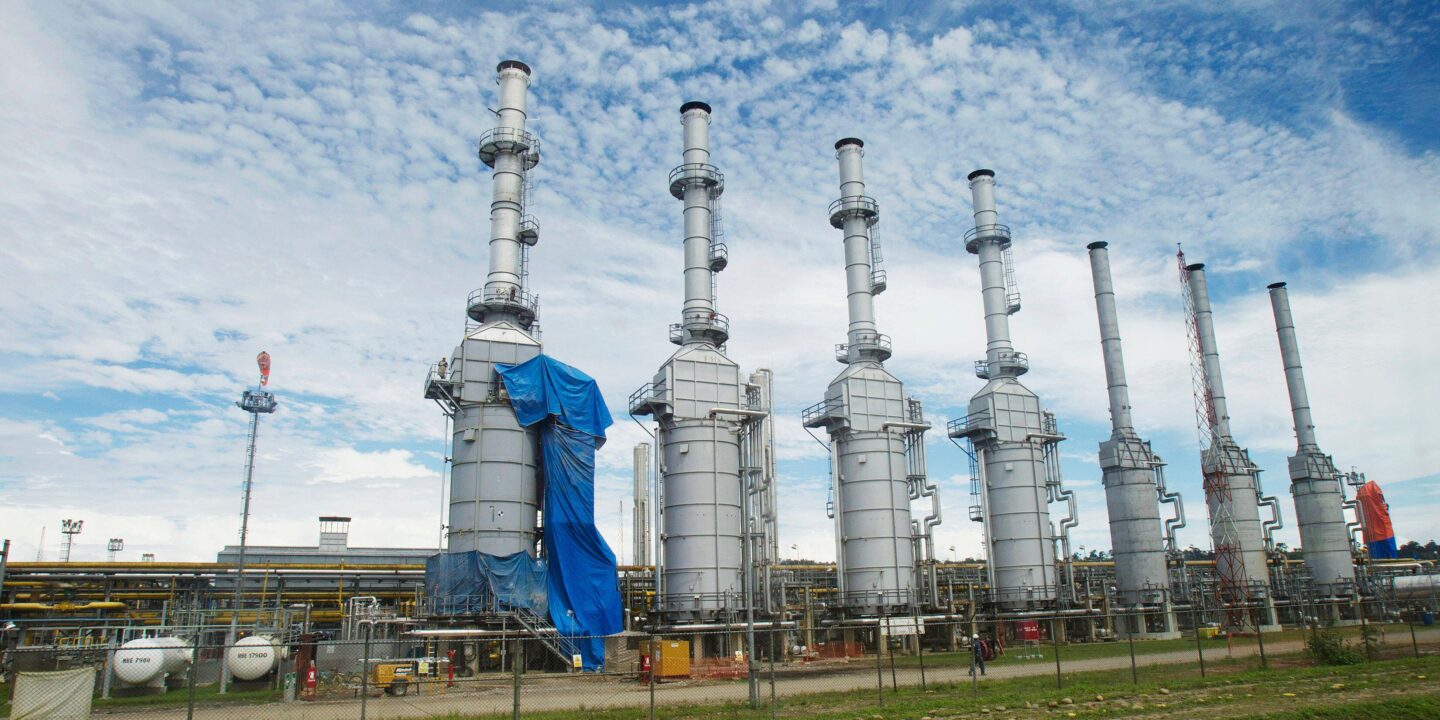
If such production is to be reached, further projects will need to be developed at the 30,000 km2 formation, which is already home to hundreds of wells and divided into blocks owned and operated by state-owned oil and gas firm YPF, in partnership with various international companies. The government hopes to exploit the deposits as much as is technologically possible, and has sought to subsidise fossil fuel companies through programmes such as the GasAR Plan, which was recently extended until 2028.
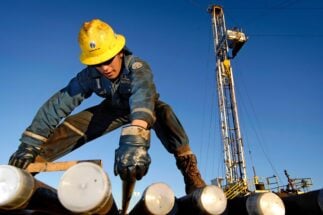
Wages on offer at Vaca Muerta are currently double the national average, attracting thousands of workers, mostly men, from across Argentina in the past few years, arriving into towns across Neuquén province and its eponymous capital city. The jobs, while well paid, are also highly risky, as evidenced by numerous accidents in recent years.
At a wellhead, the oil and gas equivalent of the coalface, the pay is between 300,000 and 400,000 pesos (US$1,800–2,400) a month, said Sebastián Cortez, manager of the Neuquén Chamber of Petroleum and Related Industries (CEIPA), which groups oil and gas companies in the province. Cortez said that he started out in such a role, and that “although the work is hard, the pay is incomparable”.
In 2021, the oil and mining sector in Argentina directly employed more than 84,000 people, according to the government’s Wage Dynamics report, not counting those in related services. Most of the oil and gas jobs are concentrated in Neuquén province.
When extraction started, Vaca Muerta employed 5,000 oil workers. A year and a half later, 3,500 had been dismissed. This situation of hiring then laying off is recurrent
Population growth in the province is more than double that of the country’s average. In 12 years, there has been an increase of almost 200,000 people, something the national media have dubbed “the Vaca Muerta effect”.
“They arrive without a place to stay,” said Vilma Castro, who works for the Neuquén city council. On Avenida Argentina, the main street in the city of Neuquén, it is common to see 10 to 20 people a day who’ve arrived looking for work, she said. “I’ve mostly seen people from [the provinces of] Formosa, Chaco, Salta – from the north. Generally they come alone, without family. Many arrive without knowing what to do. We help them.”
Among the cities with the highest population growth in the province are Rincón de los Sauces, Zapala and San Martín de los Andes. However, according to Castro, most of the people looking for work at Vaca Muerta settle in the provincial capital.
Trade unions and environmental organisations such as Observatorio Petrolero Sur (OpSur) complain that working conditions at the project are volatile and are pegged to the international price of oil, which makes workers highly vulnerable to fluctuations.
“When extraction at Vaca Muerta started, it employed 5,000 oil workers. A year and a half later, 3,500 had been dismissed. This situation of hiring and then laying off people is recurrent,” said Martín Álvarez Mullaly, a researcher at OpSur.
A ‘just’ energy transition?
At the recent COP27 climate summit, Argentina shared its strategy on how it plans to deliver on its climate pledge for 2030. Among the more than 250 measures listed in the document, the government makes explicit mention of an energy transition from fossil fuels, to be achieved by developing the renewable energy sector.

The government’s roadmap also incorporates the concept of a “just energy transition”. This refers to considering the equity and justice implications of moving away from fossil fuels – for example, the effects on currently employed oil and gas workers, who will have to be trained and provided with support to transition to jobs in cleaner industries.
A low-carbon economy in Latin America can generate up to 15 million new jobs and 1% net additional growth by 2030, according to a 2020 report by the Inter-American Development Bank. While jobs would be lost in livestock and fossil fuels, it’s been estimated that more would be added in renewables, agriculture, construction and forestry.
Achieving an energy transition “is not just about turning off the gas tap and that’s it,” said Enrique Maurtua Konstantinidis, an Argentine climate change consultant. But he is still confident that the “supply of jobs that a just transition would provide could be far greater than what Vaca Muerta provides today.”
“The government believes that in order for the country to move forward, it is necessary to have dollars. And those dollars are generated by selling commodities. Those commodities are: barrels of oil, gas and cows. These are three things that are not part of the climate solution,” Maurtua Konstantinidis added.
An energy transition is not just about turning off the gas tap and that’s it
Joaquín Etorena Hormaeche is a coordinator for the Partnership for Action on Green Economy (PAGE), a programme of the International Labour Organization that supports countries in their transition to green economies. For him, there are many variables that have to be considered when establishing the speed and direction of a just energy transition.
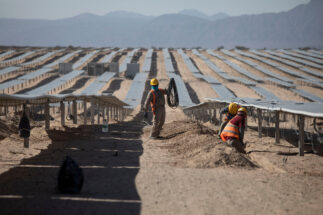
“We need to know what kind of jobs can be generated by different renewable energy sources. For example, wind and solar require, above all, jobs at the installation stage but after that the number of jobs decreases significantly,” Etorena Hormaeche said.
By 2018, there were over 8,800 people working in the renewable energy sector in Argentina, according to the latest figures disclosed by the national government, of which 8,329 were construction – and thus, temporary – jobs and 488 permanent positions.
In recent years, Etorena Hormaeche has been working with different players across sectors to encourage mutual dialogue about Argentina’s energy transition. “We work directly with three groups: workers, companies and the state,” he said. However, each group has a different idea as to what the energy transition should look like.
So far, the trade union sector’s priority has been job safety, especially considering the risky working conditions often found in the oil and gas sector. Some unions such as the Argentine Construction Workers’ Union (UOCRA) have started discussing what they are looking for in a just energy transition, but this is not the case for most workers’ organisations closer to the oil sector.
At COP27, the Trade Union Confederation of the Americas, a Latin American regional organisation of which UOCRA is a member, presented a statement laying out its position and asking to move forward with a “truly just transition.” The document addresses five areas: just transition in the region; mitigation and “carbon colonialism”; adaptation, loss and damage; finance; and social justice.
The document’s concluding paragraph provides food for thought: “Only when the climate crisis is addressed under the premise of climate justice will it cease to be an accounting and greenhouse gas emissions reduction problem, and can it then be tackled in its full magnitude, considering its social and historical dimension.”