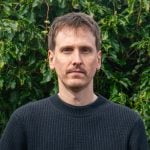
Tu Shuiping has lived in Argentina for a decade, since Chinese state contractor PowerChina came to the country and he became its general manager. During that time, the national subsidiary has expanded rapidly, working on numerous energy and infrastructure projects.
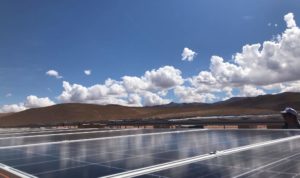
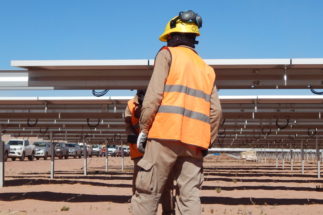
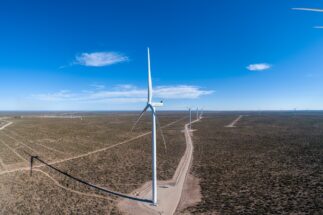
PowerChina is now the largest renewable energy contractor in Argentina, with five wind farms and six solar farms already built, including Cauchari, the largest in Latin America. The company currently has 12 more projects underway, worth a total of US$1.5 billion.
In this interview with Diálogo Chino, Tu Shinping describes PowerChina’s interest in Argentina and the reasons behind its expansion. He also highlights the growing link between the two countries and details some of the company’s current projects, including a controversial dam in Mendoza and a train line in Vaca Muerta.
Diálogo Chino [DC]: When and how did PowerChina’s interest in Argentina arise?
Tu Shuiping [TS]: It comes from 2011, when we at PowerChina were looking at renewable energy projects. We then expanded into other areas in the following years. Argentina is one of the largest countries in the region and we were always interested in working here. There are natural resources in abundance and a rich and large land. It is a country with many comparative advantages.
DC: After almost ten years in the country, what are the particularities of Argentina in the way it works compared to China?
TS: You have to be patient in Argentina. Some projects can be completed quickly but others cannot. You have to communicate with everyone, governments, communities and unions. It is not easy to reach an agreement with everyone. You have to be patient and have a good disposition. Argentina is very different from other countries.
DC: How do you assess the current economic context in Argentina?
TS: We have to wait until the debt issue is over. But if the economy does not grow then we will be in a difficult situation. Argentina has to double its export capacity. The country needs more and more dollars that it does not have and ends up using money from other countries. Argentina cannot be changed in the short term.
DC: How difficult is it to get financing for projects in Argentina?
Any logical or reasonable business will have financing. Argentina has defaulted several times and that makes financing difficult. But if the government resolves the debt issue and if it manages to grow, it has a high probability of having more financing again. We are now focused on working on reasonable projects, otherwise we have to put in a lot of our own resources.
DC: What did the recent change in government mean for the company?
TS: The new government has a pragmatic attitude. It is not talking about things that are up in the air. It has more patience. They know Argentina’s problems and how people think. They are people from all walks of life. If a government has officials who were born with money and better education, it does not understand how people think.
The project was a dream come true. It is at an altitude of 4,000 metres in an area where there is practically nothing
DC: How do you characterise the relationship between China and Argentina?
TS: They are natural partners. Argentina has agricultural capacity and potential that China needs, while China has industrial capacity and infrastructure that Argentina lacks. If the two countries come together the benefit is mutual.
DC: PowerChina is the largest renewable energy contractor in Argentina. How did you come to have so many projects?
TS: We have the capacity to work on all types of energy and infrastructure projects, not just renewables. But it is in this sector that there has been the most investment in recent years. Local companies do not have as much advantage in renewables so we enter with an advantage. It was strategic business planning.
DC: You participated in the construction of Cauchari, the largest solar energy park in Latin America, in the north of Argentina. Is there a possibility of further expanding the project?
TS: The project was a dream come true. It is at an altitude of 4,000 metres in an area where there is practically nothing. Now we have a plan to expand the solar park by 200MW but we are waiting for the order from the national government. It depends on their interest.
DC: PowerChina aims to build the Portezuelo dam in Mendoza. But the project is surrounded by questions from communities about local impacts. Is it feasible to move forward under these conditions?
TS: We presented a technical proposal and it is advancing. Hopefully it can be made concrete. The environmental impact study shows that water resources will not be affected. We have to negotiate with the provinces that are opposed and come to an agreement. Everything depends on that. Technically it is a good project.
DC: PowerChina’s interest in building a train line in Vaca Muerta was also recently mentioned. What would this project look like?
TS: We are interested but we have to look for financing. It would cost between US$1.2 and US$1.5 million. It would allow efficient transport from Vaca Muerta to the port of Bahia Blanca. We have to do it as soon as possible. We are now working on the technical side and if the project is successful, financing will be sought from China or multilateral banks.
DC: In what other sectors would you like to advance in the future?
TS: We have the capacity for many things as a company. We always follow the country’s strategy and planning, we do not choose one-off projects. From there we manage to grow. We don’t make anything a priority. If Argentina wants railways, we go there, for example. We maintain our own small team for business development and when we have a project we work with local partners.