One of the keys to understanding what countries are doing to counter the climate crisis is to look at where their electricity comes from.
Depending on its origin, the energy we use is either cleaner or dirtier. For example, a power plant that burns coal to produce electricity releases more greenhouse gases (GHGs) into the atmosphere than a solar or nuclear plant.
Although the countries of Latin America and the Caribbean are not among the largest global contributors of emissions that cause climate change, the region is one of the most vulnerable to extreme weather events such as droughts or floods and so are planning cuts.
This means that countries, their governments and societies, must move forward in an energy transition that favours electricity generated by renewable sources. Water, sun, wind, geothermal or biomass should be prioritised over energy derived from fossil fuels such as oil, natural gas and, above all, coal.
Costa Rica and Uruguay have grids that, several months of the year, are 100% renewable
This transition to cleaner sources of energy means that a number of infrastructure projects designed to extract, process and transport fossil fuels will eventually have to be closed or converted in order to meet emissions reductions targets and avoid the worst-case climate scenarios. These facilities have been referred to as ‘stranded assets’ in climate finance and energy planning circles, as countries will need to start calculating how economically and environmentally profitable it is to keep them in operation over the long term.
With this in mind, Diálogo Chino presents a unique map that plots all of Latin America’s thermoelectric power plants and that details, where information is available, their energy capacity, status and financial backers. The data we have compiled is intended to serve as a reference point for those hoping to understand how the countries of the region are progressing in the energy transition.
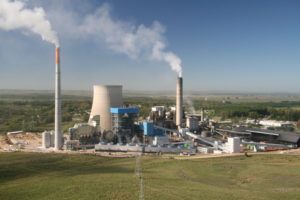
Thermoelectric energy, which is generated by the heat produced from burning fossil fuels, continues to be the most widespread in Latin America and the Caribbean, with almost 500 plants throughout the region. In at least 14 countries, thermal power plants were the main source of electricity in 2015, according to data from the Latin American and Caribbean Electrical Information System (Sielac) run by the Latin American Energy Organization (Olade). In almost all others it was the second source.
In some cases, these thermoelectric plants are an alternative to the other major energy source in the region: Water. Hydroelectricity is the dominant source as a share of the energy mix in seven countries and second in at least another ten. Hydroelectric generation is cleaner (leaving aside other socio-environmental impacts and conflicts with constructors in many countries on the continent). This is because the capacity of hydropower plants to generate energy depends on the water levels of rivers and dams. In times of water stress, which have become more frequent in several countries due to climate change, this has meant turning on the thermal power plants.
“As we move forward with other solutions, the region must ask itself how to strike a balance between moving towards cleaner energy grids and maintaining the thermoelectric plants needed to provide backup power in countries,” says Giovanni Pabón, a coal researcher and former coordinator of the Climate Change Mitigation Group at Colombia’s Ministry of Environment.
“Some are already finding it. Chile decided to include biomass over coal in its long-term vision, to keep the ones it already has and explore other renewable alternatives. Both Costa Rica and Uruguay have grids that, several months of the year, are 100% renewable”.
There are also differences between the various fossil fuels used to generate electricity. Many thermoelectric plants have been favouring or converting to natural gas, which generates fewer emissions than coal, is abundant in the region and is ‘bridging fuel’ that can assist in the transition.
274
thermoelectric plants in Latin America run on natural gas
In our mapping we found at least 274 plants that run on natural gas as the main fuel, and 75 that still run on coal.
The cost of this form of energy production is high. Emissions from all thermoelectric plants in Latin America over their lifetime – something that industry observers call ‘committed emissions’ – total 6.9 gigatonnes of carbon, according to a study by the Inter-American Development Bank (IDB) last year. Other plants planned, approved, or under construction would add a further 6.7 gigatonnes and emit a combined total of 13.6 gigatonnes, putting the region well above its mitigation commitments under the Paris Agreement.
In fact, our mapping shows that at least 100 of the thermal power plants active in the region were inaugurated in the last decade, including 10 coal-based ones.
This shows that, although most countries have been making commitments on how to cut emissions in the electricity sector, in practice they are still betting on thermal energy over other options such as solar, wind or hydro, which went from accounting for 58% of regional electricity generation in 2009 to 50% in 2016).
This map shows many of the power plants that Latin American and Caribbean countries – rich in fossil fuel deposits but highly vulnerable to the effects of climate change – will have to consider at what point to cut their losses on them and favour greener alternatives.
Sources
We built this database by cross-checking information from state sources, operating companies, industrial guilds and press releases. Some of the more complete records include: Secretaría de Energía y Compañía Administradora del Mercado Mayorista Eléctrico Sociedad Anónima (Cammesa) in Argentina, Ministerio de Energías in Bolivia, Agência Nacional de Energia Elétrica (Aneel) in Brazil, Sistema de Información Eléctrico Colombiano (Siel) and Asociación Nacional de Empresas Generadoras (Andeg) in Colombia, Ministerio de Energía and Coordinador Eléctrico Nacional in Chile, Corporación Eléctrica del Ecuador (Celec) and Ministry of Energy in Ecuador, Energy Regulatory Commission, Federal Commission of Electricity and Secretariat of Energy in Mexico, Administración Nacional de Electricidad (Ande) in Paraguay, Ministry of Energy and Mines in Peru, Dirección General de Energía y Administrador del Mercado Eléctrico (Adme) in Uruguay, and Corporación Eléctrica Nacional (Corpoelec) and Transparency International in Venezuela. Empresa Nacional de Energía Eléctrica en Honduras, Ministerio de Energía y Minas de Guatemala, Ministerio de Energía y Minas en Panamá, Instituto Costarricense de Electricidad, Superintendencia General de Electricidad y Telecomunicaciones en El Salvador
Reporting by Emilio Godoy, Suchit Chávez, Tatiana Pardo Ibarra, Jeanfreddy Gutiérrez, Leonardo Coelho, Karina Godoy, Damián Profeta and Andrés Bermúdez Liévano, with support from Rob Soutar, Fermín Koop, Alejandra Cuéllar and Manuela Andreoni. Map designed by Julia Janicki.