


China’s announcement that it would aim for carbon neutrality by 2060 made a splash at the UN General Assembly in September, with Japan and South Korea making similar commitments in the weeks that followed. But questions remain about what this domestic policy shift will mean for China’s overseas power investments.
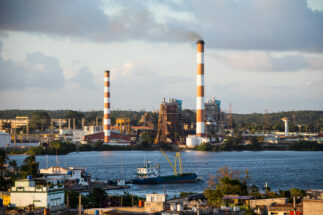
A new database we have compiled at Boston University’s Global Development Policy Center highlights how many of these investments are in fossil fuel-based power plants, and China’s plans to build more.
777
power plants around the world have received Chinese financing
Collecting data on power plants outside China that have received financing from Chinese policy banks or foreign direct investment from Chinese companies, we counted 777 power plants in 83 different countries. This total includes plants that are operational, under construction and in planning, and together represents 186.5 gigawatts (GW) of generation capacity.
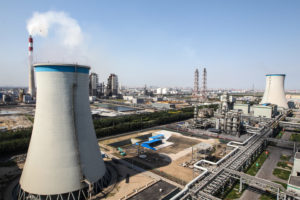
Coal-fired plants form the largest share of these investments by capacity, at over 74 GW, or about 40% of the capacity tracked in our dataset. We estimate the fossil fuel plants in our dataset are currently generating around 314 million tonnes of CO2 emissions per year. The plants under construction or in planning represent another 80.3 GW of capacity. If they all come online by 2030, they will add a further 211 million tonnes of CO2 annually.
Assuming no retirement of the currently operating fossil fuel plants in our dataset by 2030, their cumulative CO2 emissions over the next 10 years would reach almost six billion tonnes of CO2. This would use up 1.3% of the global carbon budget – the CO2 emissions that can enter the atmosphere for us to retain a 66% chance of limiting global warming to 1.5C. Since many coal-fired power plants have lifetimes of 30 to 40 years, this is likely an underestimate of the effects on a longer-term carbon budget.
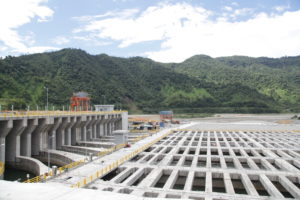
However, the types of power projects financed by China may be shifting. Over the past decade, annual installation of clean energy with Chinese investment and finance has generally been on the rise. Looking at projects in our database that are under construction or planned from now until 2033, wind and solar represent around 12% of this capacity, and the share of hydropower is higher in future capacity (33%) than for currently operating plants (27%). But the distribution of these future projects is still far too heavily centered on fossil-based generation to be compatible with the Paris Agreement.
China’s renewable energy companies often face barriers in going overseas. They tend to be smaller and privately owned, compared to the large state-owned enterprises that have decades of experience in developing traditional power plants in foreign countries.
Although wind and solar account for a small share of the total generation capacity of Chinese investment overseas, they form a higher share of individual projects. Renewable projects are typically much smaller in capacity than coal, gas and hydropower plants.
In fact, wind power projects account for 29% of all projects tracked in our database, and solar projects represent 17%. It is possible that despite their smaller size, the relatively larger number of renewable energy projects presents an opportunity for learning and scale-up on the part of Chinese policy banks and foreign direct investors.
Furthermore, the majority of Chinese overseas investment in renewable power projects comes from foreign direct investment, rather than China’s policy banks. One bright spot is the private Chinese company Canadian Solar, which is China’s tenth largest investor in terms of foreign direct investment in overseas capacity. The other companies in the top ten are state-owned enterprises and include China’s biggest power companies.
Analysing these investment patterns can shed light on future policy mechanisms to encourage Chinese overseas investment in renewable energy. For example, why has Canadian Solar been so successful? And what has enabled the relative proliferation of Chinese investment in renewable energy in Latin America, compared to more coal-heavy regions like South and Southeast Asia?
In order to align domestic climate targets and China’s global climate footprint, Chinese leaders should also focus on designing policies that encourage overseas investment in renewable energy. Our data analysis and work mapping China’s overseas energy projects can help these policymakers, along with researchers and clean energy advocates around the world, to identify key trends in China-backed global power generation and to steer decision-making towards a cleaner energy future.

![Official figures state around 73.5% of the Madhupur Saal Forest land had been converted to different commercial purposes. The lucrative profit of mono-crop cultivation has led people to clear forest lands for banana and pineapple cultivation [image by: Prakash Bhuyan]](https://dialogue.earth/content/uploads/2020/11/13-300x240.jpg)