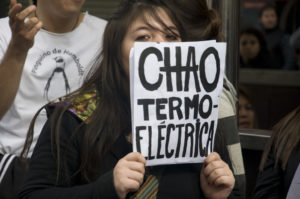
At the end of June, Chile’s lower house approved a bill baninng the installation and operation of coal-fired power plants nationwide by 2025. The initiative still requires the senate’s approval but has already raised questions about grid instability and the replacement of coal with expensive and high-polluting diesel.
In 2019, the Chilean government pledged to close all its coal-fired power plants by 2040. Since then the timeframe has been shortened and the transition accelerated.
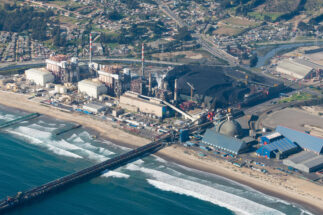
The latest change was announced on July 6. It involves the early decommissioning of four coal-fired plants – the Angamos 1 and 2 stations in the northern Mejillones region and Ventanas 3 and 4, in the central Puchuncaví region. All are owned by AES Andes and are located in highly industrialised areas.
It is irresponsible what was approved in the lower house, because neither technical recommendations nor background studies were considered
While the original plan involved the closure of eight plants by 2024 and the remaining 20 by 2040, the new modification proposes the cessation of operations of 65% of plants by 2025.
The National Electricity Coordinator and the National Energy Commission have yet to approve the new schedule. Meanwhile, experts are concerned about congress’ calculus.
“It is irresponsible what was approved in the lower house, because neither technical recommendations nor background studies were considered,” says Álvaro Lorca, an electrical engineering academic at Chile’s Catholic University. “Only a really basic analysis was made, adding up the megawatts, but that is not enough.”
According to Lorca, it is not a question of keeping coal-fired plants running but, but closing them in the right way: “This requires a lot of investment, and if it is done the way it is proposed in the project, we are all going to end up paying for it because we are not a rich country.”
Renewables versus coal in Chile
At the beginning of June, Chile inaugurated the Cerro Dominador, a solar thermal power plant that combines concentrated and solar PV, the first anywhere in Latin America. Located 60 kilometres from the northern city of Calama, more than 10,000 mirrors transfer the heat from the sun’s rays to molten salts and then to water, producing steam that generates 210MW of energy.
Although this is the latest addition to one of the world’s fastest growing clean energy matrices, it is still insufficient to replace coal-fired electricity. Chile’s grid is 25,000 MW, 25% of which is generated by renewable energy sources, mostly solar and wind.
“We estimate that if 100% of coal-fired plants are retired by 2025, we will probably have the electricity we need, on the verge of rationing, but to achieve that we will have to switch to diesel engines, which are as polluting as coal, if not more so, and which are also much more expensive,” sources at the energy ministry told Diálogo Chino.
Carolina Urmeneta, head of the environment ministry’s climate change office, agrees. “We are concerned that we are exchanging one fossil fuel for another,” she says.
Chile has committed to becoming carbon neutral by 2050, in line with the Paris Agreement. Yet, none of the proposed pathways account for the increase in diesel for electricity generation. “It’s true that conditions are always changing, but it’s about making the best cost-efficient decisions,” Urmeneta says.
As much as the push for non-conventional energies, such as solar and wind, has allowed the government to far exceed its target of 20% of generation from these sources by 2025, plants are not close to the major demand centres.
“That’s why new transmission lines and battery systems are needed,” says Urmeneta.
There is another, even more technical, but equally crucial problem to ensure the stability of the system. Coal-fired power plants currently provide stability to the system because of the way they work, according to Álvaro Lorca.
The plants operate with a giant cylinder that spins constantly. But if there is a problem, if generation stops, it continues to spin, helping the system to be more stable. As it spins by inertia, the cylinder continues to produce energy, which provides a backup for the system.
“If we want the country’s energy system to be as secure as it is now with coal-fired power plants, we have to invest heavily in new energy sources,” warns Lorca. These could be in batteries or other technologies, or repurposing coal-fired power plants that currently operate, but that solution remains some way off.
Achievable goals
Closing all coal-fired plants by 2025 is an ambitious challenge, but not impossible, says Felipe Pino, a lawyer at Chilean NGO Fima, which oversees the Just Transition project.” It should not only include security, but also energy sovereignty,” he says.
Pino points out that Chile currently generates more electricity than it needs and exports the difference. Therefore, if exports were to be reduced, Chile could achieve the early closure of coal-fired power plants. However, he says the government has not properly pursued this.
Moreover, despite large investments in renewables and surplus production, many suffer from energy poverty in Chile Pino says. “Supply does not reach all people equally. Ensuring it and also ensuring the just transition is what is missing for a real decarbonisation plan,” he says.
For Álvaro Lorca, 2025 is an irresponsible target, but 2030 is more sensible. “Coal-fired plants are an environmental disaster both for the planet and for the localities [so-called sacrifice zones]. In the face of this, emission-free technologies are the solution, but this is quite a dramatic transition and it is not going to happen overnight,” he says.
The transition must be both responsible and transparent about the costs involved.
Beyond the science, the technical aspects and the political will, Chile’s decarbonisation process faces another problem. Climate change, especially the mega-drought, which has been wreaking havoc in much of the country for more than a decade, has hydroelectric generation at historic lows. Only 5% of all years on record have been drier than 2021.
In July, reservoir and run-of-the-river hydro plants’ contribution to the electrical grid did not exceed 10%, instead of the usual 30%, forcing coal-fired generation to make up the shortfall with more than 40%. Demand has also increased compared to 2020, because many cities are not under quarantine, as they were a year ago. It is projected to grow 5% this year.
Although the decarbonisation plan was updated to account for the pandemic and is still achievable by 2040, uncertainties remain, according to Urmeneta: “The ideal is to be able to reinforce the most cost-effective measures and adapt actions.”