The case for immediate climate action could not be more stark. Global temperatures have already risen by 1.1°C and over 3 billion people are highly vulnerable to the effects of a warming planet, according to the Intergovernmental Panel on Climate Change (IPCC). We need to immediately adapt to the impacts of a changing climate.
We also have to limit warming as close to 1.5°C as possible, the main goal of the Paris Agreement. Global emissions must peak very soon, if not right away, fall by more than 40% by 2030, and reach net zero around 2050. The more we delay action, the more difficult it will be to secure a sustainable and liveable future for all.
Governments at present are rightly focused on imperative concerns, such as the Covid-19 pandemic and recovery, the war in Ukraine, disruptions to global value chains, rising commodity prices and inflation. Can we afford to address climate change goals?
A new IDB study finds that in Latin America and the Caribbean, achieving the Paris Agreement goals would require realigning 7% to 19% of GDP – up to US$1.3 trillion – worth of private and public spending every year. This is not a net cost: climate action would not only be much cheaper than the costs of inaction but would also bring substantial benefits. Moreover, climate action is not only about spending more. It is mainly about spending differently.
The results of our study lend perspective to the role of global climate finance and domestic policy reforms that can help governments finance climate action. Developed countries have pledged US$100 billion of climate finance to developing countries every year. They must urgently deliver on this promise. These flows, however, only represent a fraction of total needs. The bulk of the effort will come from rethinking institutions, planning and regulations to redirect existing public and private financial flows towards climate solutions.
Rethinking investments from day one
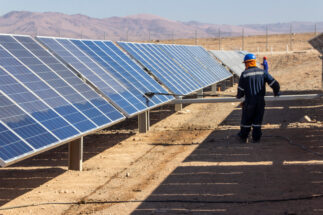
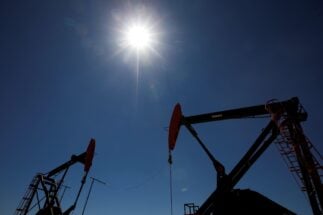
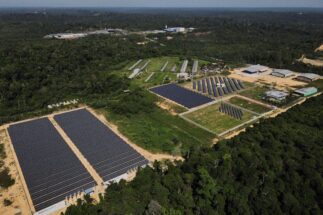
There is a global consensus that effective solutions to reaching net-zero emissions exist. These include investing in renewable energy instead of fossil fuels and switching to diets that require less space to produce food and help reduce pressure on ecosystems. There are also abundant adaptation solutions, including building infrastructure away from flood zones and choosing crops that are more resistant to heat and drought.
15million
net new jobs could be created in Latin America and the Caribbean by 2030 as a result of decarbonisation
Many of these solutions carry net economic benefits. The return on resilience can reach as high as 400%. Decarbonisation can also boost our economies. It can increase GDP by 1% by 2030 thanks to financial savings in energy, building and transport, health and productivity gains, as well as increased ecosystem services. These solutions could also create 15 million net new jobs by the end of the decade.
To adopt these solutions, we must consider climate goals at the design and planning stages. Reducing emissions does not mean building a natural gas plant and then spending more on a filter. It means prioritising wind or solar from the start. Similarly, building a new road further from the coast can be much cheaper than spending more to build protection against sea-level rise. In developing countries that are currently building infrastructure to provide basic services for the coming decades, climate action and development are two sides of the same coin.
Humans and institutions are capital
Adapting to climate change is also linked to social spending. The pandemic has shown how the socioeconomic impacts of external shocks depend greatly on whether social protection programs are in place to help affected households, especially the poorest. The same is true for climate shocks such as cyclones or droughts.
Social spending is also crucial to ensuring a just transition. Moving to greener technologies will negatively affect certain groups, such as workers at coal power plants. Providing decent unemployment benefits, education and training opportunities will make a big difference in ensuring no one is left behind. Here too, development and climate spending are complementary.
Plan to catalyse domestic and international finance
Where can governments find 7% to 19% of GDP for climate action? Our paper explores green fiscal reforms and the removal of fossil fuel subsidies. These actions together can free up to US$200 billion per year. Governments will also need to manage the fiscal risks associated with climate goals. Oil and gas exporters could lose up to $3 trillion by 2035 as the global energy transition erodes royalties. Excise taxes on gasoline and diesel, used in countries like Costa Rica, will also need to be reformed as the number of electric vehicles increases. A long-term tax strategy can help identify ways to replace these revenues.
climate action and development are two sides of the same coin
Regulatory and institutional reforms are the essential piece of the puzzle. Take cycling: For those who work close to where they live, biking can be cheaper than commuting by car. In cities, protected bike paths can be much cheaper than car lanes. Biking also comes with health benefits and reduces congestion. Yet, regulations and institutions might work against biking. Local authorities might have a mandate to build roads, but not to build bike lanes or think about connectivity. Regulations may require the private sector to provide parking space for office buildings, not for cyclists. Changing city planning and requirements for office and home developers in this context is essential. It can be a simple way to redirect existing finance flows towards climate solutions.
Redirecting existing spending critical for reaching goals
Dozens of changes like these are needed. Governments can come up with comprehensive climate strategies that delineate the transformations needed in each sector and design roadmaps to remove the barriers preventing public and private financing of climate action. All ministries can play a role. Finance ministries, for instance, can help strengthen inter-ministerial coordination and liaise with multilateral development banks that can provide technical assistance and finance part of climate action.
None of this will occur in a vacuum. All countries must face the climate crisis while addressing other priorities. The pandemic and the war in Ukraine, however, show that governments can act decisively during emergencies. The climate emergency should be no exception.
This article originally appeared on the Inter-American Development Bank’s blog. It is republished here with permission.