China’s relationship with Latin America looks set to undergo a period of reconfiguration rather than retreat in 2026.
Although China remains a key partner for most of the region, direct lending and investment has slowed and heightened trade tensions between China and the US have also tested relations. The result is a more cautious relationship, marked by selectivity and an increasingly competitive international context, experts told Dialogue Earth.
Latin American countries maintain their role as suppliers of strategic resources for the Chinese economy, with minerals, soybeans and other agro-industrial products, as well as energy, of vital importance. The structure of this relationship is not new, but it takes on renewed relevance in a global landscape marked by the acceleration of energy transitions, the search for food security, and geopolitical tensions between China and the United States.
“China remains interested in Latin America for the same fundamental reasons it was a decade ago: resources and markets,” Margaret Myers, managing director of the Institute for the Americas, China and the Future of Global Affairs at Johns Hopkins University, told Dialogue Earth.
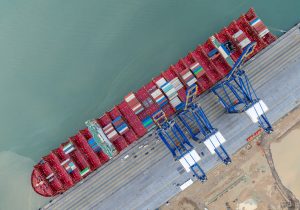
Trade data reflects this continuity. China has established itself as the main trading partner of countries such as Brazil, Chile, and Peru, while the region at large is importing a greater quantity of Chinese-made goods, from consumer goods to industrial and technological equipment. For many Latin American countries, this dynamic reinforces a dependence on raw materials rather than value-added exports and deepens their trade deficits.
From an environmental perspective, the demand for minerals critical to the production of batteries, electric vehicles and renewable energy has increased the value of known deposits and accelerated the exploration of new projects in Latin America. But this has also given rise to social and environmental tensions with communities in mineral-rich areas. Lithium in the Southern Cone and copper in the Andes have become strategically important not only for China but for the global economy as a whole.
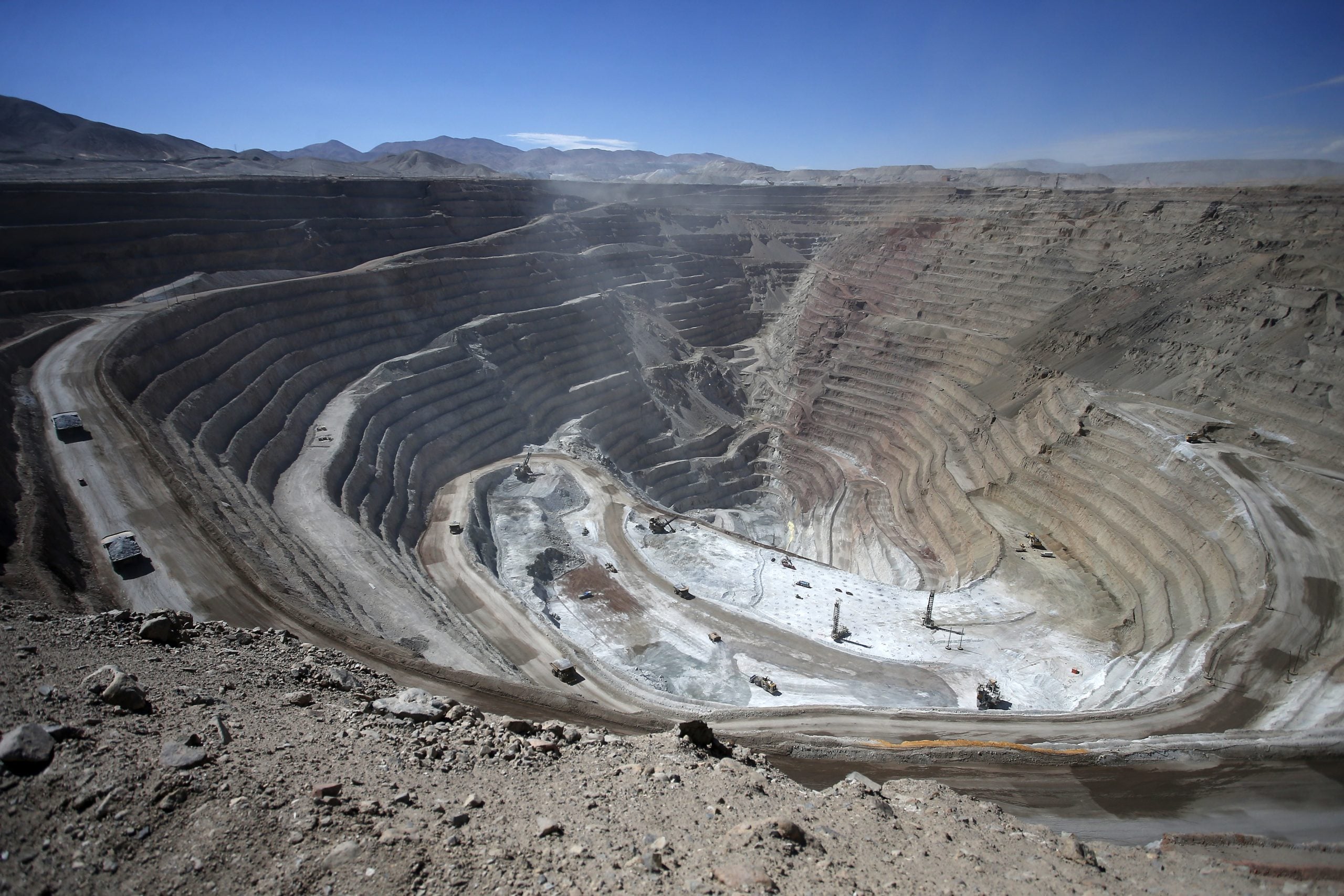
“The energy transition is intensifying competition for resources that are already generating social and environmental tensions in the region,” said Parsifal D’Sola, founder and executive director of the Andrés Bello Foundation, a Colombia-based think-tank focusing on China.
Less financing, more strategic focus
The contraction of Chinese financing to Latin America is one of the clearest features of the current state of the relationship. Data from Boston University’s Global Development Policy Center confirms a trend that has been consolidating since the end of the last decade: Chinese loans to countries in the region – primarily from the country’s two development finance institutions, the China Development Bank and Export-Import Bank – have declined after peaking in the mid-2010s. In recent years, the volume of new loans has been limited, though a small upturn was recorded in 2024. Meanwhile, debt payments have continued.
This retreat does not, however, mean a total absence of Chinese financing, or a wider abandonment of its relationship with Latin America. At the forum between China and the Community of Latin American and Caribbean States (CELAC) held in Beijing in May, China reaffirmed its commitment to the region and announced new lines of financial support and cooperation, highlighting shared development goals. The emphasis was placed less on bilateral loans and more on cooperation mechanisms, financing for specific projects, and political coordination.
The change is also reflected in official discourse. In its most recent policy document on Latin America and the Caribbean, the Chinese government reaffirmed the importance of the region as a key partner, but placed the emphasis on “high-quality” cooperation, with greater emphasis on sustainability, technological innovation and alignment with the energy transition. This is its third policy paper on the region, but unlike previous iterations, the text devotes more space to sectors such as clean energy, electromobility, the digital economy, telecommunications and smart infrastructure.
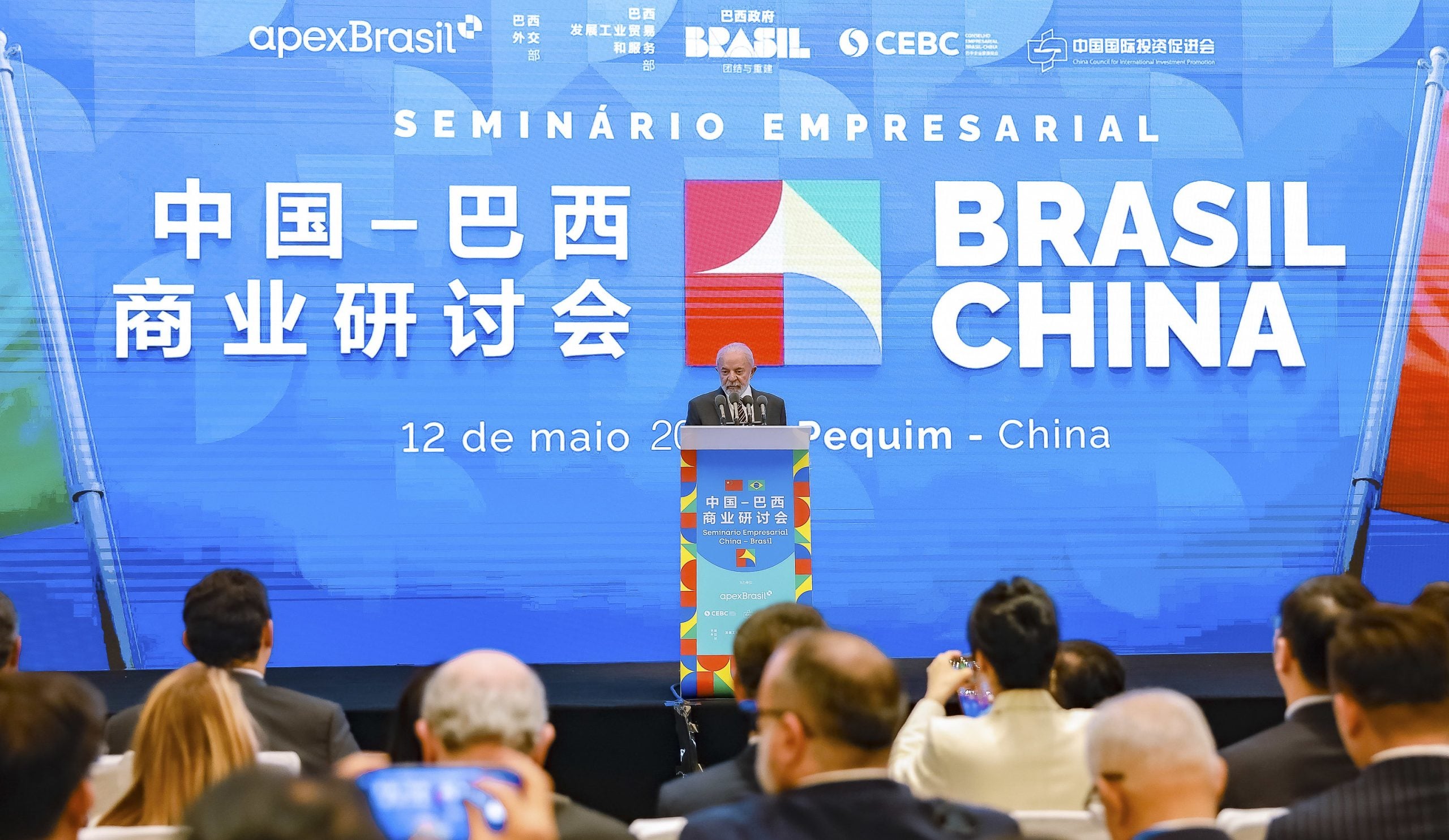
In practice, this reorientation is translating into more targeted investments and a greater presence of Chinese companies through equity capital, acquisitions and partnerships with local players, experts told Dialogue Earth.
For Rebecca Ray, a researcher at the GDP Center, this pattern is particularly visible in Brazil, where she says electric vehicles have become “a top priority” for investment. “There are no more powerful partners in this area than China, which has shown immense interest in collaborating with Brazil,” she added. At the same time, Ray told Dialogue Earth that the broader outlook across the region is mixed, and that in countries such as Mexico, friction around such investments and trade may arise, linked to both the country’s nationalisation of its lithium resources and trade tensions with the United States and China over tariffs.
Critical minerals are central to this new phase. Lithium, copper, and even rare earths are the focus of investments and agreements aimed at securing the supply of key inputs for China’s battery, electric vehicle and renewable energies. According to the Boston University report, although the total volume of Chinese financing has decreased, the economic relationship has become more diversified, with a growing role for individual companies as the protagonists and less prominence for the Chinese state as a direct lender.
“Looking ahead to 2026, the drivers will be multidimensional: trade and investment, technological cooperation and energy,” Jorge Malena, director of the Asian Studies Committee of the Argentine Council for International Relations (CARI), told Dialogue Earth.
Geopolitical competition
Beyond changes in the volume or sectors of investment, a key variable affecting China’s relationship with Latin America today is the intensification of competition with the United States. In 2026, the relationship between Beijing and Washington is likely to remain on unstable ground, with effects also likely to be felt in the region, which many in Washington view as its own backyard. Sectors such as trade, technology, infrastructure and security have been sources of tension, transforming economic decisions into strategic ones.
For Francisco Urdinez, a researcher and director of the Impacts of China in Latin America and the Caribbean (ICLAC) research group, the recent Chinese policy document on Latin America “is a good guide that shows China’s commitments and values to the region, with a strong emphasis on multilateralism and a rhetoric of horizontality, which presents the relationship as South-South”.
However, he warned that this message is impossible to read without taking the US into account. “The return of the United States to the region is driven by the idea of regaining quasi-imperial hegemony over the Western Hemisphere, and that implies, explicitly or implicitly, removing China from Latin American space,” he said.
The China-US competition will enhance strategic polarisation, which will offer opportunities to governments in the regionJorge Malena, director of the Asian Studies Committee of the Argentine Council for International Relations (CARI)
In this context, he suggested that any Chinese advance in strategic sectors may be interpreted by Washington as interference in its sphere of influence. “Everything China does in the region can be read as a threat, and that opens the door to pressure to question projects, break ties with Chinese banks or reduce trade dependence,” Urdinez said. The tension is no longer just about large infrastructure projects, but also about more specific decisions related to telecommunications, data, energy and technology, he argued.
Myers said countries in the region will find it “increasingly difficult to avoid choosing sides” as the dispute intensifies. “The relationship between the United States and China is not in repair, it is in flux, and it can go in many directions,” she said. In that context, she added. This will be particularly important when it comes to projects the United States considers strategically important, “such as a telecommunications network, a space facility or a waterway”, she added.
Key political swings in several Latin American countries will also test this dynamic.
In Chile, following the recent victory of the hard-right president-elect José Antonio Kast, there has been no suggestions of a break with China – its top trading partner and destination for a significant share of its exports – but his incoming government could harden its political alignment with the United States. In Colombia, uncertainty about the direction of the next government raises questions about the continuity of its rapprochement with China, seen during the current administration of Gustavo Petro. In Brazil, regardless of electoral cycles, the relationship with China appears today as a structural pillar, especially in sectors such as energy, mining and electromobility. In Venezuela, the recent imprisonment of former president Nicolás Maduro by the United States could mean constraints for China’s engagement with the country.
“The China-US competition will enhance strategic polarisation, which will offer opportunities to governments in the region,” said Malena. “In infrastructure, technology and energy, we would see financing alternatives, disputes over standards and flagship projects that will condition the alignments and strategic autonomy of Latin American states.”