The world’s energy system is undergoing a transformation. Last year, renewable energy became the largest source of installed capacity in the world and Bloomberg Energy Finance estimates that by 2040 electric vehicles will account for 35% of car sales. Furthermore, the Shell’s CFO said he expects oil demand to peak before oil supply, with this occurring within 5-15 years. This would undoubtedly have implications for the oil market.
This expansion of clean energy and transport is only set to ramp up following the Paris Agreement on climate change, in which governments decided to limit global temperatures to well under 2C, and to strive for 1.5C rises. The deal aims for net zero emissions of greenhouse gases (GHG) globally in the second half of this century.
Latin America’s oil producers feel the pinch
The drop in oil prices has already impacted the exports and fiscal balances of the region’s producer countries. A country’s exposure to this changing oil market is a function of both the strength of its non-oil related industries and its position on the oil production cost curve. The relative effects are determined by the level of oil dependency which varies across Latin America. Venezuela is the most vulnerable to external shocks since crude accounts for 95% of its total exports, nearly half of its total fiscal revenues and acts as a major source of foreign exchange. Whilst less vulnerable than Venezuela, Ecuador, Colombia, and Mexico have not escaped unscathed from the plummeting prices.
At present, declining Latin American oil revenues have principally been a function of supply and demand in the oil market. However, the Paris Agreement on climate change may introduce another factor into the oil price equation, which might have a disproportionate impact on Latin American oil exporters.
Technology innovation and increasing efforts to avoid dangerous climate change and reduce air pollution will suppress global demand for crude oil, either through taxation or regulation (including carbon price instruments), that benefit alternative low-carbon energy sources. Norway, for example, already announced this year an outright ban on petrol powered cars by 2025. This implies that only the oil producers with the lowest cost base will be able to continue production on an economically viable basis. Even though the Organization of Petroleum Exporting Economies (OPEC) recently agreed to cut oil production in an attempt to push prices up (with some success), this is predicated on non-member countries such as Russia doing the same. This is not guaranteed. Nor is it clear that given the current economic and political landscape any country within OPEC will find be able to bear the pain as a ‘swing producer’ – producers who attempt to stabilise prices by increasing or decreasing their output. Furthermore, the emergence of US shale and other players means OPEC can no longer hold sway over global production in the way it used to and any price rise will likely be short-lived.
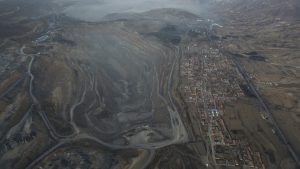
This is particularly critical for oil producing countries in Latin America, as the majority of both their current oil production and their oil reserves are made of heavy crude oil. Turning heavy crude oil into usable oil products is an extremely energy intensive activity that requires huge industrial facilities and colossal investments. Any kind of carbon price regimes in individual countries and/or tighter climate regulations would likely discriminate against heavy crude – as well as other energy-intensive forms of oil extraction such as tar sands – to the benefit of lighter crude such as that found in Saudi Arabia. Indeed, even under the current regime, with no carbon pricing, Latin America’s heavy crude already lags behind other types of oil in industry cost curves.
Uncompetitive oil
“Stranded assets” are a likely consequence for Latin America under these conditions. It is therefore high time to get the right set of policies to make the transition away from a reliance on oil exports. As the economic risks for oil producers rise, financing investments will be more challenging. Furthermore, the New Climate Economy 2016 report estimates that in order to transform the energy sector to make it compatible with global average temperature rises below 2C, investment in oil, coal and gas must decrease by about one third by 2030. Under this scenario it is difficult to justify further investments in heavy crude oil extraction.
Reliance on fossil fuels is not a sustainable engine for the economy in the 21st century. Latin American countries may have decisions taken out of their hands as the sector’s high production costs make it uncompetitive. This exposure could be more acutely felt in Latin America since oil production and refining in many countries in the region is dominated by state oil companies. This has clear policy implications. From the standpoint of individual governments, privatising oil production to limit fiscal exposure may make sense. What’s certain is that further investment in processing heavy crude would appear to be at odds with the wider thrust of the Paris Agreement.
There are many good reasons to diversify an economy away from fossil fuel exports, including those which have little to do with either climate change or the dynamics of the oil market. However, the combination of these two factors means that oil production in Latin America is likely to feel the effects of the energy revolution underpinned by the Paris Agreement faster than the industry may realise.