In 2024, Elisa Morgera was appointed as the United Nations’ special rapporteur on the promotion and protection of human rights in the context of climate change, becoming the second person to hold the position since its creation in 2021.
Special rapporteurs are independent human rights experts appointed by the UN to examine, monitor, advise and report on human rights issues, or situations in particular countries. Their mandates can be thematic or country-specific and they speak independently from the UN system.
Since taking on the role, Morgera, a professor of global environmental law at the University of Strathclyde in Scotland, has produced three thematic reports, including one on the need to “defossilise” our economies. Another, on critical minerals, is in the works. She has also made a visit to the vulnerable Pacific island nation of Vanuatu to report on climate and human-rights action.

Elisa Morgera aims to clarify states’ obligations and businesses’ responsibility to protect human rights during her mandate as UN special rapporteur (Image © Laurie Lewis)
In this interview with Dialogue Earth, Morgera highlights the need to phase out fossil fuels and transition towards renewables but only in a way that does not violate human rights. She speaks about the impact of critical minerals extraction on communities, and the need for approaches to climate governance and international processes to be more inclusive and meaningful.
Dialogue Earth: How do you define your role, and what impact do you hope to have?
Elisa Morgera: The aim of my mandate is to clarify how we can better protect human rights in the context of climate change, looking into the disproportionate impacts of climate change, and clarifying states’ obligations and businesses’ responsibility to protect human rights. After I was appointed, I prepared two reports to set the scene, synthesising the work other UN rapporteurs have done on climate change, human rights and intersectionality, also looking at access to information. Then I engaged in a process of speaking to states, human-rights holders, defenders, children and NGOs from all regions of the world.
What emerged is the need to prioritise climate solutions that are the most effective at protecting human rights, based on the available science. There is [currently no government] prioritisation of solutions on the basis of climate law. This year, my first report is focused on the phase-out of fossil fuels as a matter of international human-rights law, building, among other areas of science, on the evidence of human-rights holders affected by fossil fuels, across their full life-cycle.
What do you see as the most urgent priorities in linking human rights and climate change today?
Even if we crossed 1.5C global average temperature rise last year, that doesn’t mean we have crossed it for good, and we should not give up on the absolute priority to keep climate action in line with 1.5C pathways. That is why it’s so important to take effective climate action, meaning the phase-out of fossil fuels and the transition towards renewables – but only in a way that is effective for climate mitigation and doesn’t violate human rights, especially of those most affected by climate change.
My second report this year will be on a human rights-based approach to renewables, including critical minerals. The energy transition is not just about energy, it’s also how we protect nature, water and food. I’m really happy that the Inter-American Court of Human Rights, in its recent advisory opinion on the climate emergency, emphasised the need to protect the climate as part of the life-supporting systems on this planet.
Were you satisfied with the opinion?
I’m very supportive of all the findings of the Inter-American court. It relied on work done by over 20 UN special rapporteurs, building on what we learnt from affected human-rights holders, and clarified in terms of international legal obligations at the UN system level. The advisory opinion is as extensive as we were expecting, providing detailed guidance on human rights and climate change. An aspect of the opinion that is remarkable is how the court clarified its findings are not only based on the Inter-American legal system, but many are also based on general international law, which is relevant for every state.
Latin America is seeing a trend towards “green extractivism” amid heightened demand for minerals for the energy transition. How should governments and companies approach these transitions in a rights-respecting way?
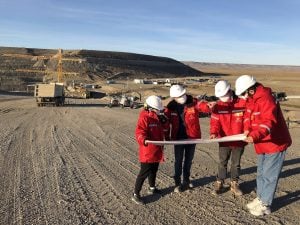
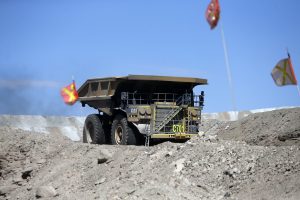
The “lithium triangle” [of Argentina, Bolivia and Chile] has been a target for extraction for more than 10 years, but we see the search for minerals relevant to the energy transition is now happening in every region of the world. Since I took office, I heard many testimonies from communities everywhere of their human rights being violated in the context of these minerals.
If our search for critical minerals is still supporting the same economic model underlying the fossil fuel-based economy, we are not really addressing the climate crisis effectively
We need to question our energy demands and projections. If our search for critical minerals is still supporting the same economic model that is underlying the fossil-fuel-based economy – a model not in line with human rights and planetary boundaries – then we are not really addressing the climate crisis effectively. The search for critical minerals can’t be justified if it does not take a more holistic approach to environmental sustainability and human rights. If activities that are meant to be about climate mitigation emit significant greenhouse-gas emissions and harm nature’s contributions to regulate the climate, we are in fact harming the climate system, and we can’t afford for that to happen.
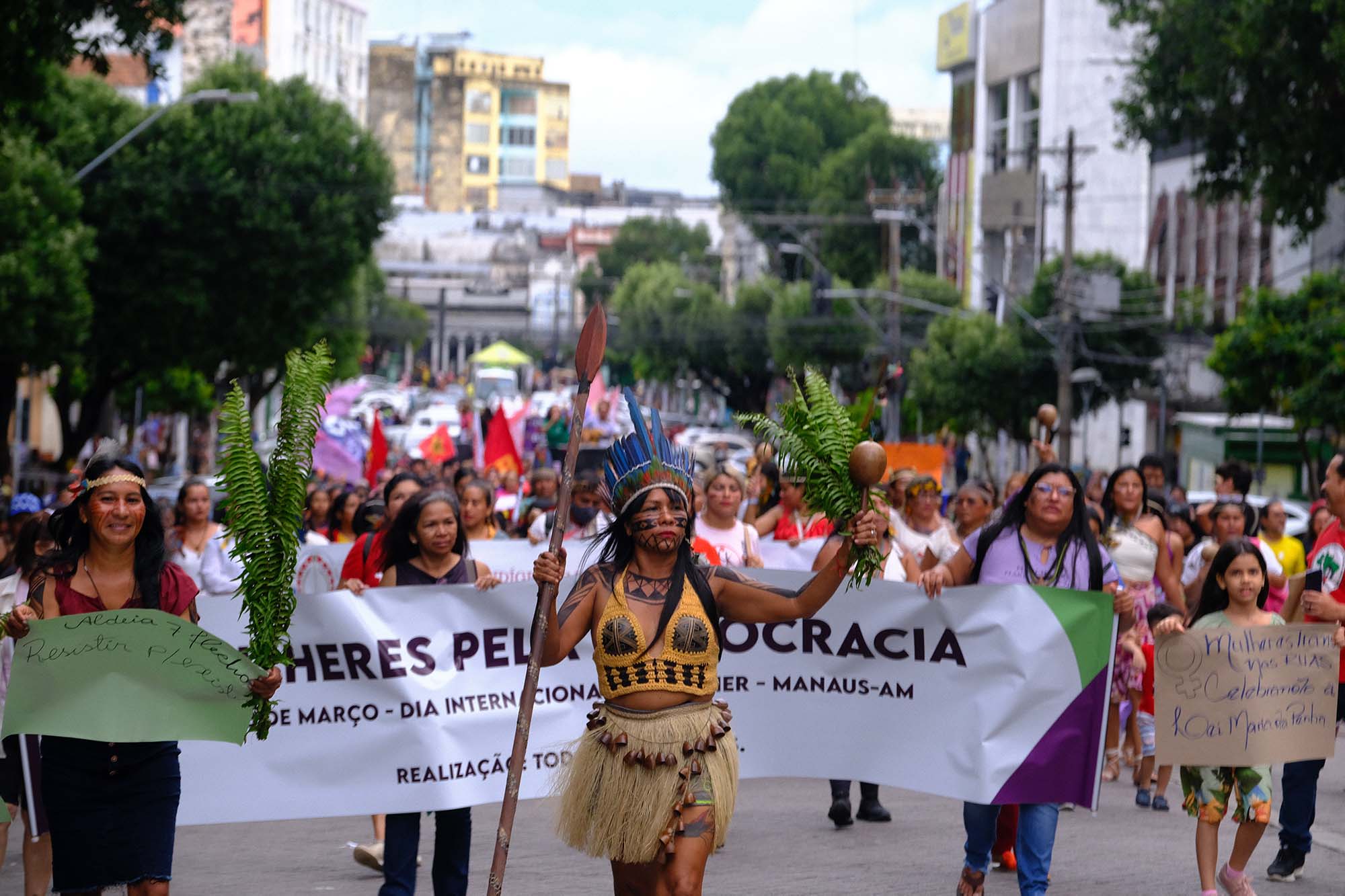
How should states ensure meaningful participation of Indigenous peoples, youth and other marginalised groups in climate decision-making?
The Escazú Agreement and the Aarhaus Convention are critical, as they specifically focus on public participation in decision-making related to the environment and human rights. Other global human-rights treaties provide obligations for public access to information, making sure we have enough understandable and accessible information to be able to exercise our right to participation in decision making and access to justice on matters that affect our human rights. States need to open up their decision-making processes, allowing defenders to contribute, justify decisions on the basis of these contributions, and provide guarantees of access to justice if the decisions that are adopted do not appear fit to effectively protect our human rights in the context of climate change.
What responsibility do private companies – particularly those in fossil fuels and extractive industries – have in upholding human rights in the context of the climate crisis?
We need national legislation that is much clearer on the responsibilities of companies to phase out fossil fuels. Based on common but differentiated responsibilities of different countries in contributing to climate change, the phase-out won’t be the same in all countries, but national legislation needs to give a clear direction that fossil fuels is no longer a viable sector.
We also need legislation to clarify how all companies need to protect human rights in the context of climate change. We see that in some countries, but we need more progress. Businesses need to assess in advance if any of their activities or their value chains can have negative impacts on human rights and take preventing action, sharing that information with the public, creating spaces for dialogue and accepting complaints if these actions do not seem fit to protect human rights by potentially affected communities.
Are there structural weaknesses in global climate governance that undermine human-rights protections?
We are not sufficiently including biodiversity, ocean, health sciences and the experience of people affected by climate change as part of climate governance. Doing so would help us to prevent the same mistakes of the past – undermining water, food and nature, and violating people’s rights. Another challenge is the lobbying and the power of certain industries in climate policy spaces, which is diverting attention from priority climate issues into other directions that are not sufficiently proven to be effective in terms of climate change mitigation. We need to address conflict of interest in any climate governance space and to be clearer on which climate solution should be prioritised.
What are your expectations for the COP30 climate summit in Brazil this November?
We need to address the inclusivity of this decision-making process, making sure that environmental defenders and human-rights holders can contribute to COP negotiations, while tackling conflict of interest and the growing number of fossil-fuel lobbyists that are part of national delegations. We also need a clear process to monitor progress in phasing out fossil fuels. Otherwise, the COP will keep losing legitimacy. In addition, we need to make sure that NDCs [nationally determined contributions, countries’ climate action plans] are aligned with the 1.5C target, but it’s unclear who will call out states that do not have sufficiently ambitious NDCs. If all these expectations do not materialise at COP30, we are left with the question of whether the COP is a space for meaningful climate action.