Argentina has revealed possible changes to the country’s forest and glacier laws that could encourage further mining activity in environmentally sensitive areas of the country.
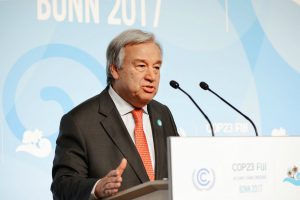
Sergio Bergman, Argentina’s minister for environment and sustainable development, revealed the news to Diálogo Chino at the recent COP23 climate talks in Bonn, Germany. The declaration followed a recent closed-door meeting between President Mauricio Macri and mining executives.
“We have to have an open discussion about forests and glaciers. Our laws do not solve the way we manage resources. All they do is try to curb them from being affected and this must be reviewed. They are grand, unrealistic ideas that lack the mechanisms for implementation, monitoring and execution,” Bergman said.
He added that existing protections have ended up being “an epic piece of legislation proclaimed aloud by the lobby” that have no traceability on how they impact the natural resources and territory they wish to preserve.
Enacted in 2009, the Forest Law establishes minimum budgets for the protection of native forests in Argentina, dividing them into three zones according to the type of activity allowed. It was passed after years of rising deforestation rates in the country, which has lost more than 70% of its original native forests.
Finance for implementing the law is supposed to be provided from a budget assigned annually by the executive branch of government. These cannot be less than 0.3% of the national budget or 2% of withholding taxes on agricultural and livestock exports, and those of the forestry sector. However, since it was passed, the law has never been given the corresponding budget.
It is principally due to this lack of a budget that deforestation continues in Argentina.
In the first six months of 2017, more than 45,000 hectares were destroyed in the north of the country, according to a Greenpeace report based on satellite imaging. Almost half of the clearings were illegal and occur in areas that should be protected by the Forest Law.
The Law on Glaciers has also experienced problems since it was passed in 2011. The Law establishes minimum budgets for the protection of glaciers and orders an inventory of them every five years. However, no inventory has yet taken place, with hopes that one will be completed in 2018.
During recent the climate negotiations in Bonn, countries sought to raise expectations in the protections of ecosystems, according to Enrique Maurtua Konstantinidis, director of climate change at the Environment and Natural Resources Foundation (FARN).
“Macri is going the opposite way, seeking to make the laws on forests and glaciers weaker,” Konstantinidis told Diálogo Chino.
He added: “This is really surprising, especially when the government has shown progress on many fronts with respect to the fight against climate change. It is a clear setback.”
Enrique Viale, president of the Association of Environmental Lawyers, told Diálogo Chino that Bergman’s statements were an “international disgrace”, given that they were uttered at COP23 and he believes, contrary to Bergman’s declarations, that the laws can be applied. However, there are other interested parties involved.
“Both laws come face to face with Argentina’s great powers – the Law on Forests with the large soy producers and the one on glaciers with the large transnational mining companies,” Viale said.
Macri has even faced criticism for changing the forest and glacier laws from within his governing Cambiemos coalition. Elisa Carrió, a prominent politician and lower house representative for the Civic Coalition party she founded, wrote to mining secretary Daniel Meilán to voice her displeasure at the reforms. Another high-profile figure, Ricardo Alfonsín, of the Radical Civic Union (UCR) party warned of “severe environmental consequences”.
Expanding activities
The attempt to amend both laws is further evidence of the Macri administration’s official policy of promoting the mining and agricultural sectors in Argentina, as it declared on coming to power in 2015.
By way of a presidential decree, Macri ordered the total elimination of withholding taxes on wheat, corn and meat, with gradual tax reductions to be introduced in the case of soybeans.
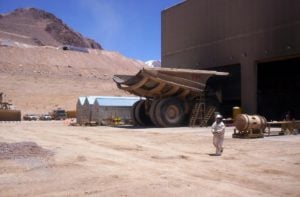
At the same time, policies to boost mining have put glaciers at risk. The government eliminated withholdings on mining, arguing that taxes discouraged investment. The government expects that this will attract around US$20 billion and has contemplated signing a federal mining agreement with the provinces, which under Argentine law preside over natural resources.
Today, Argentina is the world’s 10th largest silver produce, 13th largest producer of gold and 20th in terms of copper. Most resources leave the country without processing or adding significant value. Of total mining exports, 96% are metals (67.6% is gold, 13.8% copper, 12.8% silver and 5.8% others). Mining accounts for 6.1% of Argentina’s total exports.
Many planned and operational projects could be affected when the inventory on glaciers is finalised since they are in periglacial areas where productive projects cannot be carried out, according to Viale. He says this explains the motivation for modifying the Law on Glaciers.
Argentina is among the countries with the most active conflicts in relation to mining projects, according to OCMAL (Observatory of Mining Conflicts in Latin America). This has led to local laws banning open-pit mining in eight provinces, curtailing the government’s planned expansion of the sector.