Forests

How an Amazon activist became a ‘Green Nobel’ prize winner

Indigenous woman Alessandra Munduruku wins 2023 Goldman Prize for her resistance to mining in Brazil
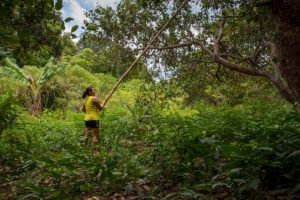
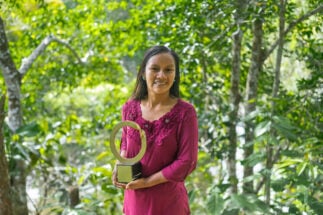
<p>Alessandra Korap Munduruku, a winner of this year’s Goldman Environmental Prize, poses in the Brazilian Amazon. She was recognised for her efforts to protect Munduruku territory from encroachment by a mining company (Image: Goldman Environmental Prize)</p>

Alessandra Korap Munduruku, a winner of this year’s Goldman Environmental Prize, poses in the Brazilian Amazon. She was recognised for her efforts to protect Munduruku territory from encroachment by a mining company (Image: Goldman Environmental Prize)

Alessandra Korap Munduruku, a 38-year-old Indigenous woman from the Brazilian Amazon, has been named as one of the six grassroots activists to receive this year’s Goldman Environmental Prize.

Awarded annually since 1990 to an environmental leader from each of Africa, Asia, Europe, North America, South and Central America, and the world’s island nations, the Goldman Prize recognises outstanding efforts to protect the planet, and is often dubbed the “Green Nobel.”

Alessandra is a leader and voice for the Munduruku, an Amazon Indigenous group of around 14,000 people facing ongoing threats from the expansion of mining and agriculture, as well as impacts from hydroelectric dams on the Tapajós River in Pará state. She previously worked as a teacher, and over the past decade has gained international attention and praise for her environmental activism.

She currently heads the Pariri Indigenous Association, an organisation that works to support Munduruku communities – a role she has carried out in face of repeated death threats, and which she balances alongside a law degree. “I want to be a lawyer and keep defending the rights of my people,” Alessandra told Diálogo Chino. “This is my dream.”

Diálogo Chino spoke with Alessandra following her Goldman Prize award, hearing more on her resistance to mining and journey to prominence, the other causes she has defended and the new challenges she sees ahead.

Campaign against mining

The Goldman Prize was an acknowledgement of Alessandra’s efforts to stop developments on Indigenous lands by British mining company Anglo American.

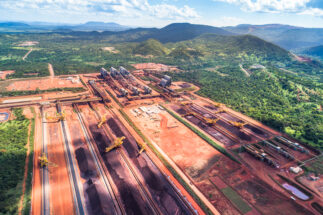
In 2020, she learned that Anglo American – one of the world’s largest mining companies, active in Brazil since the 1970s – had 13 permits to research copper reserves in the Sawré Muybu Indigenous territory. This 180,000-hectare area of rainforest had been home to the Munduruku for some 4,000 years, though the territory lacked any formal demarcation.

Each step is a victory for us. We expect more and will keep fighting for the territory’s demarcation

Alessandra began to campaign against the potential mining projects, and moved to mobilise community leaders, environmental organisations and even lawmakers. “You want to approve projects that will massacre us, but we are not going to allow it!” she said in an impassioned address in the Brazilian congress in 2020.

In 2021, following sustained pressure from Alessandra and the movement she had led, the company withdrew its applications from Sawré Muybu and other Indigenous lands.

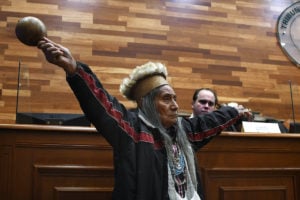
Alessandra Korap Munduruku accepts a Goldman Prize at the award ceremony in San Francisco, USA on 24 April (Image: Goldman Environmental Prize)

Only a few hours before the Goldman ceremony in San Francisco on 24 April, Alessandra received the news that the Brazilian government has moved forward the process to legally recognise the Sawré Muybu territory, something that had stalled since 2016. “I was very happy because each step is a victory for us,” she said, noting that the process is still not concluded. “We expect more and will keep fighting for the territory’s demarcation.”

Dams and mercury contamination

Successfully blocking mining projects is not Alessandra’s only achievement as an environmental activist. In the 2010s, the leader campaigned against the Brazilian government’s plans to build a series of hydropower dams in the basin of the Tapajós River, a major tributary of the Amazon. Her resistance came after another mega-project in the region, the Belo Monte dam, had brought negative impacts for the Xingu River basin and riverside communities.

In 2016, Brazil’s environmental agency IBAMA withheld the approval of one of these dams, the São Luís do Tapajós, partly due to issues found in the project’s environmental licensing, and partly in response to intense campaigning by the Munduruku. “That was our first victory, and it happened because we were very persistent,” Alessandra said.

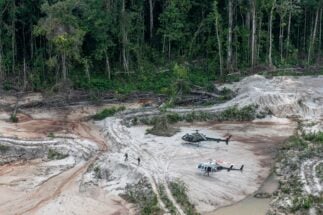
At the same time, illegal mining and its wastes were also becoming a growing threat to Munduruku lands and the Tapajós River. The Indigenous people reported effects from contamination, both on their health and in reduced populations of fish, but little scientific evidence of this was available.

Alessandra asked the Oswaldo Cruz Foundation (Fiocruz), a prominent health research institute, for help. “A lot of people didn’t believe that the population was sick due to mercury contamination,” she said. “White people tend to believe in paper, so we wanted to show the paper. We wanted to prove it.”

Since 2020, a series of Fiocruz studies have been released describing the effects of mercury exposure through fish consumption in traditional communities, first based on the case of the Munduruku, but later extended to other groups.

Railways, the new challenge

Alessandra has little free time amid her campaigning. She spoke with Diálogo Chino the day after the award ceremony from a San Francisco airport, while waiting for a flight to Washington, where meetings with key international leaders and stakeholders would take place. “People joke that nobody can stop me, nobody can fool me,” she said. “And my mum says that she never knows where I am.”

In addition to returning to her studies, another challenge awaits Alessandra when she returns to Brazil in the next week. She is concerned about the potential impacts of a number of planned infrastructure projects – chief among them, Ferrogrão, a 900-kilometre railroad that will pass through the Amazon towards ports in the north, primarily carrying corn and soy for export.

Original plans for Ferrogrão were drawn up more than a decade ago, and despite various controversies and legal actions surrounding it, the project is still alive under the government of President Luiz Inácio Lula da Silva. “We know our territory will be affected,” Alessandra said. “So we need to be heard. Before decisions that will impact our territory, the government has to talk to us.”
Forests

How an Amazon activist became a ‘Green Nobel’ prize winner

Indigenous woman Alessandra Munduruku wins 2023 Goldman Prize for her resistance to mining in Brazil

Alessandra Korap Munduruku, a 38-year-old Indigenous woman from the Brazilian Amazon, has been named as one of the six grassroots activists to receive this year’s Goldman Environmental Prize.

Awarded annually since 1990 to an environmental leader from each of Africa, Asia, Europe, North America, South and Central America, and the world’s island nations, the Goldman Prize recognises outstanding efforts to protect the planet, and is often dubbed the “Green Nobel.”

Alessandra is a leader and voice for the Munduruku, an Amazon Indigenous group of around 14,000 people facing ongoing threats from the expansion of mining and agriculture, as well as impacts from hydroelectric dams on the Tapajós River in Pará state. She previously worked as a teacher, and over the past decade has gained international attention and praise for her environmental activism.

She currently heads the Pariri Indigenous Association, an organisation that works to support Munduruku communities – a role she has carried out in face of repeated death threats, and which she balances alongside a law degree. “I want to be a lawyer and keep defending the rights of my people,” Alessandra told Diálogo Chino. “This is my dream.”

Diálogo Chino spoke with Alessandra following her Goldman Prize award, hearing more on her resistance to mining and journey to prominence, the other causes she has defended and the new challenges she sees ahead.

Campaign against mining

The Goldman Prize was an acknowledgement of Alessandra’s efforts to stop developments on Indigenous lands by British mining company Anglo American.

In 2020, she learned that Anglo American – one of the world’s largest mining companies, active in Brazil since the 1970s – had 13 permits to research copper reserves in the Sawré Muybu Indigenous territory. This 180,000-hectare area of rainforest had been home to the Munduruku for some 4,000 years, though the territory lacked any formal demarcation.

Each step is a victory for us. We expect more and will keep fighting for the territory’s demarcation

Alessandra began to campaign against the potential mining projects, and moved to mobilise community leaders, environmental organisations and even lawmakers. “You want to approve projects that will massacre us, but we are not going to allow it!” she said in an impassioned address in the Brazilian congress in 2020.

In 2021, following sustained pressure from Alessandra and the movement she had led, the company withdrew its applications from Sawré Muybu and other Indigenous lands.

Alessandra Korap Munduruku accepts a Goldman Prize at the award ceremony in San Francisco, USA on 24 April (Image: Goldman Environmental Prize)

Only a few hours before the Goldman ceremony in San Francisco on 24 April, Alessandra received the news that the Brazilian government has moved forward the process to legally recognise the Sawré Muybu territory, something that had stalled since 2016. “I was very happy because each step is a victory for us,” she said, noting that the process is still not concluded. “We expect more and will keep fighting for the territory’s demarcation.”

Dams and mercury contamination

Successfully blocking mining projects is not Alessandra’s only achievement as an environmental activist. In the 2010s, the leader campaigned against the Brazilian government’s plans to build a series of hydropower dams in the basin of the Tapajós River, a major tributary of the Amazon. Her resistance came after another mega-project in the region, the Belo Monte dam, had brought negative impacts for the Xingu River basin and riverside communities.

In 2016, Brazil’s environmental agency IBAMA withheld the approval of one of these dams, the São Luís do Tapajós, partly due to issues found in the project’s environmental licensing, and partly in response to intense campaigning by the Munduruku. “That was our first victory, and it happened because we were very persistent,” Alessandra said.

At the same time, illegal mining and its wastes were also becoming a growing threat to Munduruku lands and the Tapajós River. The Indigenous people reported effects from contamination, both on their health and in reduced populations of fish, but little scientific evidence of this was available.

Alessandra asked the Oswaldo Cruz Foundation (Fiocruz), a prominent health research institute, for help. “A lot of people didn’t believe that the population was sick due to mercury contamination,” she said. “White people tend to believe in paper, so we wanted to show the paper. We wanted to prove it.”

Since 2020, a series of Fiocruz studies have been released describing the effects of mercury exposure through fish consumption in traditional communities, first based on the case of the Munduruku, but later extended to other groups.

Railways, the new challenge

Alessandra has little free time amid her campaigning. She spoke with Diálogo Chino the day after the award ceremony from a San Francisco airport, while waiting for a flight to Washington, where meetings with key international leaders and stakeholders would take place. “People joke that nobody can stop me, nobody can fool me,” she said. “And my mum says that she never knows where I am.”

In addition to returning to her studies, another challenge awaits Alessandra when she returns to Brazil in the next week. She is concerned about the potential impacts of a number of planned infrastructure projects – chief among them, Ferrogrão, a 900-kilometre railroad that will pass through the Amazon towards ports in the north, primarily carrying corn and soy for export.

Original plans for Ferrogrão were drawn up more than a decade ago, and despite various controversies and legal actions surrounding it, the project is still alive under the government of President Luiz Inácio Lula da Silva. “We know our territory will be affected,” Alessandra said. “So we need to be heard. Before decisions that will impact our territory, the government has to talk to us.”
Cookies Settings

Dialogue Earth uses cookies to provide you with the best user experience possible. Cookie information is stored in your browser. It allows us to recognise you when you return to Dialogue Earth and helps us to understand which sections of the website you find useful.

Required Cookies

Required Cookies should be enabled at all times so that we can save your preferences for cookie settings.

Dialogue Earth - Dialogue Earth is an independent organisation dedicated to promoting a common understanding of the world's urgent environmental challenges. Read our privacy policy.

Cloudflare - Cloudflare is a service used for the purposes of increasing the security and performance of web sites and services. Read Cloudflare's privacy policy and terms of service.

Functional Cookies

Dialogue Earth uses several functional cookies to collect anonymous information such as the number of site visitors and the most popular pages. Keeping these cookies enabled helps us to improve our website.

Google Analytics - The Google Analytics cookies are used to gather anonymous information about how you use our websites. We use this information to improve our sites and report on the reach of our content. Read Google's privacy policy and terms of service.

Advertising Cookies

This website uses the following additional cookies:

Google Inc. - Google operates Google Ads, Display & Video 360, and Google Ad Manager. These services allow advertisers to plan, execute and analyze marketing programs with greater ease and efficiency, while enabling publishers to maximize their returns from online advertising. Note that you may see cookies placed by Google for advertising, including the opt out cookie, under the Google.com or DoubleClick.net domains.

Twitter - Twitter is a real-time information network that connects you to the latest stories, ideas, opinions and news about what you find interesting. Simply find the accounts you find compelling and follow the conversations.

Facebook Inc. - Facebook is an online social networking service. China Dialogue aims to help guide our readers to content that they are interested in, so they can continue to read more of what they enjoy. If you are a social media user, then we are able to do this through a pixel provided by Facebook, which allows Facebook to place cookies on your web browser. For example, when a Facebook user returns to Facebook from our site, Facebook can identify them as part of a group of China Dialogue readers, and deliver them marketing messages from us, i.e. more of our content on biodiversity. Data that can be obtained through this is limited to the URL of the pages that have been visited and the limited information a browser might pass on, such as its IP address. In addition to the cookie controls that we mentioned above, if you are a Facebook user you can opt out by following this link.

Linkedin - LinkedIn is a business- and employment-oriented social networking service that operates via websites and mobile apps.