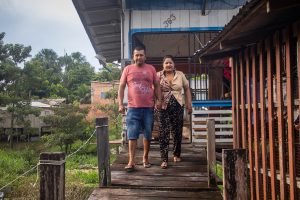
“The land does not belong to us; we belong to the land,” says Antonio Jimbicti. “Whatever we do to the land, we do to ourselves.” Jimbicti is a teacher in the Shuar community of San Luis Ininkis, Morona Santiago province, located in Ecuador’s Amazon Basin.
Editor’s note
This article is part of Dialogue Earth’s Indigenous Voices fellowship. The eight fellows are Indigenous journalists and storytellers from across the Global South. The fellowship aims to foreground not just Indigenous issues, but also the storytelling, reporting and insights of Indigenous journalists themselves.
We, the Shuar, whose name means “people of the waterfall”, are spread over a vast territory that encompasses both the Amazon rainforest of Ecuador and part of Peru’s. Our culture, rich in tradition and cosmogony, is based on a deep connection with nature. We consider the forest our home and our source of life, and have developed a deep knowledge of its secrets, from the medicinal properties of plants to the cycles of animals. I understand how special our traditions are and, as a Shuar journalist, I am aware of the renewed significance they are acquiring in the face of climate change.
I carry in my blood the responsibility of being a guardian of Amazonian biodiversity. I have grown up seeing how our ancestral knowledge has allowed us to live in balance with the forest, respecting its cycles and resources. Hunting, fishing and low-impact agriculture are not just subsistence techniques, but expressions of our relationship with nature. For us, the forest is not just an environment, but a living being with which we must live in harmony. This worldview teaches us to protect fragile ecosystems and to care for the species that depend on them, because we understand that our survival is intrinsically linked to the health of our territory.
Today, however, the Shuar community of San Luis Ininkis is facing the challenges of climate change, which threaten its territory and way of life. The UN’s Intergovernmental Panel on Climate Change has repeatedly projected and described these challenges: rising temperatures, changing rainfall patterns and more frequent extreme weather events. They are already being felt in the region.
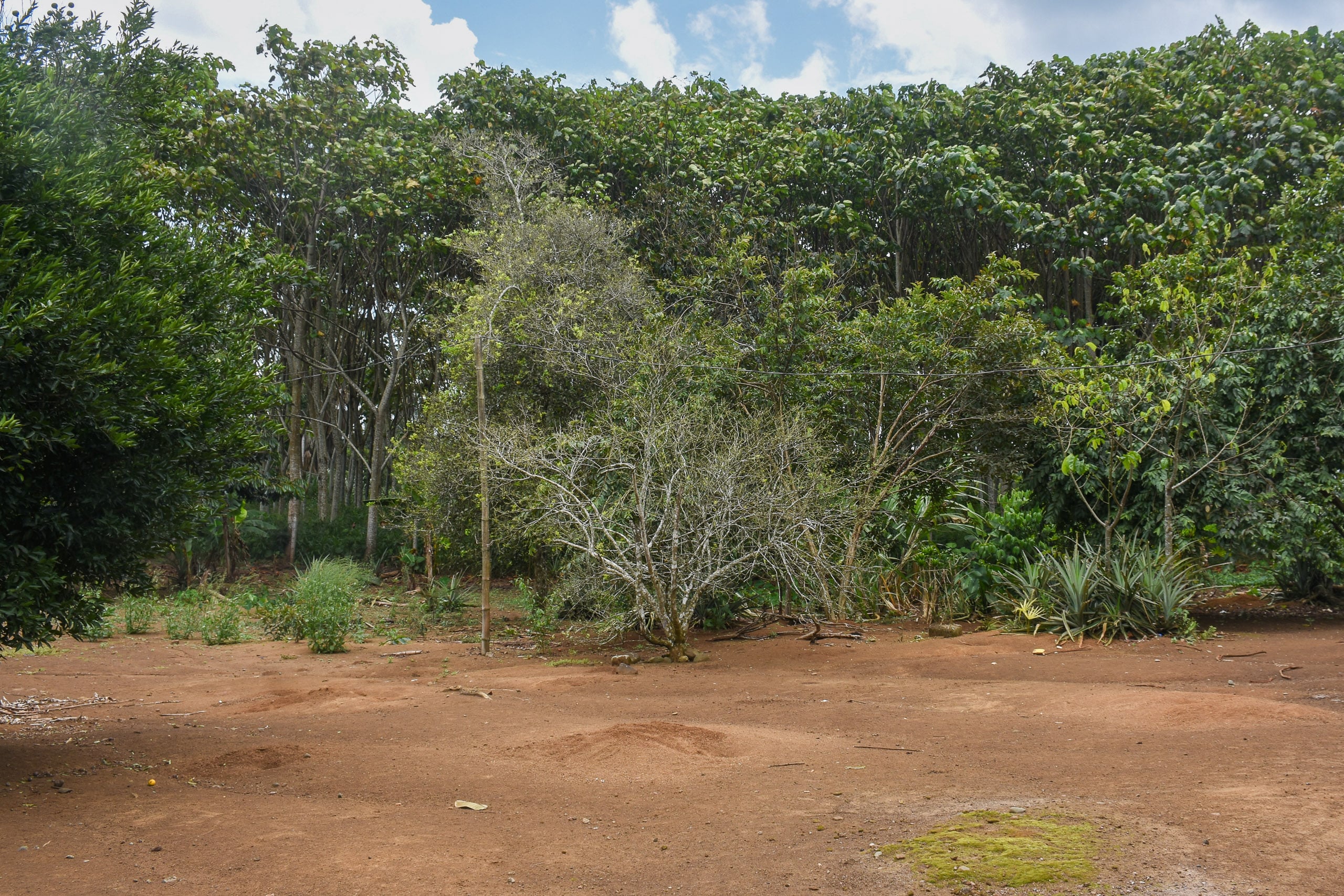
Climate data specific to San Luis Ininkis is limited, but a 2024 study by scientists working in South America and Europe detected significant changes in rainfall patterns in the Ecuadorian Amazon. The Amazonian forests of Ecuador and Peru are also facing severe degradation through deforestation.
The chacra
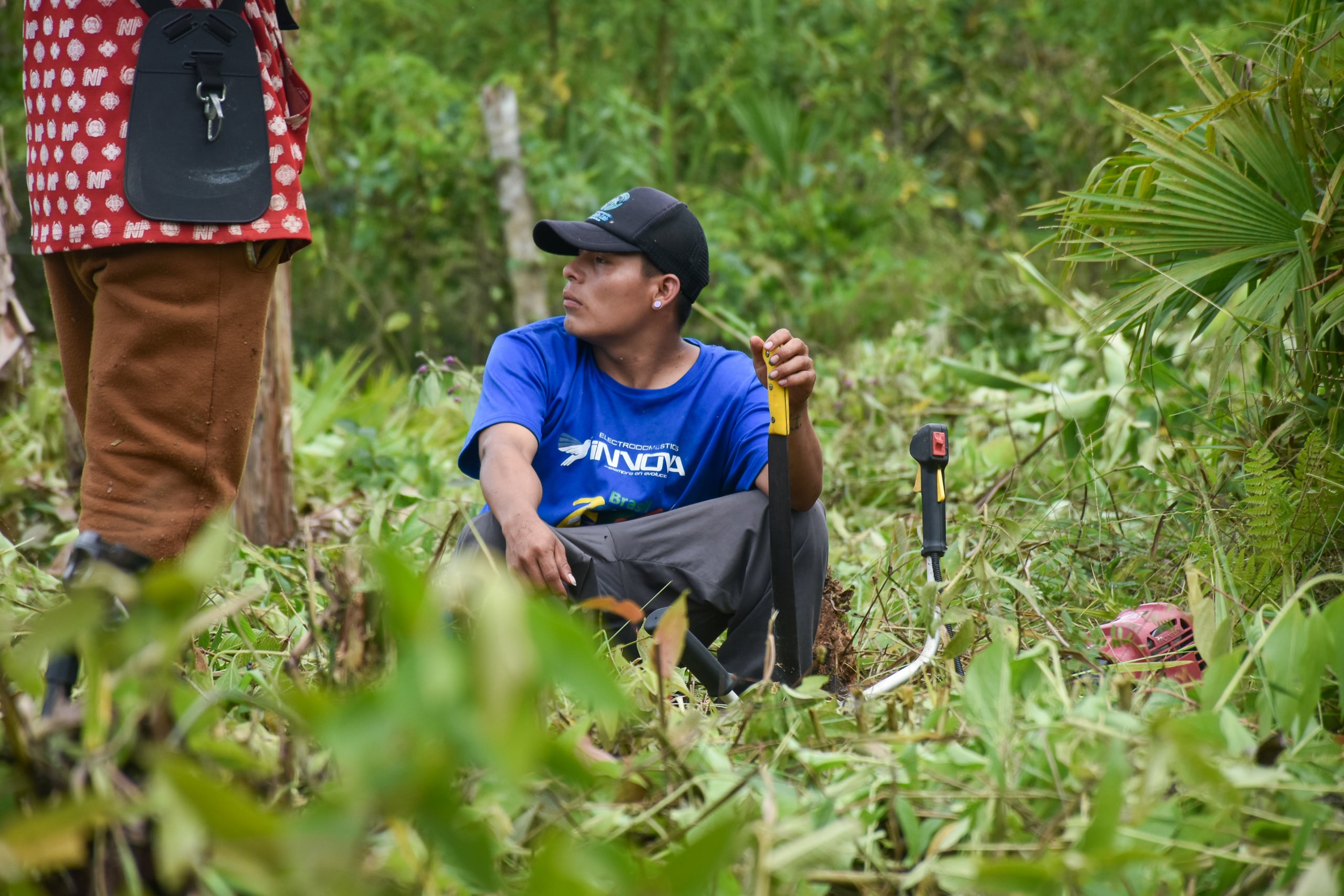
The chacra is a traditional agroforestry system used by Amazonian Indigenous peoples, including the Shuar. It is based on diversified and sustainable cultivation, combining crops such as cassava, plantain and maize with fruit trees, medicinal plants and timber species. The chacra reflects our connection to the earth. It is a system of life that teaches us balance, patience and reciprocity. Each plant has its own spirit, its own wisdom. We do not heal only with leaves or roots, but with the inherited knowledge of our elders, with the song of the forest.
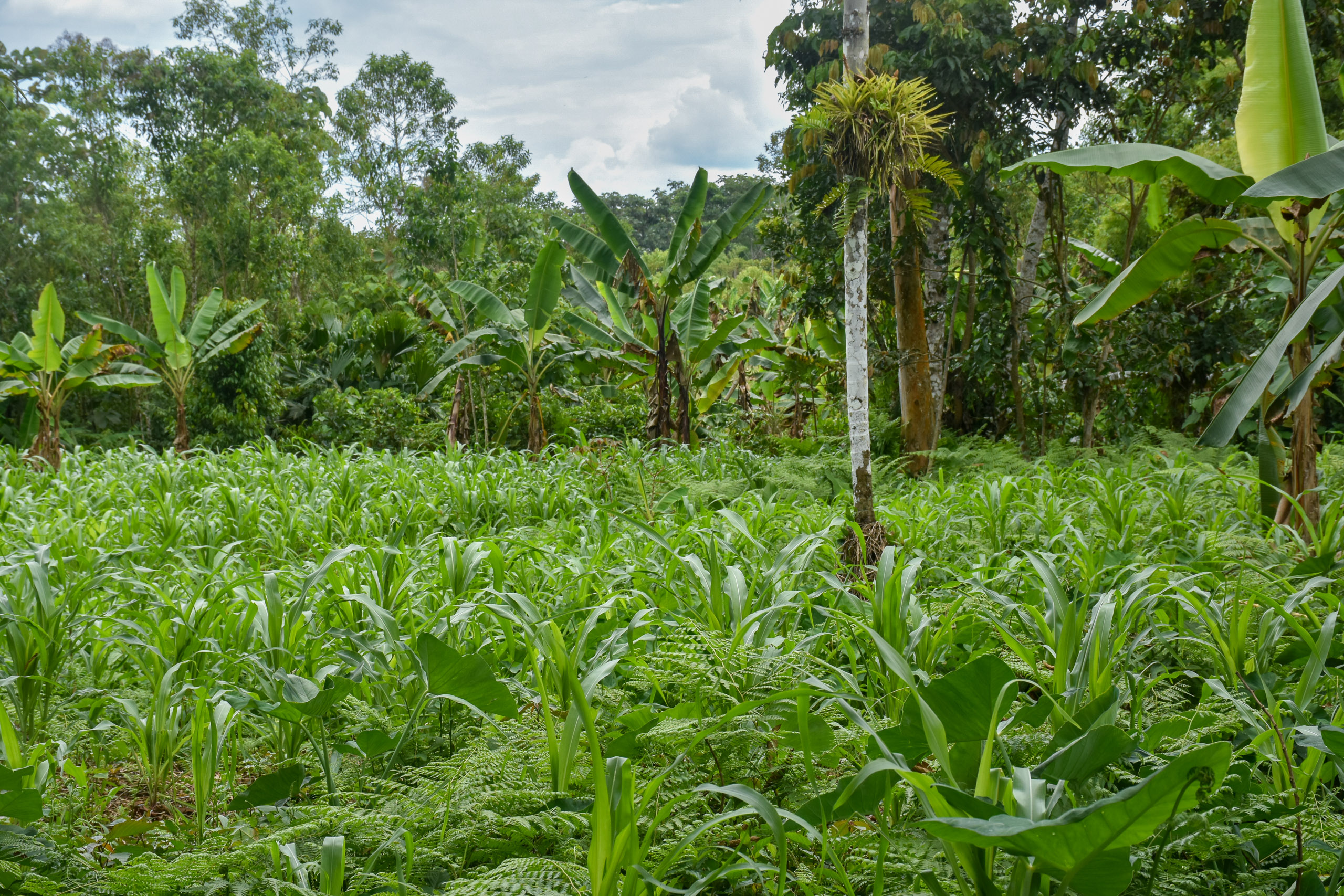
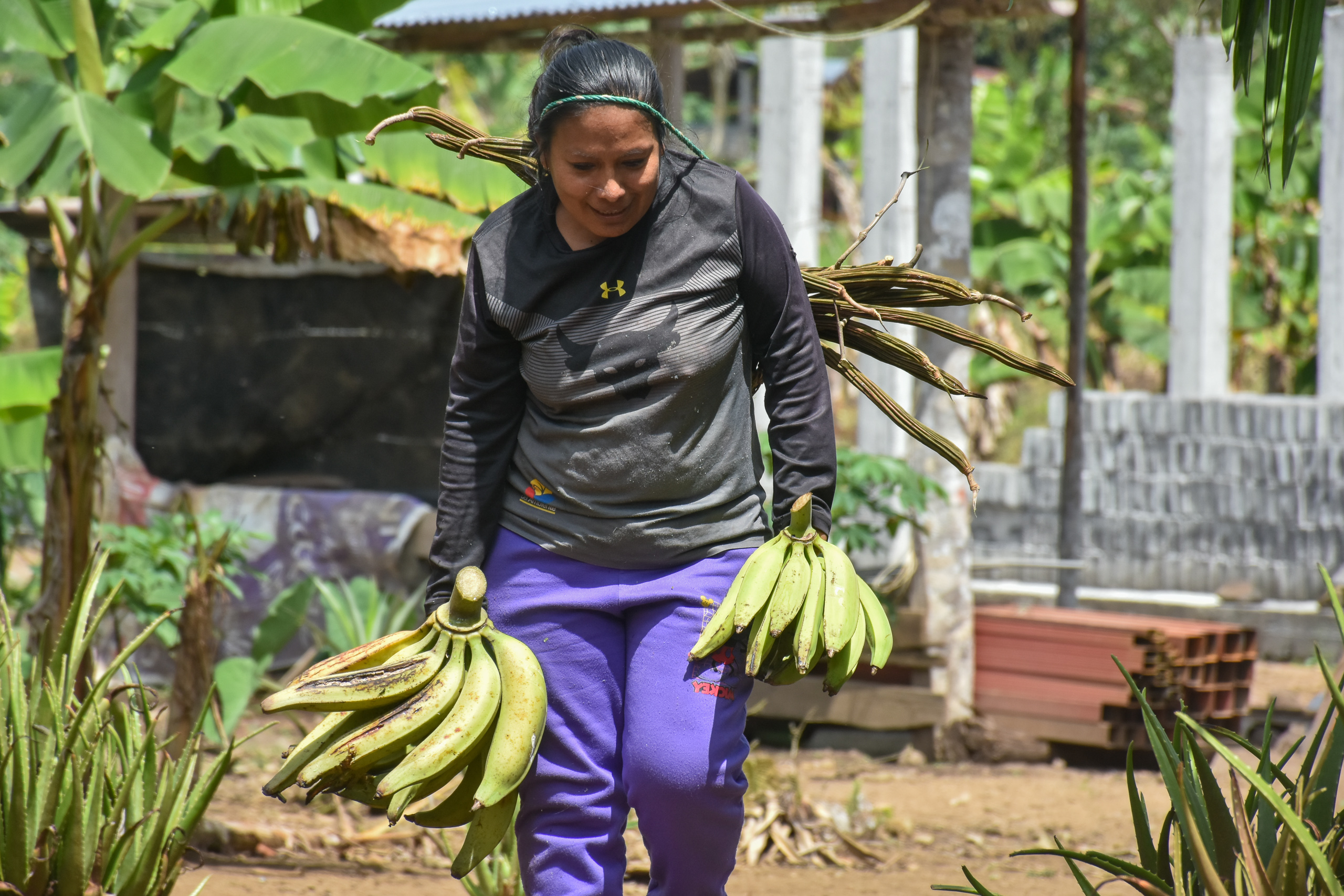
(Image: Dunio Chiriap Jimbicti / Dialogue Earth)
From an early age, we learn that nature does not belong to us; it is our sister, not our property. We only take what we need, because we know that what the forest gives us must also be returned with respect and care.
Beyond the Shuar communities, agricultural monocultures are common in Ecuador, especially in areas dedicated to commercial agriculture. These monocultures typically degrade the soil and deplete biodiversity. The agricultural practices of Shuar communities, such as the chacra, differ substantially by integrating crops with trees and medicinal plants.
The chacra promotes food security but also has a positive impact on the environment. It is inspired by the structure of the natural forest, which favours biodiversity and continuous soil regeneration. As Aurora Jimbicti, a Shuar farmer from San Luis Ininkis, points out, “this model not only promotes biodiversity, but also acts as a carbon sink.” The chacra helps to capture carbon emissions by storing them in ecologically healthy soils, which contributes to mitigating the effects of climate change and maintaining ecosystem functions on agricultural lands.
The use of technology
In Morona Santiago, Shuar communities are also integrating modern technologies into their traditional practices to combat climate change, and to protect their territory. They use devices such as mobile phones, tablets and drones to record climate data, monitor environmental threats and disseminate information about the conservation of their lands. Social media has become an essential tool for sharing knowledge, denouncing illegal activities and connecting with partner organisations.
Fundación EcoCiencia, an Ecuadorian socio-environmental non-profit, has provided training in the Shuar communities since 2021 on mapping and monitoring technologies, such as drones and GPS. For example, in January EcoCiencia held a workshop on territorial surveillance and protection. It included planning an early warning system to more quickly respond to deforestation threats, and work on improving cooperation with local and national governments.

Access to mobile phones and tablets has grown in Morona Santiago’s Shuar community over the past five to seven years, as mobile network coverage and internet access have improved in the region. Prior to this, communication relied on community radios and face-to-face visits between closely situated towns.
“Before, we only used our memory and words to transmit knowledge,” explains Antonio Jimbicti. “Now, with the mobile phone and tablet, we can record what we see in the forest and share it with the world.”
The community nursery
The Iwiakma Araatá (Seed Life) nursery was born approximately six years ago. It is an initiative of Clareth Ankuash, 47, who decided to take action on the decline of native species in her territory.
Ankuash is a Shuar woman from the community of San Luis Ininkis. A housewife and guardian of ancestral knowledge, she has dedicated much of her life to the cultivation and conservation of plants. From her childhood, she learned from her mother and grandmothers the value of each plant, and how to use them for food and traditional medicine.
With the support of other community members, she began collecting seeds, and propagating seedlings of trees and medicinal plants essential to the Shuar ecosystem and culture. Her efforts have allowed the nursery to grow to approximately half a hectare. There are more than 100 plants in different stages of growth, destined for the reforestation and restoration of degraded areas.
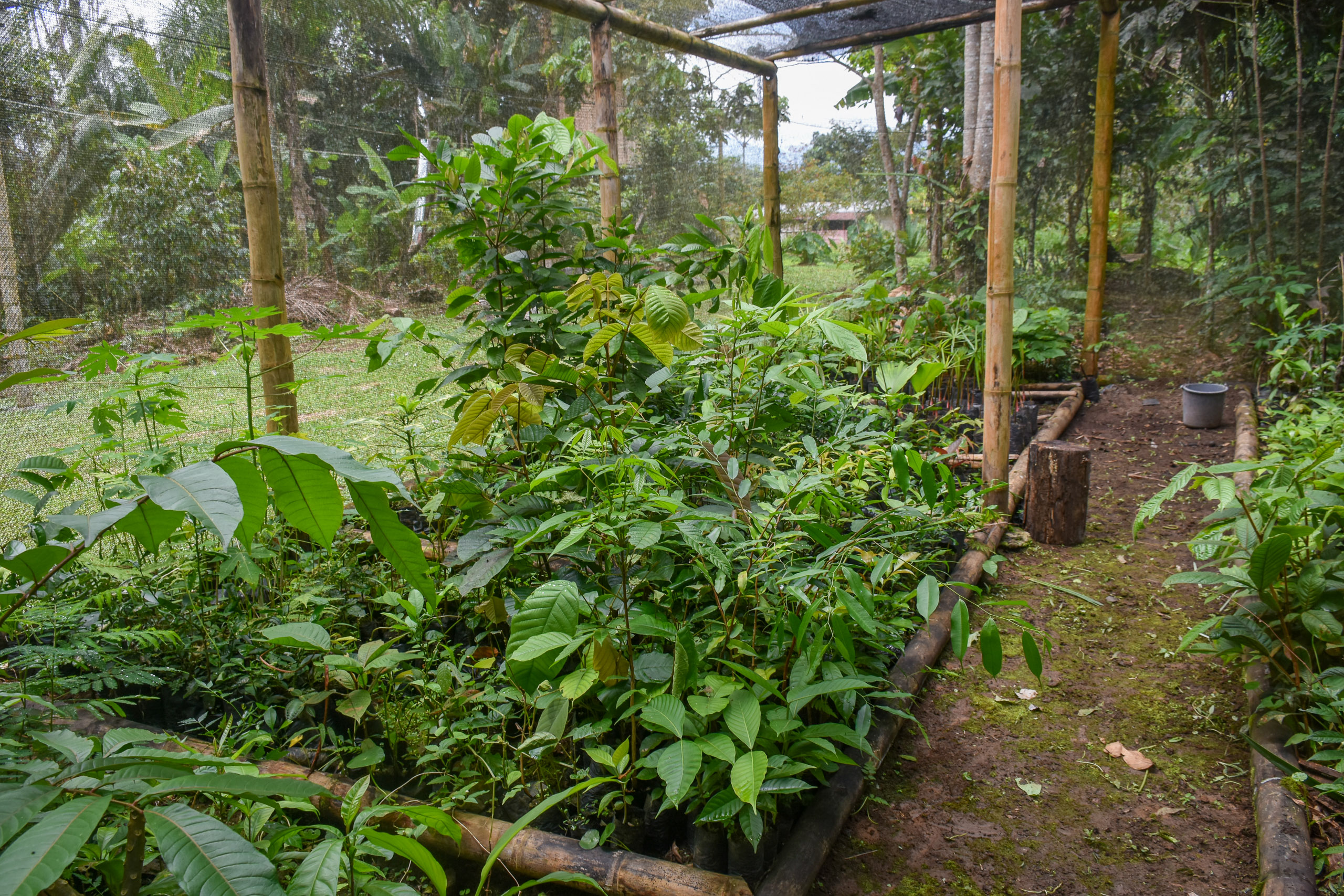
Once ready, the nursery’s seedlings are transplanted to different parts of the territory, especially in areas affected by logging or vegetation loss. Some species are also given to families to be integrated into their chacras or gardens.
Among the native plants cultivated are guayusa (Ilex guayusa), aguarico (Caryodendron orinocense), cedar (Cedrela odorata), chonta (Bactris gasipaes), sangre de dragón (Croton lechleri) and copal (Dacryodes peruviana). Each has different uses and benefits: guayusa leaves are used to make a beverage that is usually prepared in the morning for an energy boost; aguarico and cedar wood is used for construction; chonta fruits are eaten for their nutrients; and sangre de dragón and copal resin is used to cure diverse illnesses.
“The nursery not only allows us to recover our forest, but also our culture,” says Ankuash. “Every plant we place in the earth is a piece of our history and what we want to leave to our children.”
Lessons for the world
As a member of the Shuar community, I strongly believe that what is happening in San Luis Ininkis not only affects our Amazon but the world. We know that Indigenous knowledge systems are key to addressing climate change. This has also been recognised by many international organisations, such as the Food and Agriculture Organization of the UN. Our lands are vital for conserving biodiversity and, at the same time, play a fundamental role in the fight against climate change.
Through our ancestral practice of the chacra, we have learned to manage the forest in a way that respects nature, protects our water sources and captures carbon. The Shuar’s low-impact agricultural practices, adapted to local and diverse conditions, are essential to maintaining our food security and our resilience in the face of climate change.
San Luis Ininkis is an example of what we can achieve when we combine our ancestral knowledge with modern tools. Our experience suggests that the most effective solutions to environmental challenges can often be found in the practices we have preserved for generations.
“Climate change is not something distant, we live it every day,” says San Luis Ininkis’ Shuar community leader, Santiago Yankura. “But with our hands and our knowledge, we are sowing a better future.”