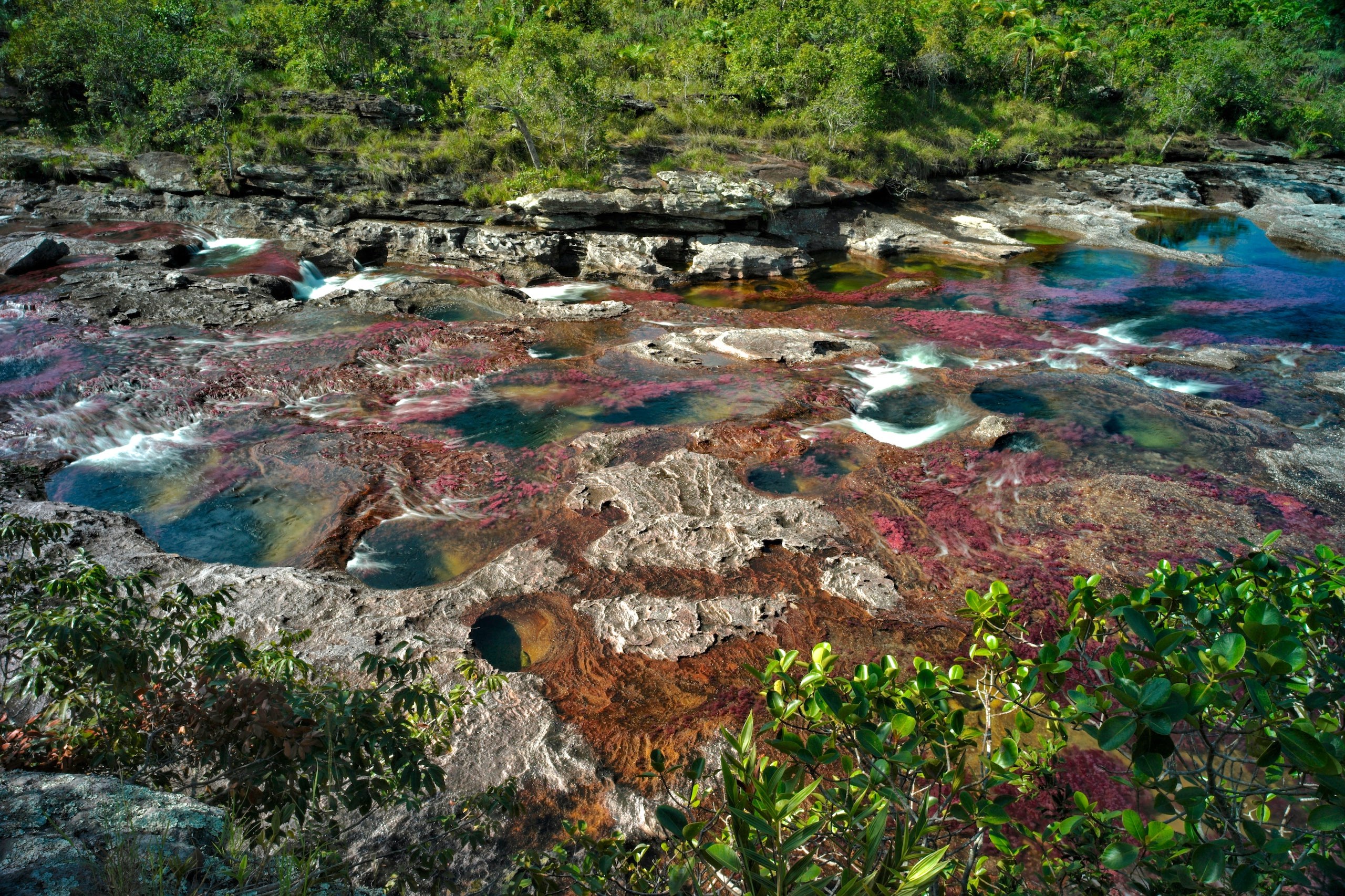
The savannahs of the Meta department, in Colombia’s central Orinoquía region, are known for their rivers. They are home to more than 750 species of fish, an abundance recognised by the Indigenous Sikuani people. They are the ancient inhabitants of the gallery forests of the Meta, Muco, Manacacías and Tillavá rivers, so-called for their long corridors of trees that grow along the banks.
Santiago is an Indigenous member of this community – his real identity has been withheld for security reasons. He recalls how the Muco River in Meta’s Puerto Gaitán municipality, 300 kilometres east of the capital Bogotá, was once teeming with fish: “We used to catch payara [Hydrolycus scomberoides], pavón [Cichla ocellaris], bocona [Prochilodus magdalenae] and guabina [Hoplias malabaricus]. Today, there are no fish.” Santiago blames the agro-industrial company Aliar-Fazenda for the deterioration.
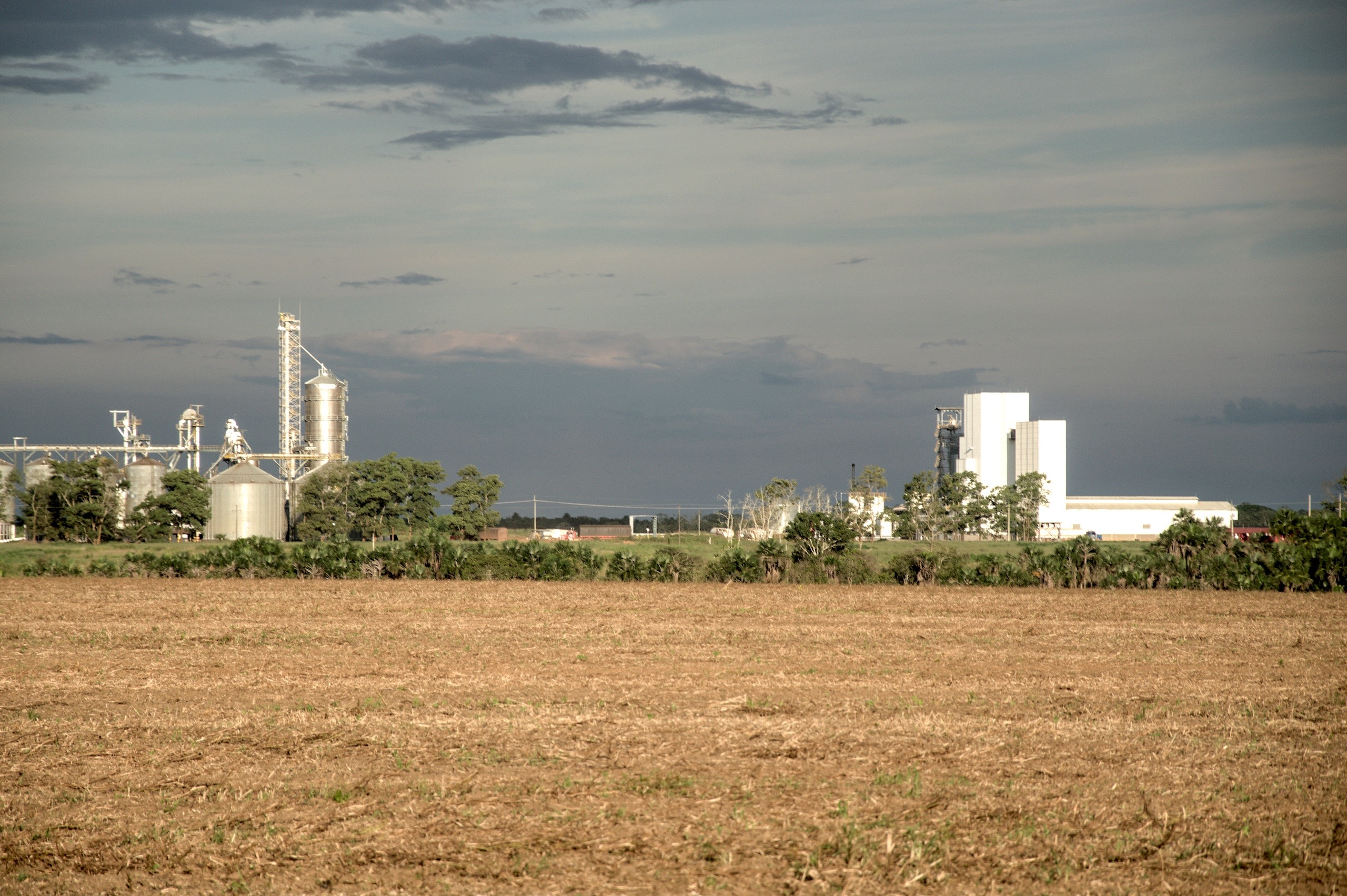
Aliar-Fazenda is the only company in the Orinoquía region that grows soybeans and corn for pigfeed concentrates. The company began operations in Puerto Gaitán in 2007. By 2018, it had transformed 40,000 hectares of land into a pantry that would feed millions of pigs over the following years. This year, the company claimed to be feeding 880,000 pigs and producing 100 million kilograms of meat annually.
According to Santiago, “the manure damaged all those moricheras [wetlands] and streams where we used to fish”.
A river contaminated with E coli
“There used to be some beautiful lagoons, and they are still there today, but no one bathes there anymore because the water is murky. The water no longer flows,” Santiago continues.
Since Aliar-Fazenda arrived, Santiago says, pollution has cost the Sikuani people the fishing-based subsistence economy that they rely upon, in addition to making it impossible to enjoy the area.
For this report, a sample was taken on 20 August this year of the waters that Santiago used to eat and drink from and analysed for pollution.
The analysis was undertaken by Tecnoambiental, a laboratory accredited by the Colombian government’s Institute of Hydrology, Meteorology and Environmental Studies (Ideam), which tested according to the basic parameters of organic pollution: the presence of faecal bacteria, other waste in the water and the loss of oxygen necessary for life in the river.
The results revealed severe contamination. Colombian standards set the maximum legal level of faecal coliform (intestinal) bacteria present in water used for recreation at 200 microorganisms per 100 millilitres. Tecnoambiental recorded 313,000 per 100 millilitres in the Muco River. This exceeds the limit more than 1,500 times over and renders these waters dangerous for irrigation or human contact.
Physical and chemical analysis shows that the waters are indeed being filtered. But even with some treatment plants in place, the system remains insufficient for tackling the amount of faecal matter entering the Muco River. According to the National Health Institute’s (INS) guide to bacteriological quality monitoring and control, high levels of total coliforms (a water contamination indicator) and the presence of E coli (Escherichia coli) in water are associated with outbreaks of gastrointestinal and dermatological diseases among children and other vulnerable groups.
Aliar-Fazenda refused to provide the information on its wastewater management and treatment plants that was requested for this report.
Moricheras as landfills?
Santiago, who lives in the Sikuani reserve of Wacoyo, is not only a neighbour of Aliar-Fazenda but also a former employee. He claims there is no water treatment.
“The workers there wash with water and that runs into a pipe, enters a septic tank […] From there, they take it out with a pump […] they don’t throw it away on the lots, but in a mountainous area.”
Raúl, another former Aliar-Fazenda employee who also asked to keep his identity confidential, says he did not observe any water treatment either: “Where they keep the pigs, there is a large space where the manure and urine can go, and when it is washed, it goes into a pond, then they send it through a pipe to outlets that they make near a morichera.” Raúl and Santiago say they do not know each other.
Raúl’s description of these releases coincides with the results of water contamination and the odours described by locals.
Santiago’s wife says she no longer collects water from the Muco River, instead collecting rainwater or buying water when there is no rain. “We have constant headaches, colds”, she adds, “and sometimes it’s not even a cold, but more like a sneezing fit, something that doesn’t produce mucus or anything […] and we say it’s because of that awful smell.”
The people of Wacoyo are not the only ones to have been affected. Barrulia, 29 kilometres from Wacoyo, was a Sikuani community that has been displaced through contentious land acquisition linked to Mennonite settlement. Barrulia’s Sikuani community also suffered from vomiting, rashes and diarrhoea, which was linked to the pollution of water supplies caused by agricultural activity. Community member Erminsu Gaitán told his story to El Turbión, an independent journalism outlet based in Bogotá. He said his grandson, Axel Gaitán Chipiaje, died in May 2024 while he was still a child. Aliar-Fazenda had pig farms nearby; Erminsu and his community attribute Chipiaje’s death to the pollution. Following their displacement, Barrulia’s Sikuani community now lives in a sports facility in an urban area of Puerto Gaitán.
They made a hole where they threw dead pigs […] And they don’t let environmentalists and government officials verify this when they comeRaúl, former Aliar-Fazenda employee
Dialogue Earth spoke to another of Chipiaje’s relatives, who used the name Miguel to protect their identity. Miguel, who has been displaced from Barrulia, blames Aliar-Fazenda for Chipiaje’s death: “Where we were in Barrulia, further east, there are about 20 [pig] sheds that filter [faeces].” There are no public medical reports confirming the cause of Axel Gaitán Chipiaje’s death.
Raúl says he was more shocked by the handling of dead piglets than by the faecal pollution: “They made a hole where they threw dead pigs. It’s near a morichera. Thirty to fifty pigs die there every day. And they don’t let environmentalists and government officials verify this when they come.”
He adds that it is not just the small pigs that die: “The bigger ones live in crowded conditions and mistreat each other, biting each other. When they don’t have food, they kill each other. That’s why they get sick and die.”
In the pork industry, it is common for 10-20% of newborns to die, and for those destined for fattening to die from respiratory diseases. But dumping carcasses without proper composting and failing to treat faecal matter goes beyond animal abuse and constitutes an environmental crime.
For this report, a right of petition was sent to the Ministry of the Environment, which clarified that the responsibility for monitoring, controlling and sanctioning this alleged dumping lies with the regional natural resources authority. In Meta that is Cormacarena, which did not respond when asked for details of its Aliar-Fazenda monitoring. Its geoportal contains no evidence of the control or monitoring of any bodies of water that lie adjacent to Aliar-Fazenda’s lands.
As pigs grow, life in Meta fades
In 2025, the business magazine Forbes credited Aliar-Fazenda with turning Meta into an agriculture and livestock powerhouse: “Puerto Gaitán, the epicentre of this revolution, accounts for the largest production of corn and soybeans in the country. In 2024 alone, its high plains grew 87% of Colombia’s soybeans and 47% of its technologically advanced yellow corn.”
According to our sources, this growth is linked to the kind of dispossession and environmental crimes that are condemning the Sikuani people. Having survived the Indigenous hunt from 1930 to 1970, when settlers “killed, dismembered and poisoned the Indigenous people”, thousands of hectares of Sikuani territories were violently seized in 1978 by the paramilitary commander Víctor Carranza. His first cousin and wife, María Blanca Carranza, sold 16,000 hectares of these lands to Aliar-Fazenda.
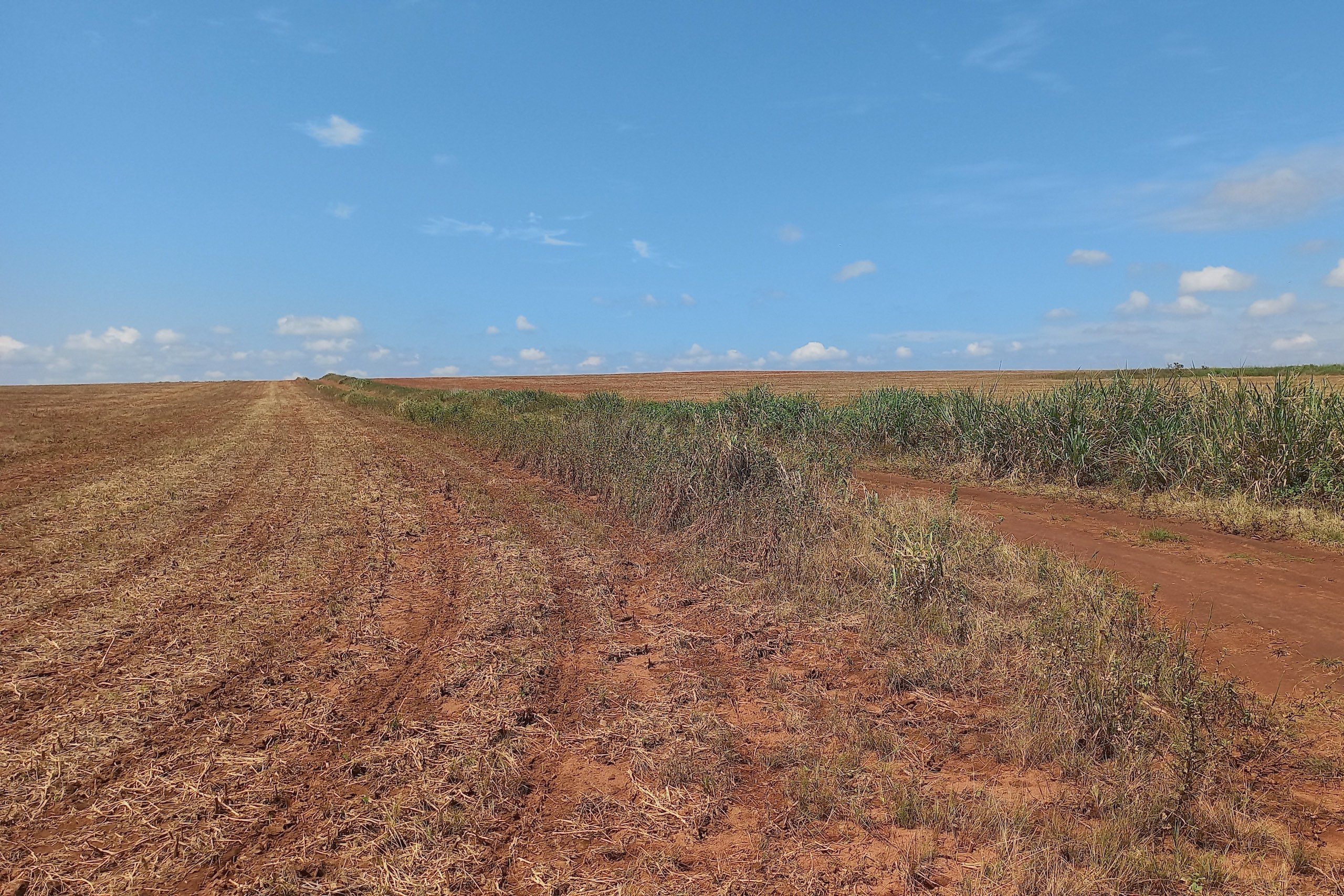
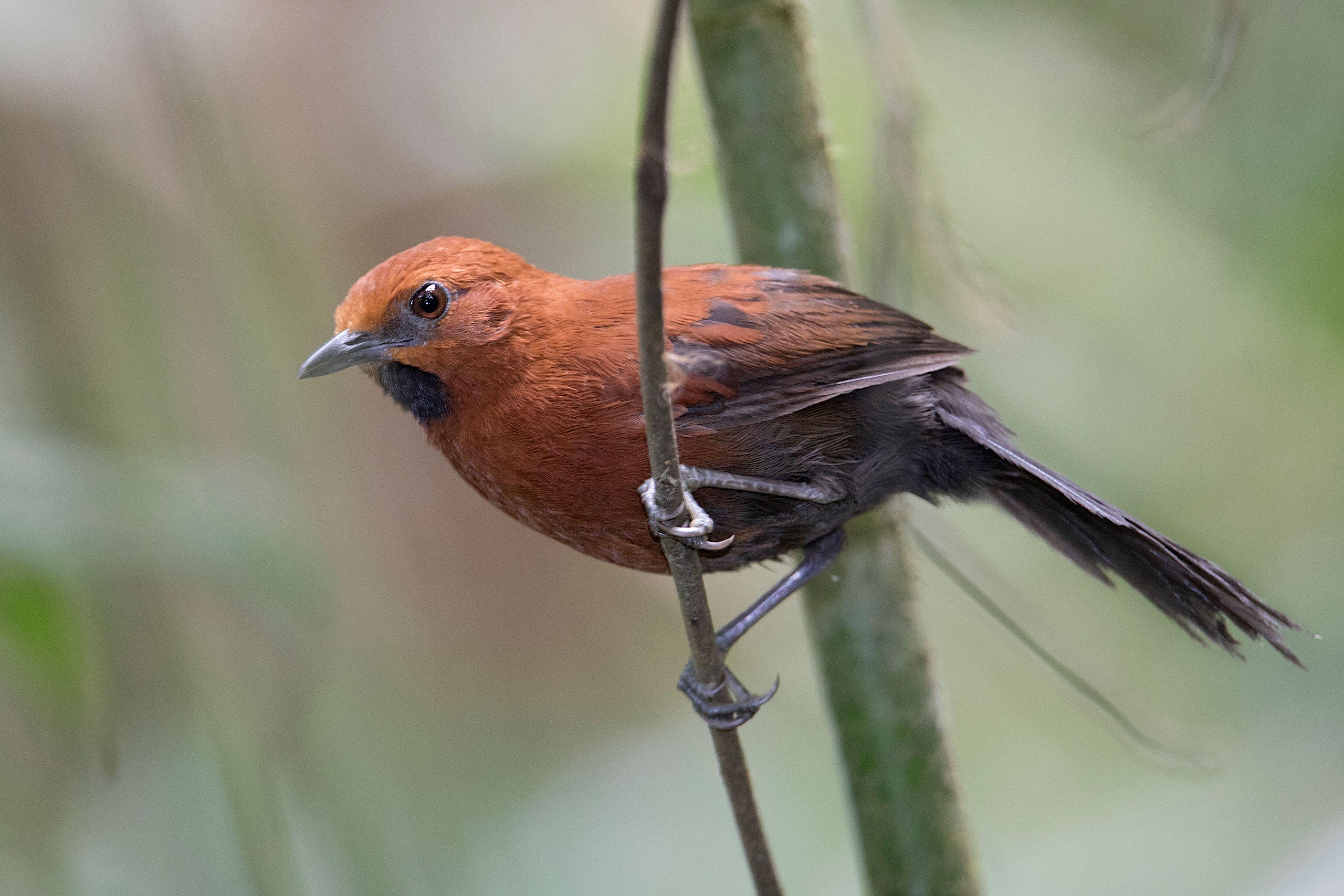
As of August 2023, the company claimed to own 50,000 hectares. These are lands where Sikuani Indigenous people no longer live. On the ground, the presence of honey bears, opossums and foxes, and royal turpials, roadside ducks and other birds, appears to be receding and thinning out.
“Since Aliar and the Mennonites appeared, the animals have gone,” says Camilo (who also asked to remain anonymous), a resident of one of the few remaining Sikuani reserves, Ibitsulibo. Camilo is referring to the migratory birds that should be crossing this sky in September, such as the semipalmated sandpiper (Tringa semipalmata) and the savannah flycatcher (Tyrannus savana).
The disappearance of birds and mammals in Puerto Gaitán is due to the destruction of the savannah. It has made way for mechanised monoculture, which flattens forests, including moricheras. According to Colombia’s Humboldt Institute, dedicated to studying biodiversity, 491 fauna and flora species in the Orinoquía region are under threat. This represents 23% of those under threat nationally.
The destruction of moricheras and floodplains has not only affected fauna and flora. It also exacerbates global warming.
In the gallery forests of Orinoquía, perpetually damp wetlands that provide the right conditions for peat to form “have enormous potential to help or hinder global efforts to address climate change”. That is according to Scott Winton, an assistant professor at the University of California, Santa Cruz, in the United States. In April, Winton reported that the average carbon density per area in Colombia’s peatlands is four to ten times greater than in the Amazon rainforest.
Winton and his team found peat in 51 of the more than 100 wetlands that they visited across Orinoquía and the Colombian Amazon. Considering Aliar-Fazenda’s developments have destroyed moricheras and floodplains in Orinoquía, Winton’s findings suggest the company may have disturbed peatland.
The expansion of Aliar-Fazenda has not only transformed the savannahs into soybean and corn monocultures. It has disturbed the ancestral balance between the Sikuani and their territory. Where once there were savannahs and moricheras with birds, today there are mistreated pigs, polluted waters, the smell of manure, and sick communities. This situation prolongs the old war against the very existence of the Sikuani people in their forests.
This report is part of a series that documents how violence, land accumulation and ecocide threaten the physical and cultural survival of the Sikuani people. It was produced by El Turbión, with the support of Global Exchange and Brighter Green’s Animals and Biodiversity Reporting Fund. Founded in 2004, El Turbión is an alternative, independent journalism outlet based in Bogotá that produces investigations and analysis that focus on the struggles of excluded communities in Colombia and beyond. The original version of this story can be accessed here.