Across the world, people have tried to use the law to hold corporate polluters accountable for climate change. No lawsuit has yet succeeded in directly linking a company’s global emissions to specific climate impacts. But the London School of Economic’s latest annual report on climate litigation notes that “important progress is being made in cases involving climate damages for localised environmental damage” – particularly in Brazil.
Brazil has proved fertile ground for climate litigation. The national environmental justice database JUMA lists 134 climate-related lawsuits, making the country the most prolific location for such actions in the Global South and the fourth most active globally.
Danielle Moreira, associate professor at the Pontifical Catholic University of Rio de Janeiro, says the past few years have seen not only an increase in the number of cases but a shift in the kind of claims being brought. She says references to climate change are “becoming more direct and explicit”.
The CNJ has indicated to all Brazilian judges that it is the responsibility of the judiciary to act against global climate changePatryck Ayala, associate professor, Federal University of Mato Grosso (UFMT)
This shift has been driven by public authorities, explains Rafaela Santos Martins da Rosa, a Brazilian federal judge. Unlike other countries, where most climate-related claims are initiated by civil society, in Brazil they are usually brought by state or federal prosecutors.
Brazil’s National Council of Justice (CNJ) has also played an important role. This public institution is tasked with ensuring the judiciary remains independent, conducting disciplinary proceedings, and issuing rules and guidelines. In 2019, it committed to embedding the UN Sustainable Development Goals into its strategic objectives, becoming the first judicial body in the world to do so.
Two years later, the CNJ published a resolution that sets a national judicial policy on the environment. Patryck Ayala, associate professor at the Federal University of Mato Grosso (UFMT), says the resolution is “surprisingly innovative”: “It sets forth a national guideline, from the CNJ, for all Brazilian judges, indicating to them that it is the responsibility of the judiciary to act against global climate change.”
New protocols for climate damage
But further rules were needed to detail how Brazilian judges could put this into practice. A working group was set up to develop them, which included academics, external researchers and representatives of the federal and state judiciary from all regions of Brazil.
The first protocol they published was about the use of evidence available to Brazilian judges, including the use of remote sensing imagery.
Then came the second protocol, which sought to explain how judges could measure climate damage. The group set to work analysing various possible mechanisms, which took almost two years. The CNJ held a public consultation in late 2022 followed by a public hearing in July 2023, where it heard feedback from civil society representatives. Moreira says this provided “fundamental technical input for the drafting of this instrument”.
The resulting protocol, published in 2024, gives concrete parameters for measuring climate damage resulting from deforestation and forest fires in both civil and criminal lawsuits. “The protocol had the great merit of being a document from the Brazilian judiciary that recognises the category of climate damage as a separate and distinct species of environmental damage,” says da Rosa, who became the deputy coordinator of this working group. “This is historic.” On 3 July, an advisory opinion issued by the Inter-American Court of Human Rights made a similar statement.
This was followed on 23 July by an International Court of Justice advisory opinion that has further strengthened this work, by confirming that parties to the Paris Agreement have a legal obligation “to protect the environment from greenhouse gas emissions”.
To assess climate damage as per the CNJ’s protocol, the size of a deforested area is fed into an online carbon calculator developed by the Amazon Environmental Research Institute (Ipam – Amazônia). This establishes how much carbon stock has been lost in any relevant Brazilian biome.
This must then be translated into a cash value, which da Rosa admits was a “difficult subject to reach a consensus” on. The group wanted to use the social cost of carbon – the economic cost of emitting a tonne of additional carbon dioxide into the atmosphere – but no official Brazilian body has yet defined a price for this.
As a result, the protocol concludes that judges should use a minimum price of USD 5 per tonne of CO2-equivalent. That figure was established more than 15 years ago in the original agreement between parties to the Amazon Fund, a mechanism that raises donations among states and companies to promote the reduction of emissions from Amazonian deforestation and forest degradation.
Subsequent estimates of the social cost of carbon, both in academic studies and by other states, have been significantly higher. The protocol notes that a higher price should be used instead in future, if and when the Brazilian government recognises one.
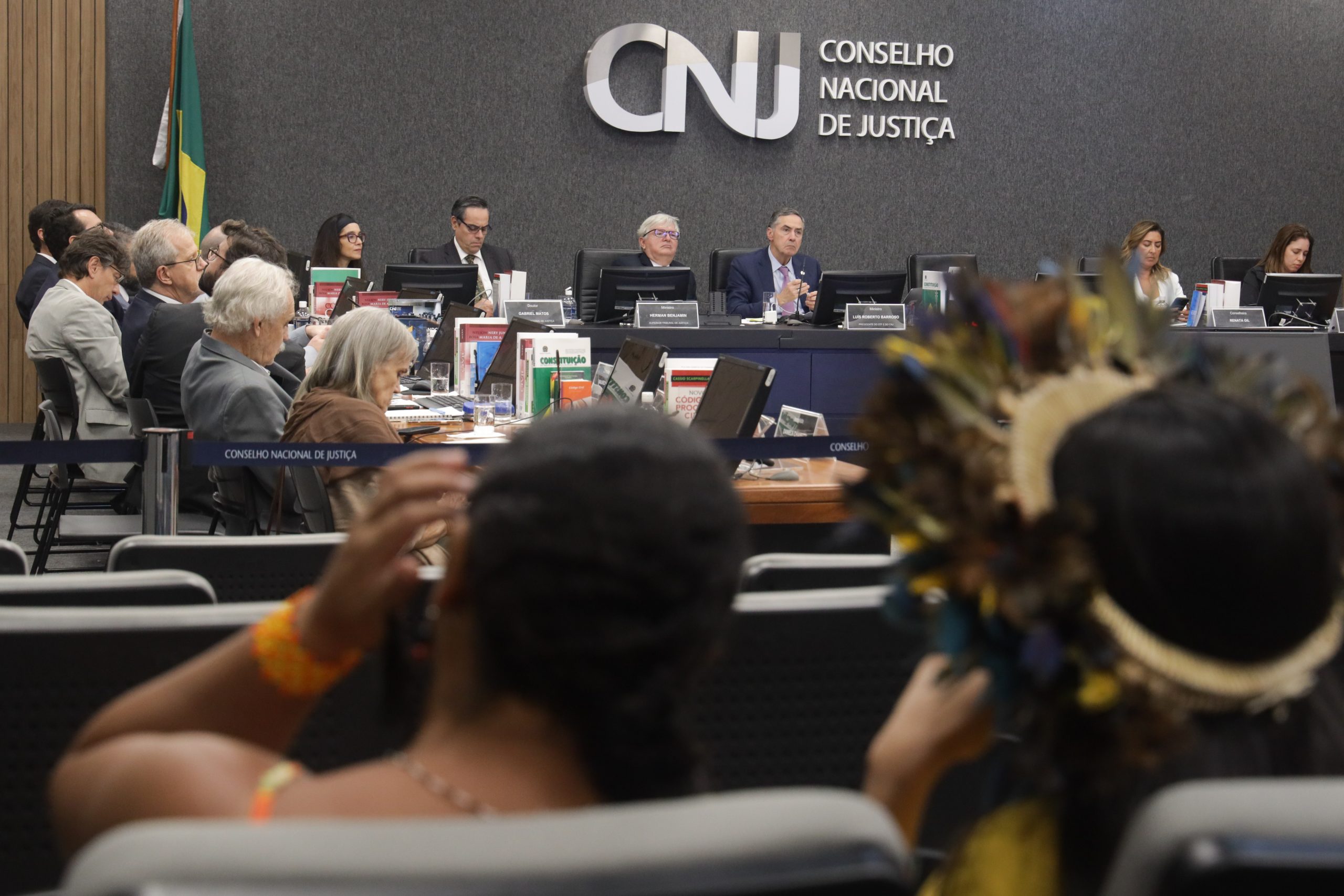
Since the protocols were published, the CNJ has changed the name of its environment policy so that it explicitly covers climate. It has also begun training judges and set up a forum to monitor compliance.
Moreira expects the second protocol in particular will “guide judicial practice and help litigants frame claims more effectively”. Da Rosa believes it will make sentencing fairer.
Putting protocol into practice
These changes are already starting to filter into the legal system. Between November and December 2024, the Federal Public Prosecutor’s Office filed a block of 193 new legal actions against more than 600 deforesters. It is seeking a total of BRL 1.3 billion (about USD 240 million) in compensation for environmental damage.
Meanwhile, judges in first-instance courts have already begun to use its methodology in their decisions, primarily in cases relating to the Amazon. “This new cycle of cases has not yet received a final ruling from the judges,” explains da Rosa, “but important movements within the judiciary signal a concerted effort to ensure that these lawsuits are judged quickly.”
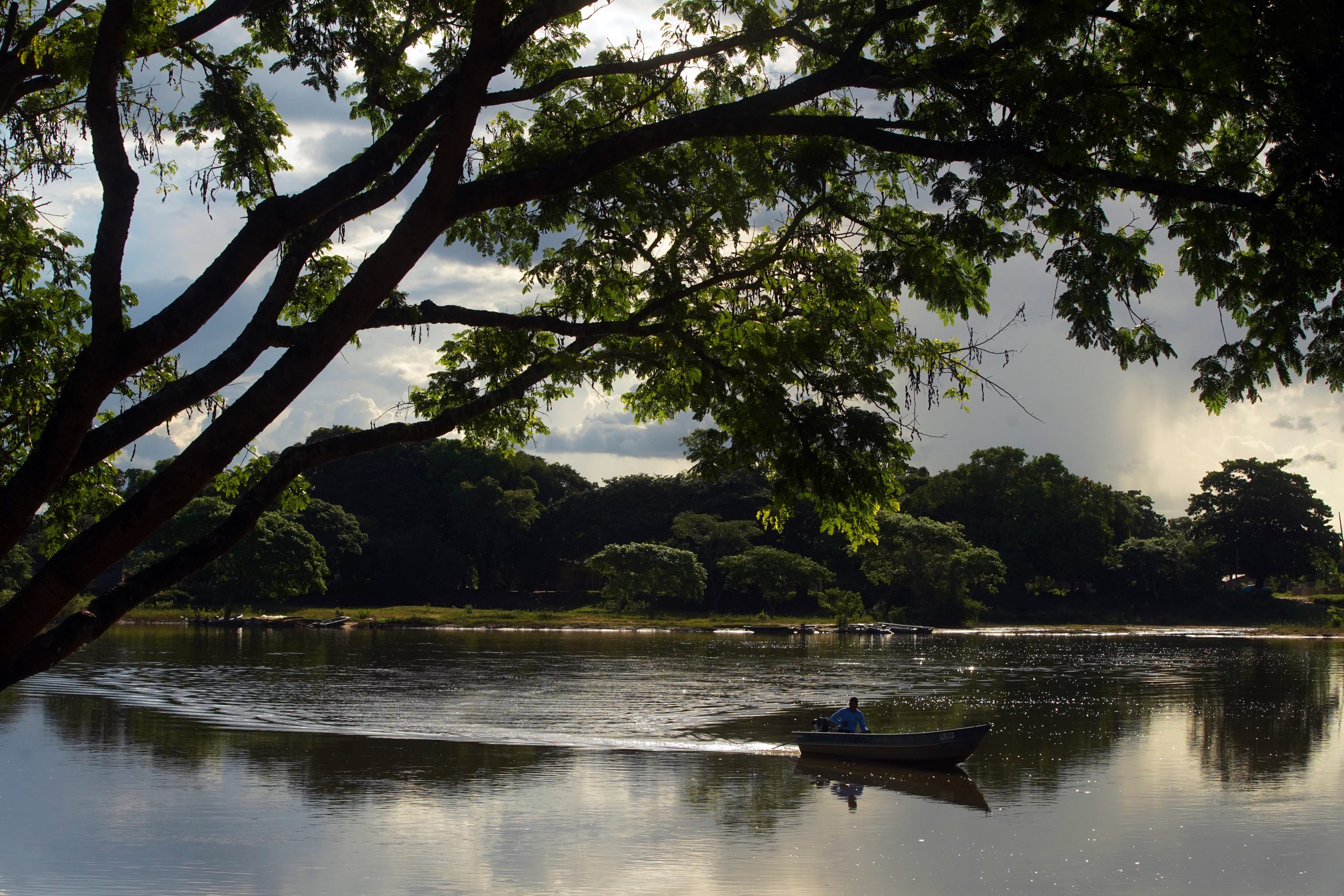
Moreira highlights a group of 22 cases filed by the Federal Public Prosecutor’s Office, following an investigation into illegal deforestation in the Antimary Agro-extractivist Settlement Project (PAE). This is a federal property in the municipality of Boca do Acre, Amazonas state, managed by the National Institute for Colonisation and Agrarian Reform (Incra) and occupied by traditional extractivist communities. The deforestation is estimated to have resulted in almost 79,000 tonnes of CO2-equivalent being released into the atmosphere. In April, the defendant, Paolo de Lima Paulo, was ordered to pay BRL 1,957,677.57 (about USD 352,000) for climate damage at the PAE, based on the USD 5 social carbon cost laid out in the CNJ’s protocol.
Before the protocol was drafted, some judges refused to define liability for climate damage caused by emissions from deforestation or fire, for reasons such as a lack of expert evidence. But according to da Rosa, there is no record of any Brazilian judge refusing to apply the protocol since its publication.
Indeed, some prosecutors have sought to value climate damage much higher than the protocol’s minimum threshold.
One ongoing case seeks to penalise a rancher, Dirceu Kruger, for deforestation on public lands in Amazonas state. Kruger had used chainsaws to clear vegetation, set fires to clear the land, then planted grass to create pasture for cattle. Satellite images show the scale of the damage and Kruger admitted on camera to having caused it.
The Federal General Attorney’s Office (AGU) argued the Organisation for Economic Co-operation and Development’s social cost of carbon pricing of EUR 60 per tonne (roughly USD 70.5) was the most appropriate level. Last year, the court froze Kruger’s assets based on this figure, to the tune of over USD 50 million. The case rumbles on.
Ripple effects
The protocol was designed specifically to tackle deforestation and forest fires. But it recognises that many types of human actions generate greenhouse gas emissions or damage carbon sinks, and says any of these could theoretically give rise to a claim.
In fact, there is already an ongoing lawsuit seeking compensation for climate damage allegedly caused by a coal power plant, in the southern state of Paraná. The Arayara Institute, a non-profit civil society organisation, claims the plant has operated for years without the requisite licences. It is challenging both the operator and state regulators to prove the plant’s legality.
But judges could still claim there is a lack of methodology for damages besides deforestation or fire, says da Rosa. For example, the CNJ has not yet defined the criteria for calculating climate damage caused by illegal methane emissions from livestock farming, she says – “but it should, because it is a very relevant gas in the scenario of Brazilian emissions.”
And although the protocol is aimed at tackling illegality, da Rosa says prosecutors could theoretically try to apply it to legal activities that have a huge climate impact.
Compensation ordered by the courts for environmental crimes can go to any public and private bodies aimed at protecting the environment. They may prioritise climate change projects, especially those involving renewable energy. In civil cases, judges tend to direct money to Brazil’s National Climate Change Fund (the FNMC).
It remains to be seen what material impact the protocol will have on deforestation in Brazil. “The success of the cases, in the sense of seeing whether responsibility was attributed and that the resources from the convictions could be used for mitigation, should be subject to evaluation by the CNJ itself,” says da Rosa.
Beyond Brazil
Although Brazil is unique in developing such a thorough national methodology, Indonesian courts have also put a monetary value on climate damage. Judges there have upheld claims for climate damage compensation following forest clearing for palm oil plantations, as well as for the release of CO2 through fires and peatland destruction.
The sequence set out in the CNJ protocol for establishing the monetary value of climate damage could easily be applied in other countries, says da Rosa. But it would need adapting to accurately assess the climate impact of different biomes, because their capacities to store carbon in biomass vary considerably. “In theory, any other jurisdiction could have cases similar to the Brazilian examples,” says da Rosa, “especially in countries where deforestation is the conduct responsible for a significant portion of greenhouse gas emissions.”
Ayala agrees the protocol could be translated, since it essentially makes existing science more accessible to courts and helps guide judges’ decisions, rather than interfering with their independence: “Similar models, if adopted by other countries, should propose standards that must be followed by judges, by a body with the authority to do so, and there should be provision for ongoing training and evaluation of these judges and their work.”