Energy has shaped the evolution of life on Earth, from the photosynthesis of early organisms to the engines of industrial society. Yet, despite its foundational role in shaping planetary systems and human progress, understandings and approaches towards it have long been dominated by engineering and economics. There has been far less focus on the social dimensions of energy, which relate to power, justice and inequality. This situation has begun to change in the past few decades as social issues gain traction both within and outside academia.
With over 130 countries currently committed to tripling their renewable-energy capacity to combat climate change, certain questions are more relevant than ever. Whose voices will shape our common future, whose will be silenced, who will benefit, and who will be burdened?
The low-carbon transition, framed as a global imperative, is expected to unleash profound structural changes in economies and societies. While this may herald a cleaner future, it also risks reproducing or strengthening legacies of injustices from the fossil-fuel era, if systemic issues of injustice embedded in energy systems are not properly reckoned with and addressed.
This is where energy justice comes in. The burgeoning field of research critically engages with energy systems to understand and interrogate how their benefits and burdens are distributed, and whose voices are heard in decision-making. It also contributes to the development of ways for energy systems to address existing injustices.
Within the field of energy justice and the broader context of low-carbon transitions, Latin America stands out as a critical yet frequently overlooked region. The continent offers not only empirical diversity of both – spanning fossil fuel extraction, hydropower megaprojects and Indigenous resistance movements against them – but also rich epistemological alternatives to dominant Western paradigms.
We, as a group of scholars researching the impacts of energy projects in Latin America, sought to fill this gap with Energy Justice in Latin America: Reflections, Lessons, and Critiques. This recently published book, which I edited, explores valuable insights from analysing case studies and contexts through an energy justice perspective.
Thirty scholars across 12 Latin American countries outline cases addressing a wide range of energy technologies and their associated issues, from extractivist states’ dependence on fossil fuels to wind-turbine blade waste. Across 16 chapters, the authors explore the social contestation of low-carbon technologies, critiques of extractivism, debates around autonomy and identity, and the systemic legacies of colonialism. Their contributions offer a timely reflection on the region’s turbulent energy landscape and contribute to a more grounded understanding of how injustice is understood and experienced across the region.
In approaching energy justice, we must think beyond simplistic binaries: of fossil fuel versus renewable energy, Global North versus Global South, modern versus traditional notions of development. The political economies of extractivist states that rely on oil and gas revenues to fund basic services are not easy systems to dislodge, nor are they inherently unjust in their origins. But as transitions unfold, the shift toward “cleaner” alternatives risks compounding the same injustices – land dispossession, environmental degradation and social exclusion – that have long plagued Latin American energy systems.
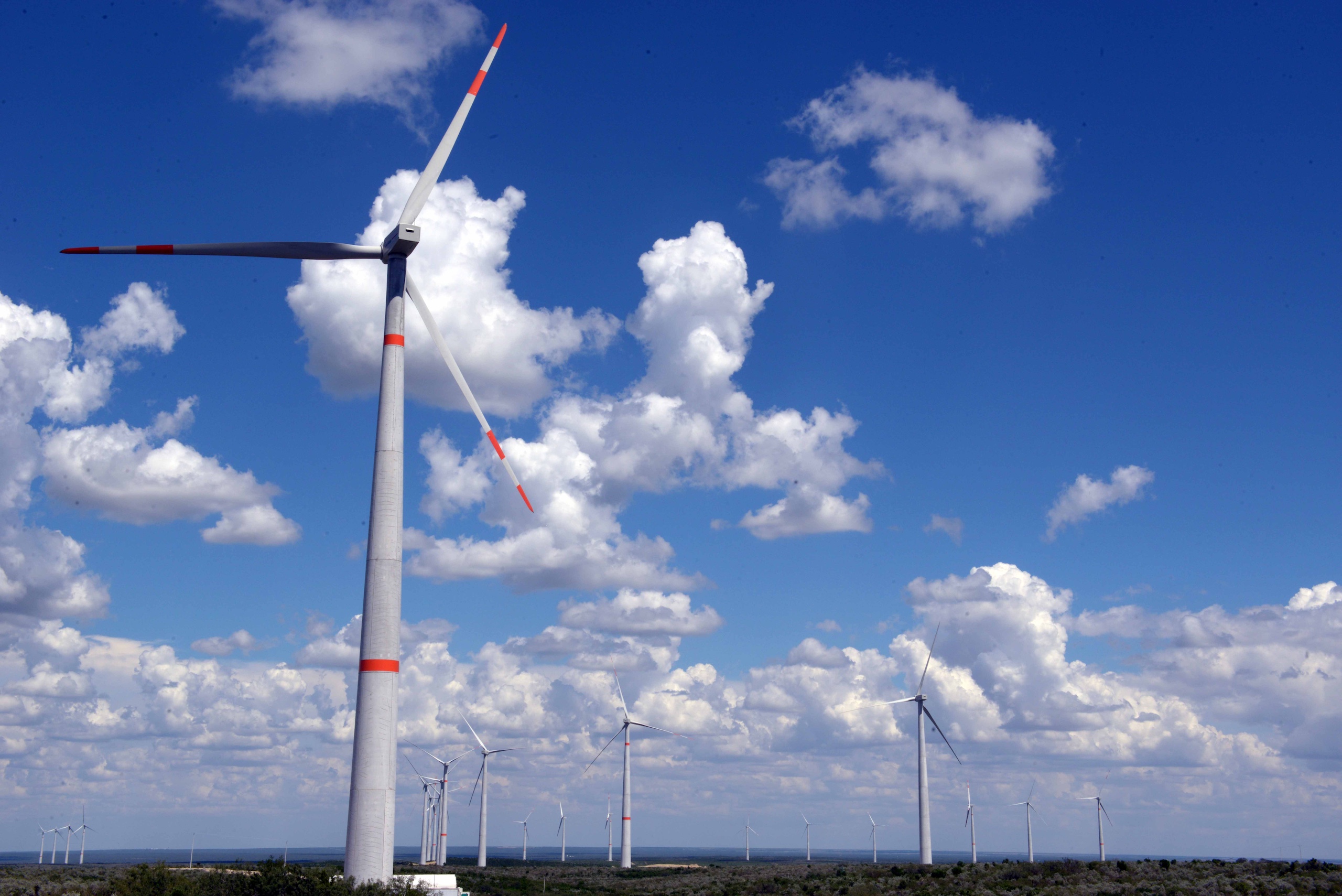
In Chile and Peru, the entanglement of copper mining and large hydropower projects with local conflicts reminds us that minerals critical to green transitions often come at a steep social and ecological cost, such as the degradation of local environments and the strengthening of intracommunity conflicts. Energy justice in Costa Rica and Panama reveals a similar pattern, where Indigenous communities are often sidelined in project planning, despite national policies that promote sustainability and inclusion. Whether it’s the violation of Indigenous rights, as reflected in Bolivia’s lithium frontier, or the neglect of wind-turbine waste in rural Mexico, a cautionary story consistently emerges: low-carbon transitions without meaningful consent or co-design from impacted communities are likely to perpetuate harm and trigger local conflicts.
It’s clear that alternative frameworks of justice need to be engaged with. We must move beyond the dominant conceptions of fairness rooted in Western philosophical traditions. In our book, one chapter combines ideas from bioethics, the philosopher John Rawls’s concept of fairness, and the reality of poverty in Latin America to show why relying only on technical or economic solutions is not enough to address complex social problems. Issues like inequality and exclusion must be tackled with approaches that are ethically grounded and socially just, it argues, because simply improving technology or boosting the economy doesn’t necessarily help those most in need.
Following a similar critical line, another envisions a feminist energy justice challenging patriarchal and colonial power structures embedded in energy systems. Feminist energy justice calls for a transformative approach to energy systems that goes beyond simply increasing women’s participation or representation. The call is to actively challenge and reshape the social, political, economic and cultural structures that underpin how energy is produced, distributed and consumed, in ways that affirm life and enable collective liberation. Such approaches facilitate identifying and addressing patriarchal and colonial power structures in energy systems, which sideline the needs and voices of vulnerable groups. They also highlight the imposing of national or global energy market needs over the wellbeing of local, often Indigenous, communities in Latin America. These approaches are not theoretical abstractions; they are necessary lenses through which to understand the lived experiences of millions.
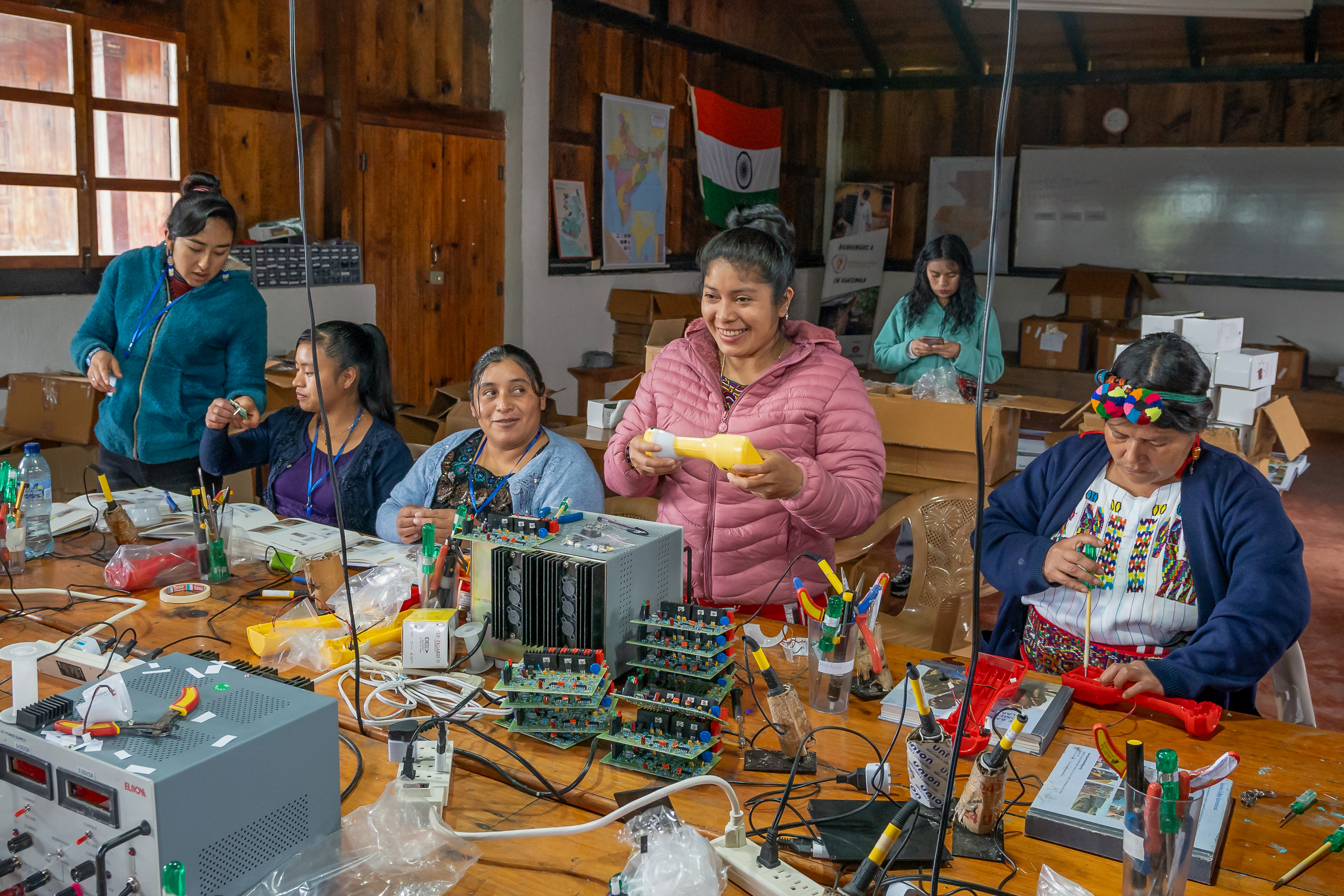

In Latin America, the relationship between energy justice, community agency and resistance is evident.
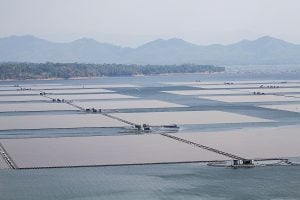
In Argentina, grassroots “territorial energisation” efforts demonstrate how locally designed energy solutions can confront inequality while building collective power, such as the Arribeños solar farm, which seeks to respond to social demands for security and stability of service.
In Ecuador, the constitutional principles of Buen Vivir and Pacha Mama made it the first country in the world to recognise the rights of nature, and bring Indigenous values into formal energy policy, offering pathways for intergenerational fairness.
In Mexico, a decolonial, pluriversal approach to energy justice is being called for. Such an approach is composed of value systems that extend beyond quantitative metrics like carbon intensity and emissions, into how valuable the renewable-energy project is for the local community. This opens the door to radically different futures where energy is not merely a commodity or service, but is rooted in strong social and cultural relations. It would seek to fulfil local needs or power traditional economic activities instead of following the mandates of capitalist modernity or global goals.
Energy systems and low-carbon transitions are not neutral assemblages of finance, wires and turbines; they are expressions of political choices, cultural values and historical trajectories
Current energy discourses often assume that scaling up solar panels or deploying green hydrogen will solve our problems. These are simplistic views that must be challenged. Similarly, energy systems and low-carbon transitions are not neutral assemblages of finance, wires and turbines; they are expressions of political choices, cultural values and historical trajectories. Knowing more about what Latin American communities have faced allows us to understand just how “clean” technologies are not inherently just, and often perpetuate land dispossession, reinforce social exclusion and ignore the voices of those most affected.
This insight is urgently needed as we face a global transition that will affect every community on Earth. If the goal is not just to decarbonise but to build equitable, democratic and culturally meaningful energy futures, then energy justice must be built from the ground up – embracing multiple ways of knowing and being, such as community-led or -owned energy projects. Latin America is not just a case study, but a crucible for rethinking energy justice itself. Its Indigenous cosmologies and social movements, as well as the academic critiques that arise, offer indispensable resources to envision and create a more inclusive and pluralistic energy future.
In a decisive decade for climate action, we have made significant improvements and gained more experience as a global community in building cleaner, low-carbon energy systems. However, the exploration of energy justice in Latin America raises an equally crucial question: can we also build fairer ones? I want to believe the answer is a resounding “yes”.
But getting there requires a profound reckoning with the region’s history of extractivism and colonialism. It needs a present-day commitment to inclusion and collaboration that genuinely embraces diverse voices and knowledges across territories, and a collective effort of co-creation. Only through this process can we begin to reshape the structures that sustain today’s energy systems and design alternatives that affirm life, reconciling local needs and aspirations with global decarbonisation goals.
Energy Justice in Latin America: Reflections, Lessons, and Critiques, edited by Adolfo Mejia Montero, was published by Routledge in February 2025.