This year’s United Nations biodiversity summit, COP16, has kicked off this week in Colombia, a nature hotspot described as one of the world’s 17 “megadiverse” countries. More than 23,000 representatives from governments, civil society, media and beyond – a record number for a biodiversity conference – have gathered in the country’s third-largest city, Cali, for two weeks of talks.
The summit comes two years after COP15, when 196 countries committed to a global deal on nature that set out four long-term goals and 23 specific targets to be achieved by 2030 to halt and reverse biodiversity loss. In Cali, governments will focus on implementation of this agreement, the Kunming-Montreal Global Biodiversity Framework (GBF), with many starting to submit updated national plans towards this.
For Latin America, the conference is an opportunity to highlight the region’s critical role in preserving biodiversity amid growing threats from extractive industries. As the COP president, Colombia has also aimed to put issues around energy systems and transitions high up the agenda. Energy has received less attention at previous summits, but its linkages with biodiversity and natural resources, as well as climate change, are being highlighted by the presidency, and have stirred debate among participants in various panels at the event.
“Latin America is a powerhouse in renewable energy and biodiversity and both issues are linked,” Susana Muhamad, Colombia’s environment minister and the COP16 president, told Dialogue Earth. “We need to start discussing that intersection so governments can create public policies that make the two sectors compatible. “It’s not enough just to decarbonise. We need to also recover the ecosystems to stabilise the world’s climate.”
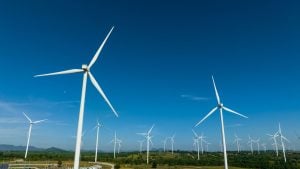
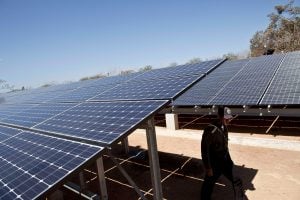
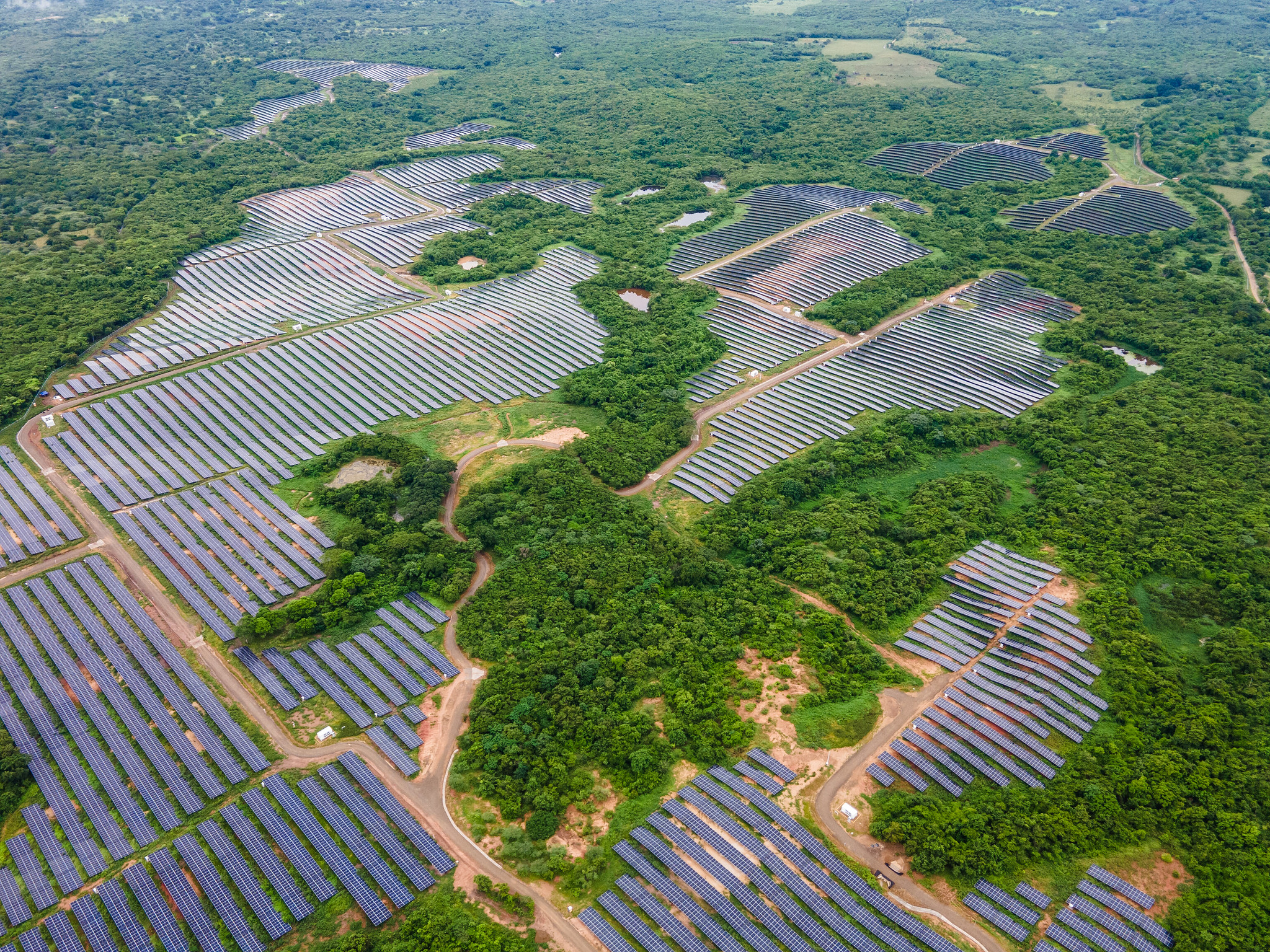
Last year, Latin America generated 62% of its electricity from renewable sources, mostly hydropower but with a growing presence of solar and wind, according to data from climate thinktank Ember. The region is also an established producer of multiple minerals critical for clean energy technologies, accounting for 40% of the production of copper and supplying 35% of the world’s lithium, among other minerals.
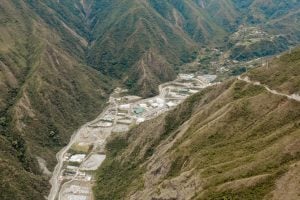
The expansion of solar and wind farms has, however, led to conflicts with local communities in recent years amid disputes over land and impacts on biodiversity and ecosystems. This has also been the case with the many new mining projects in the region, from Argentina to Peru. Critical minerals and commodities were the focus of 23% of foreign investments in the region in 2023.
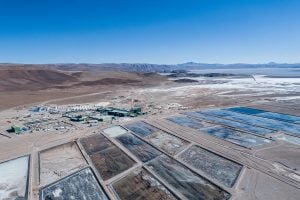
“We are not opposed to the energy transition, but we are being sacrificed in the name of it,” Iber Sarapura, a resident of the Alfarcito community in the Salinas Grandes salt flat in northern Argentina, told Dialogue Earth in Cali. Projects to exploit lithium deposits at Salinas Grandes have attracted much interest, but encountered significant local resistance.
“We live in the only salt flat in Argentina that has said ‘no’ to lithium, a place where it rains only one week per year. Water is much more valuable than the mineral,” Sarapura said.
Biodiversity finance
Countries agreed under the GBF that at least USD 200 billion in annual funding was necessary to support biodiversity protection and restoration, to be provided by multiple sources, including governments and the private sector and also new finance mechanisms. The UN established a new fund for the GBF but ahead of the conference, only seven countries had so far allocated funding to it, committing a total of USD 243 million.
In their addresses at COP16, Latin American governments highlighted the need to increase funding for biodiversity from developed countries. Gillian Guthrie, Jamaica’s representative under the UN Convention on Biological Diversity (CBD) addressed the issue in the plenary on behalf of GRULAC, the Latin America and Caribbean negotiating group.
“Adequate funding is a prerequisite to implement the GBF. Funds are alarmingly insufficient. Falling short of funding leads to projects on the ground being underfunded,” Guthrie said. “Developing countries need to mobilise resources domestically while combating poverty, hunger and inequality. We advocate for a fair financial architecture for biodiversity.”
Brazil, on behalf of the Like-Minded Megadiverse Countries – a group of 20 parties home to 70% of global biodiversity – said in a statement that while they are doing their best to implement the GBF, international cooperation is fundamental. “The scale of the cooperation, whether through bilateral channels or multilateral entities, has not been sufficient, timely, and predictable,” it reads.
Emilio Spataro, an associate in biodiversity diplomacy at the Climate Finance Group for Latin America and the Caribbean (GFLAC), an NGO, told Dialogue Earth that it would be impossible to fulfil the biodiversity targets under the GBF if a wider discussion on finance does not take place – comments echoing those of Colombia’s President Gustavo Petro at the opening plenary.
“The US, China and Europe charge interest surcharge to the countries that absorb CO2 from the atmosphere like sponges through our forests. Asking for a risk premium to those who absorb the CO2 spewed by the planet’s mega-rich is a truly deadly contradiction,” Petro said. “It’s the richest predators who should be taxed to decarbonise production and consumption.”
National plans
As part of the GBF, countries agreed to submit National Biodiversity Strategy and Action Plans (NBSAPs) ahead of COP16. These are plans for how countries will meet the targets under the framework. However, 83% of the 196 countries that are part of the CBD have not yet presented their updated plans with one week to go before the end of the conference.
In Latin America, only Colombia, Mexico, Suriname and Cuba have so far presented their plans. Colombia’s plan, for example, aims to expand the area of protected lands by 10% to reach 34% of its territory by 2030, and to build a clear connection between nature and climate. The country expects to have 3% of its GDP depending on biodiversity by 2030, up from the current level of 0.8%, by boosting the bioeconomy.
Next week, the COP16 summit’s so-called High-Level Segment will take place, with the expected participation of presidents Lula da Silva of Brazil, Dina Boluarte of Peru and Xiomara Castro of Honduras, among others. They will give brief speeches in the plenary and may also participate in other side events in the conference.
COP16 is expected to finish on 1 November with an agreement on how to monitor, report, and review progress on the GBF targets. Countries should also finalise negotiations on sharing the benefits from the use of digital sequence information (DSI) on plant and animal genetic resources, and approve a plan on the links between health and nature, among other issues.
“We shouldn’t see the GBF as an obstacle or a risk but instead as an opportunity to think of a new economy,” Muhamad said.
This story was produced as part of the 2024 CBD COP16 Fellowship organized by Internews’ Earth Journalism Network.