In summer 2015, a team of researchers led by wildlife biologist Janak Khatiwada ventured upstream along the shores of the Arun River for almost four weeks, into the high mountains of Nepal’s Kanchenjunga Conservation Area. The aim of their expedition was to survey the distribution of herpetofauna (reptiles and amphibians) in eastern Nepal. This meant spending nights turning over boulders on the riverbanks, identifying and sometimes collecting specimens. One night in the Ghunsa area of Taplejung district, the team found an unusual frog.
Based on the toxin-secreting glands on its back, hidden tympanum (hearing organ) and unwebbed fingers, Khatiwada knew the frog was a species in the genus Scutiger, but he wasn’t sure of the species. The team captured and preserved a couple of specimens.
On returning to the lab, Khatiwada and his team extracted the frog’s DNA from preserved muscle tissue, then sequenced and amplified the gene. The typical threshold of genetic difference between two distinct species is 2%. This frog showed genetic divergence of 10-11% from the other two Scutiger species known from Nepal, revealing it to be a new species.
“That’s what genetic data does,” said Khatiwada. “It reduces almost 90% of our workload in identification.” They named the species Scutiger ghunsa, in the hope that it would “raise awareness [among] local people for conservation,” he said.
Genetic data reduces almost 90% of our workload in identificationJanak Khatiwada, wildlife biologist
The Himalayas are one of the most biodiverse regions in the world. As the mountains have evolved, their geology has created a variety of habitats and climates – separated by the natural boundaries of ridges and valleys – leading to the evolution of a high diversity of species. Evolution is an ongoing process: some clearly distinct populations may be on the way to separating into new species but still be closely related genetically, whereas others may be much more genetically distinct than their similar appearance suggests. Gene-based identification can be an invaluable tool in uncovering the hidden biodiversity of the Himalayas – and a crucial step in preserving it.
Not one species of panda, but two?
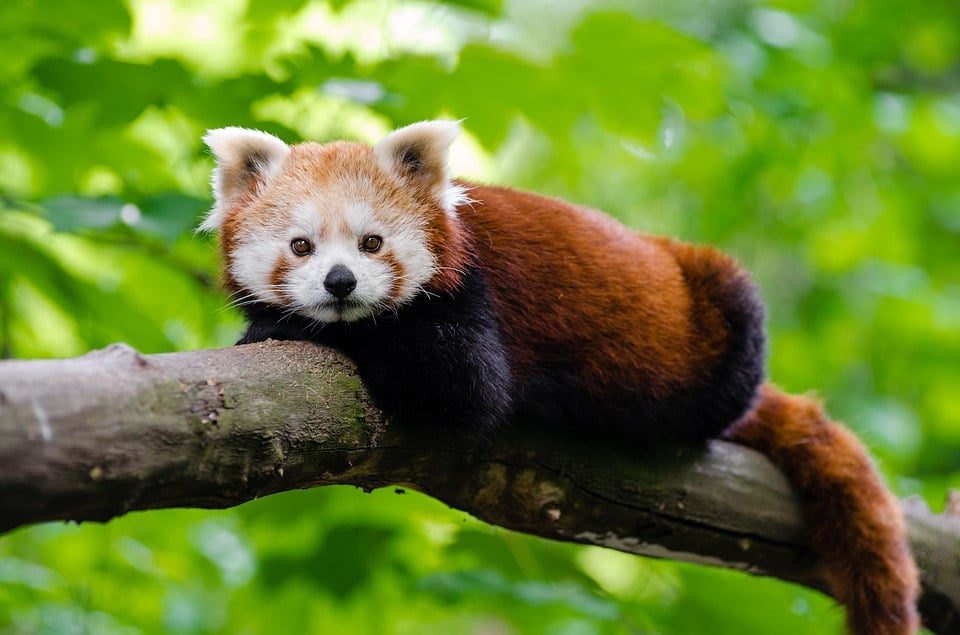
Until 2020, red pandas, occurring from Nepal to southwest China, were generally considered to belong to a single species. Based on differences in skull size, tail rings and coat colour, many researchers had suspected that there might actually be two species of red panda. But these differences were not convincing enough to warrant a taxonomic revision.
In biology, taxonomy refers to the scientific classification of living things, which are grouped according to their evolutionary relationships. In the mainstream taxonomy, a single species is grouped with closely related species into a genus; related genera are then grouped into a family, and so on.
Realising this gap, in early 2020, Arjun Thapa and colleagues at the Chinese Academy of Sciences carried out a full genome sequence analysis of 65 wild red pandas, covering the panda’s entire geographical range. The resulting study suggested that there are, indeed, two distinct species of red panda – the Himalayan and the Chinese red panda.
Beyond the question of separating species, the study highlights another value of genetic science: exposing hidden threats. The analysis revealed low genetic diversity among the Himalayan red panda, which potentially increases its risk of extinction. In the face of new disease outbreaks, for example, evolution will favour populations that can adapt, leaving populations without genetic diversity highly vulnerable.
“It is urgent that we do a proper IUCN assessment for both species based on the recent findings,” said Thapa.
The shape of yew
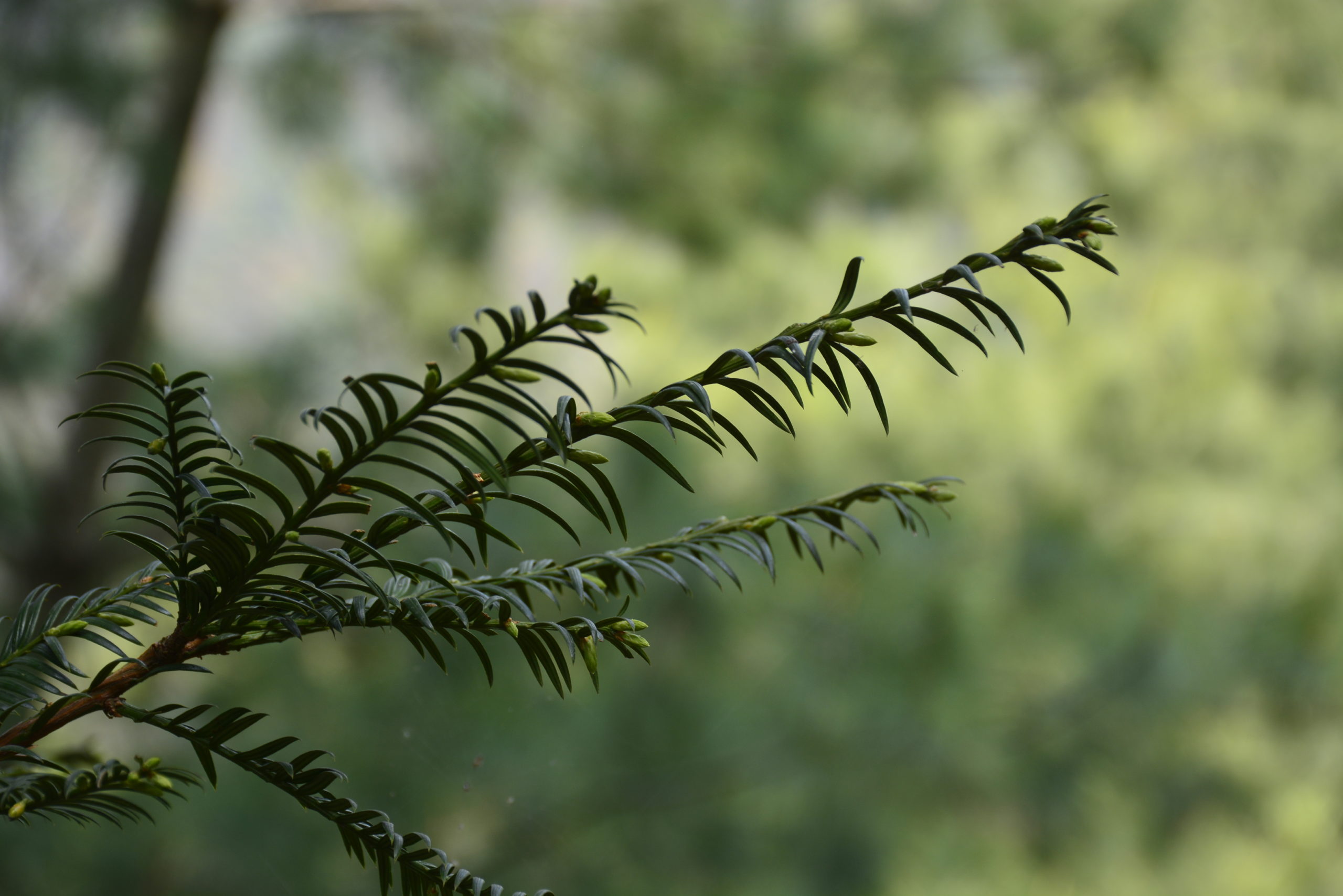
The results of genetic studies are not always universally accepted. In the early 2010s, when Ram Chandra Poudel, senior scientific officer at the Nepal Academy of Science and Technology, set out to map the status and distribution of yew trees across Nepal, he found a species previously unrecorded from the country: Taxus mairei or Maire’s yew. Poudel and colleagues considered the conifer’s morphology (size, shape and structure), climatic data and genetic markers to confirm that the trees were not either of the two yew species previously known to occur in Nepal. They published the findings in a peer-reviewed journal.
However, the Department of Plant Resources (DPR), and a few senior botanists in Nepal have continued to consider the population Poudel identified to be a just another variety of the eastern Himalayan yew, Taxus wallichiana, based on its morphology.
“I find the reluctance of senior taxonomists quite irrational,” Poudel said, “because even the local harvesters and traders easily differentiate the morphological and ecological difference among species.” The species is highly endangered in Nepal, with less than 500 mature trees remaining, and needs an urgent conservation action plan in the face of increasing overexploitation, argued Poudel.
Parts of the yew contain a compound that can be used to treat cancer; this underlines the importance of preserving plant diversity.
Why genetic science matters for conservation
Attaining ‘species status’ can have significant implications for the conservation of a population. The ‘discovery’ of a ‘new species’ through genetic study, even if the population was already known, may be met with a flurry of media interest. This can translate into increased engagement from policymakers, conservationists and local communities.
Plus, many conservation frameworks are tied to the notion of a species. National wildlife legislation in Nepal and many other countries gives differing levels of protection to different species. For example, if a species is included on a ‘protected’ list, that might criminalise killing or disturbing it, or mean that its habitat cannot be destroyed. An endangered population receiving ‘species’ status might open up the possibility of its inclusion on such a list, rather than being considered just a form of an otherwise-unprotected species.
Similarly, the International Union for Conservation of Nature (IUCN) Red List – the global database of endangered wild animals and plants – mostly focuses on the species level to assess threats to global biodiversity. Where data on distribution, population size and threats to a species are available, IUCN scientists periodically review the threatened status of each species to inform and prioritise conservation action. While the frog Scutiger ghunsa, described by Khatiwada and his team, is not yet included on the IUCN Red List, their work has at least laid the groundwork for its assessment.
However, Khatiwada warns, official recognition and proper conservation plans for the species face uncertainty, as Nepal lacks dedicated herpetologists who could catalogue its basic demographic information.
Species diversity refers to the variety of different species of plants, animals, fungi and micro-organisms.
Genetic diversity means the variety of genes contained across different species and within a single species. Sometimes genetic diversity in a species is very obvious: for example, poodles, German shepherds and golden retrievers are all domestic dogs, but look very different.
Ecosystem diversity refers to all the life held in different habitats, whether tropical or temperate forests, hot and cold deserts, wetlands, rivers, mountains and coral reefs. Each ecosystem is a series of complex relationships between biotic (living) components such as plants and animals, and abiotic (non-living) components which include sunlight, air, water, minerals and nutrients.
Translating genetic science into conservation faces hurdles
“Incorporation of genetic data for taxonomic identification has been ongoing for almost five decades in the West,” said Uma Ramakrishnan, a molecular ecologist at the National Centre for Biological Sciences, Bangalore, India. There is now a burst of such studies in South Asia “because we were behind in its incorporation and now trying to catch up”.
The IUCN Red List assessments are currently based on data such as population size and distribution, but not genetic diversity. In a co-authored paper, Brittany Garner, a conservation biologist at the University of Montana, USA, argued that if the list considered data on genetic diversity, many species would be afforded a more critical status. In 2020, the IUCN congress adopted a motion calling for increased consideration of genetic diversity in IUCN planning and action.
The IUCN database is gigantic, and its committees include thousands of scientists from across the world. Changing something so big that has been going on for so long is “not that simple”, Garner told The Third Pole, “because the Red List was conceived before the idea of infusing genetic data for assessments”. But given a rapidly changing environment, genetic assessment could help to look at the future vulnerability of a species and how they could adapt and evolve, she said.
Garner argues that countries shouldn’t always wait for IUCN assessments before drafting conservation action plans for vulnerable species. “The IUCN will always be behind in catching up with what’s going on in the ground,” she said, adding that for newly identified species that are threatened, local bodies, governments and researchers should actively collaborate for better conservation.
As elements of the conservation world struggle to keep pace with genetic science, some findings are informing real world conservation actions. Based on the findings of Ram Chandra Paudel and team, the NGO Greenhood Nepal is working to assess the wild population of Maire’s yew, and educate locals about its sustainable harvesting.
No matter what we name it, the tree in the forest is the same and it faces an uncertain futureKumar Paudel, Greenhood Nepal
“Genetic tools are precise in identification of species, and they provide greater resolution in species diversity to help understand resilience of wildlife populations to environmental changes. We just need a collective effort to educate decision makers on the need and benefits of incorporation of these tools in conservation and biodiversity management,” said Kumar Paudel, director at Greenhood Nepal.
Referring to the vulnerable population of Maire’s yew, Paudel said: “No matter what we name it, the tree in the forest is the same and the fact is that it faces an uncertain future.”