From warm beaches near the equator to the cold shores of the south, surfers and scientists are becoming activists in South America. They are successfully pushing for laws to protect the waves that break along the Pacific coast.
Chile recently became the latest country to pass legislation that protects its breakers. Ecuador is following suit. Both take inspiration from Peru, which set the regional precedent 25 years ago.
What began as a local cause for surfers who wanted to protect their pastime has become a regional push to recognise the ecological, cultural and economic value of waves.
Why protect waves?
Karla Jaramillo, an Ecuadorian marine biologist and surfer, says protecting waves is essential for protecting coastal ecosystems. These environments are fragile and even minimal interventions, like building a pier or breakwater, can alter both the waves loved by surfers and the environments on which ocean species depend.
“Surfers are the first to notice these changes because we inhabit these spaces,” Jaramillo tells Dialogue Earth.
The role of waves in the coastal environment is comparable to that of plants in wetlands or rainforests. They shape the landscape and regulate the ecosystem.
How development can change a wave
Waves are a key component of how water moves around coasts, and therefore a major factor in shaping the seabed, shoreline and what lives there.
Waves deemed good quality for surfing are often related to seabed features such as reefs and sandbars, and how they interact with local wind, tide and currents.
They can be drastically altered by construction and development – such as breakwaters, shipping facilities and beach replenishment – that changes the shape of the seabed, the shore or the movement of water. If wave height, duration or shape is altered, this can either improve or damage the attraction for surfers.
Jesse Reiblich is a researcher in the Department of Marine Affairs at the University of Rhode Island in the US. He says waves have been historically ignored in protection policies, but in recent decades surfers have spearheaded a growing movement to defend the spaces they inhabit.
In 2010, New Zealand’s Coastal Zone Policy Statement established protection for surf breaks. And the US state of California is currently debating legislation that would create state surfing reserves, adding to a 1976 act that protects public access to the coast.
In Latin America, Peru was first in 2000. Other countries have since built their own, similar systems. “It is interesting that a legal framework was found for the exclusive protection of breakers and to see how each country adapts this,” says Reiblich.
Peru catches the wave
In the late 1990s, Peruvian surfers organised to push for more protection. They were driven by cases such as La Herradura, where road building affected the entire beach, and the construction of a pier in Cabo Blanco.
Peru became the pioneer of surf protection in 2000 with its Breakers Law, designed exclusively for the protection of waves. The law states that waves can be protected from activities that could damage the breaks, alter the seabed or change currents.
Although the law was passed in 2000, the regulations that actually enforce it under the Peruvian system were only created in 2013 – a year before Peru hosted the World Surfing Games.
Since then, Peru’s Hazla por tu Ola (Do it for your Wave) campaign has used the Breakers Law to protect more than 30 surf breaks.
The campaign brings together companies, athletes and citizens to finance the necessary studies to register a surf break as a protected area under Peruvian law. To officially register a break, details of the waves, underwater topography, nearby coastline and biodiversity must be recorded and submitted.
The initiative was key in raising awareness of the importance of caring for waves and gaining more support for the law, says the campaign’s coordinator Carolina Butrich, a former national windsurfing champion.
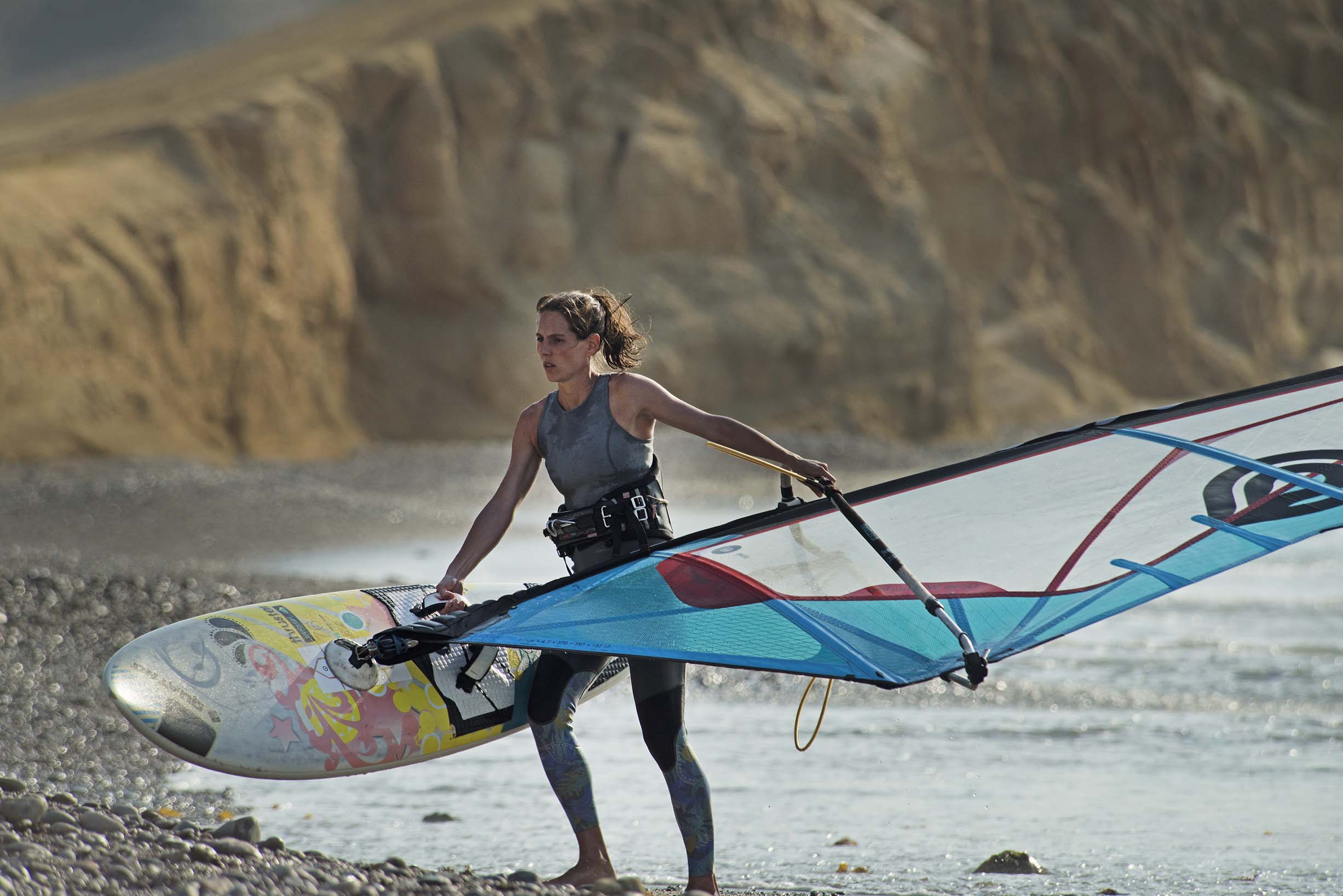
Implementation of the law was not easy, says Butrich, partly because the concept of protecting waves was difficult to convey. When passed in 2000, the law did not declare a body directly responsible for its implementation.
This took years to establish. The navy was eventually put in charge of registering waves, meaning it oversees the assessment of information for a wave’s inclusion on the register, and enforces the law.
Chile drops in
Peru’s example inspired other surfing communities.
“After seeing what happened in Peru – seeing that protecting a wave could be legal – we began to look at how to protect the waves here,” says Ramón Navarro, a big-wave surfer and one of the most prominent figures defending Chile’s breakers.
Navarro gives his native break, at Punta de Lobos in central Chile, as an example of community-driven coastal conservation. To protect the wave, a campaign purchased a key beachfront site, and Punta de Lobos became a World Surfing Reserve in 2017.
These reserves are an initiative of Save The Waves, a coalition of organisations that aims to protect surf ecosystems across the globe. It supported Navarro’s campaign and has helped to turn Punta de Lobos into a model of how local activism and international alliances can come together to protect coastal ecosystems.
This success was locally driven, rather than being brought about by national laws. “There is no single way to protect a wave,” concludes Navarro.
Although the surfing community in Chile was making gains such as at Punta de Lobos, they wanted more. So, they pushed their government to follow Peru’s example and succeeded. In October, the country passed a law that brings in similar protections, and grants the Chilean navy the power to enforce compliance.
Under the law, any construction that could compromise a protected wave must undergo precautionary studies. In most cases, construction is likely to be forbidden to prevent harm. The regulations mandate Chile’s Ministry of Sport and regional governments to identify and conserve surf breaks, as well as requiring technical reports on the topography and biodiversity impact for any work that may affect them.
“This is great news. But the hardest work is yet to come: the implementation of the law,” warns Navarro.
Ecuador joins the lineup
The defence of Ecuador’s waves began in 2019, when a project to build a breakwater in the south-western province of Guayas came to the notice of local surfers. They feared the work would alter the breakers that brought them to the beach and gave the local environment its shape.
A multinational collective of mainly surfers was born, finding its inspiration in the Peruvian model. Called Mareas Vivas (Living Tides), the group also sought legal advice. It involved the Ecuadorian Surfing Federation in its current legislative proposals, which are being discussed in the National Assembly. The hope is to offer similar protection to the laws in Peru and Chile.
Carolina Butrich has presented the Peruvian case to the assembly.
Cecilia Torres, one of the coordinators of Mareas Vivas, claims strong campaigning brought about a change in public opinion during the first legislative debate in August 2025.
“More people were beginning to understand the importance of waves, not only from an environmental or cultural perspective, but also as an essential part of the coastal ecosystem,” she says. “There are so many aspects to consider … from the coastline and ecological dynamics to the economic impact.”
The law was set to be debated by politicians for a second time in November but due to political turmoil in Ecuador this has been delayed.
Mareas Vivas is pushing for the second debate to be rescheduled. Torres says the collective is already preparing for the law’s implementation, stressing: “A law is useless if we don’t enforce it.”
Surf’s up
Beatriz Aguirre is from Corriente a Favor (Favourable Current), an Ecuadorian foundation that promotes sustainable tourism and is a Mareas Vivas member. She knows that a single wave can transform a community’s economy.
Aguirre cites the case of Lobitos, in north-west Peru, where surfing generates USD 3.6 million annually for the local economy according to Save The Waves. For Aguirre, protecting waves boosts tourism but also becomes a tool for marine conservation through the pairing of waves’ ecological and financial value.
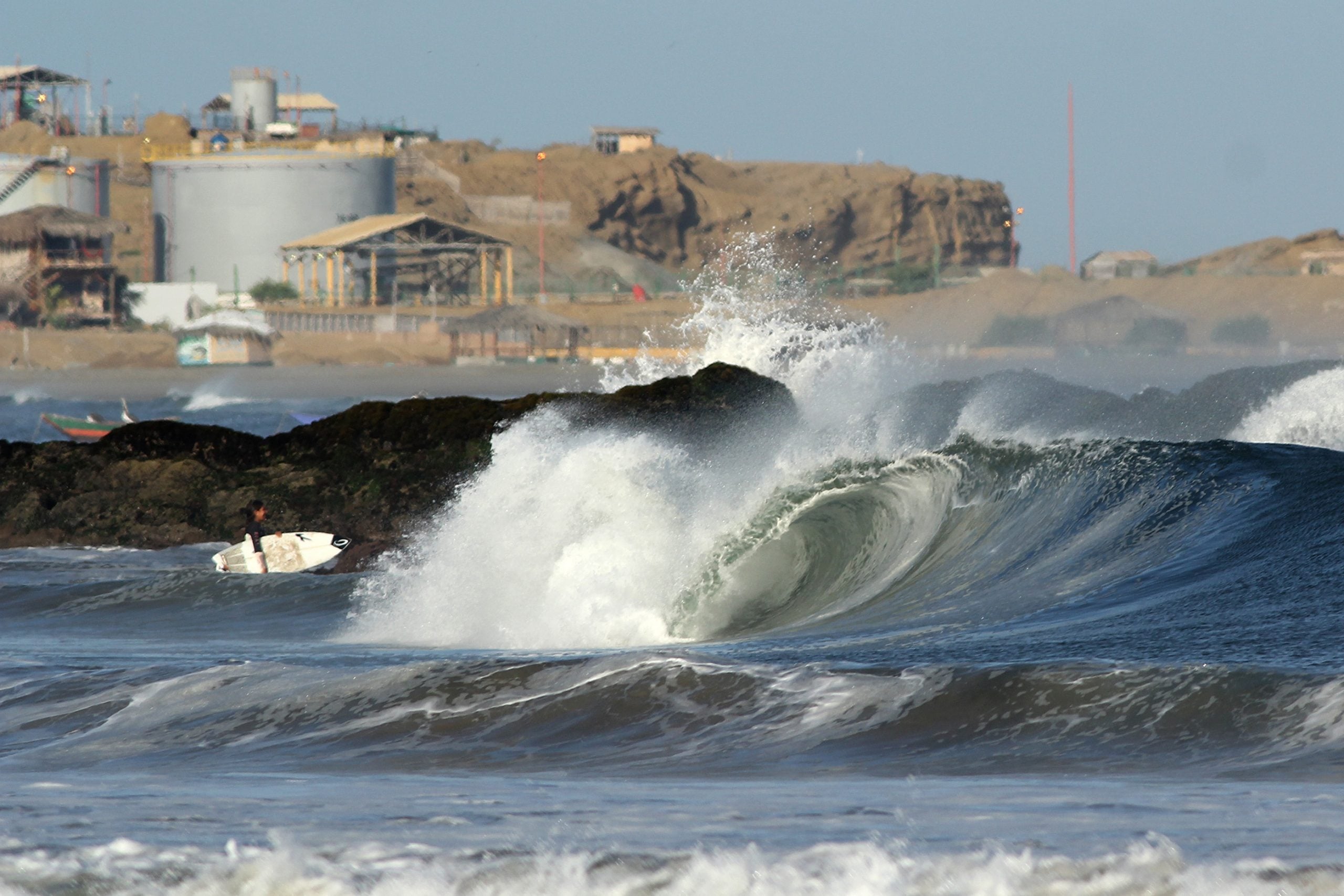
These initiatives are redefining countries’ relationship with the sea, turning the energy and movement of the ocean into a common good with legal protection. Peru, Chile and Ecuador are being closely watched by other countries, such as Mexico, where activists are seeking to replicate the model.
As coastal development increases, so do the risks of interfering in ocean systems, warns the University of Southern California oceanographer, Willington Rentería. Developments such as that at La Herradura, which inspired the start of Peru’s surf-protection journey, are being repeated on beaches across Latin America, he warns.
“The sea cannot be controlled,” says Rentería. “Protecting the waves also means protecting communities.”
The ride ahead promises to be choppy. But the need to protect waves they see as theirs has already united those coastal communities, scientists and members of government who believe that the future of their countries are linked to the energy of waves.