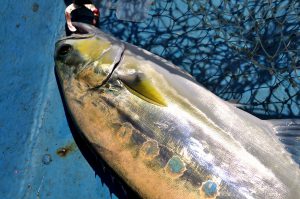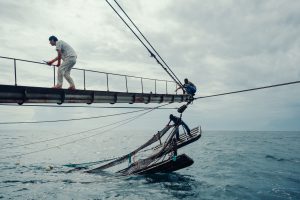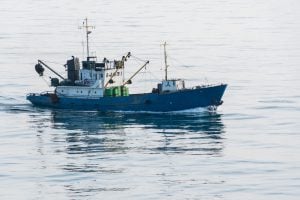
Every day, a similar scene. A fleet of between 200 and 500 fishing boats scours the limit of Argentina’s Exclusive Economic Zone (EEZ); waters that belong to everyone or no one, depending on your way of looking at it.
The vessels are from Spain, South Korea and China, among other countries. They are mostly searching for squid but also hake, rays and sharks. When the holds are full, an auxiliary refrigerated vessel known as a “reefer” or “mothership” appears and offloads the catch, allowing the smaller vessels to continue fishing. This process is known as transshipment.
Although transshipment is routine in the international fish trade, on the high seas these operations camouflage a multitude of activities related to illegal fishing: the “laundering” of undeclared fish, the uncontrolled depredation of marine fauna, corporate and government corruption, and even the trafficking of drugs, weapons and people.
“Transshipment can facilitate illegal, unreported and unregulated (IUU) fishing. This has become more common as coastal fish stocks are depleted, so fishing fleets move further offshore,” says John Hocevar, director of Greenpeace USA’s Oceans campaign.
By offloading cargo at sea, vessels can avoid the time-consuming journey back to port that takes hundreds or even thousands of miles.
Gateway crime
One of the problems around transshipment on the high seas is that “legal and illegal fishing are all mixed up together”, says Miren Gutiérrez, a researcher at the Overseas Development Institute (ODI).
According to Argentine marine conservation specialist, Milko Schvartzman, transshipment occurs for two reasons: to save costs and to elude monitoring.
“It serves to circumvent the traceability of the catch; who caught it, how it was caught, and where it was caught,” he says.
It can also have a negative impact on local economies as fish are taken elsewhere for processing, thereby limiting the number of jobs on shore.
Abundant seas
The waters on the margin of Argentina’s EEZ have become a hotspot for transshipment.
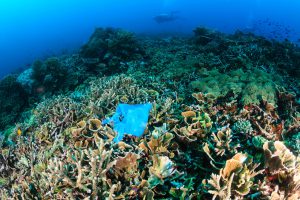
The area is home to some of the most precious marine biodiversity on the planet. Warm ocean currents from Brazil meet with cold water from the Falklands (Malvinas) Islands, above a vast seabed plain that plunges steeply at the edge of the continental shelf. This enables marine life to prosper.
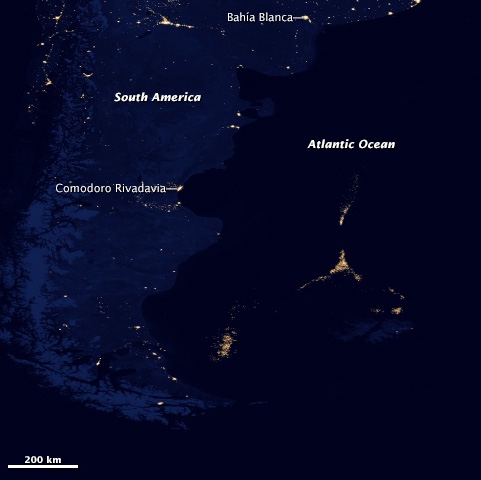
In this part of the South Atlantic, the main fishing nations are China, South Korea and Spain. According to Schvartzman, at peak season about 460 foreign ships ply the limit of Argentine jurisdictional waters: 40% are Chinese; 20% are from South Korea; and 15% from Spain.
Pablo Trueba who studies data on the movement of ships at OceanMind, says preliminary information indicated that there were at least 34 refrigerated vessels with speeds similar to those of fish transshipment vessels in 2017.
Plunder on the high seas
While fishing outside Argentina’s EEZ is not illegal it represents a crucial arena in the fight against illegal fishing.
“These [fleets] are out of control, using inadequate fishing practices and systems, and changing their flags, names or identification with relative ease in order to avoid being recognised, caught or fined,” says Martín Toledano, president of the Fundación Nuestromar (Our Sea Foundation).
“This fishing is economically and environmentally unsustainable as well as being labour intensive, as countries subsidise their fuel and equipment. The [Chinese] state itself is complicit in the depredation of the South Atlantic”, says Guillermo Cañete, head of the marine programme at environmental organisation Fundación Vida Silvestre.
These [fleets] are out of control, using inadequate fishing practices and systems
César Lerena, a former Argentine undersecretary of state for fisheries, estimates the country is losing US$5 billion (31.6 billion yuan) and thousands of jobs every year due to foreign fishing at the 200-nautical mile limit, and that transshipment only exacerbates the situation.
He believes the problem stems from a lack of capacity to control illegal fishing and protect resources, and Argentina’s failure to seek treaties with countries that fish in contested waters.
Dialogue needed
Experts cite Uruguay as a relevant actor in the depredation of the South Atlantic caused by international fishing fleets.
Traditionally, Uruguay has offered port facilities to boats that fish in the region, including those that fish illegally.
“That’s why the port at Montevideo is considered the second most active in the world for unloading undeclared catches,” says Schvartzman.
China plans to build a port in Uruguay to facilitate fishing in the region. The construction of the fishing port [by Shandong BaoMa Fisheries] will make it easier for an international fishing fleet to expand and compete against the products that are fished within Argentina’s Exclusive Economic Zone.
If markets become saturated with fish from these waters, it means demand for Argentine products will fall, along with prices.
In other parts of the world, regional fishing regulators set limits on fishing in international waters, in order to guarantee the availability of fish stocks. However, in the South Atlantic there is no such organisation.
“Argentina’s maritime territories are usurped by the United Kingdom (UK) in the Malvinas (Falkland Islands) and that’s why we can’t create a regional regulatory authority,” says Cañete. The Falklands are an archipelago about 300 miles (483 kilometres) east of Argentina’s coast.
Inside the EEZ
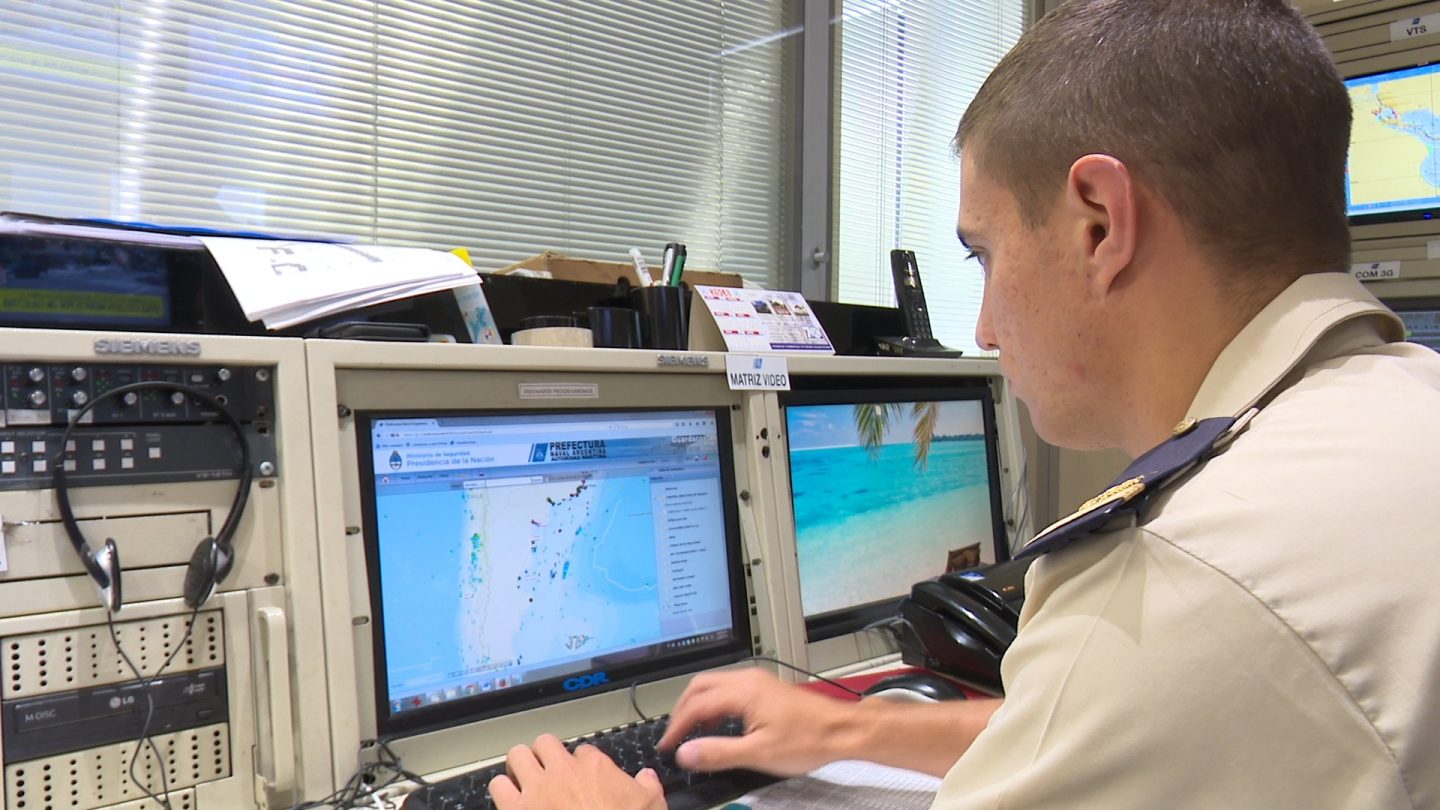
The Argentine Naval Prefecture, the entity responsible for securing maritime sovereignty, has defended its record of protecting national waters. Sergio Cernadas, the chief prefect of the Maritime Traffic Service, says that the system to prevent fishing by foreign vessels in national waters “works well”.
“We have a permanent presence of vessels in the area with regular air patrols, a coastguard system that tracks ships electronically, together with an alarm system, which allows for total control of the water’s surface in real time,” Cernadas explains.
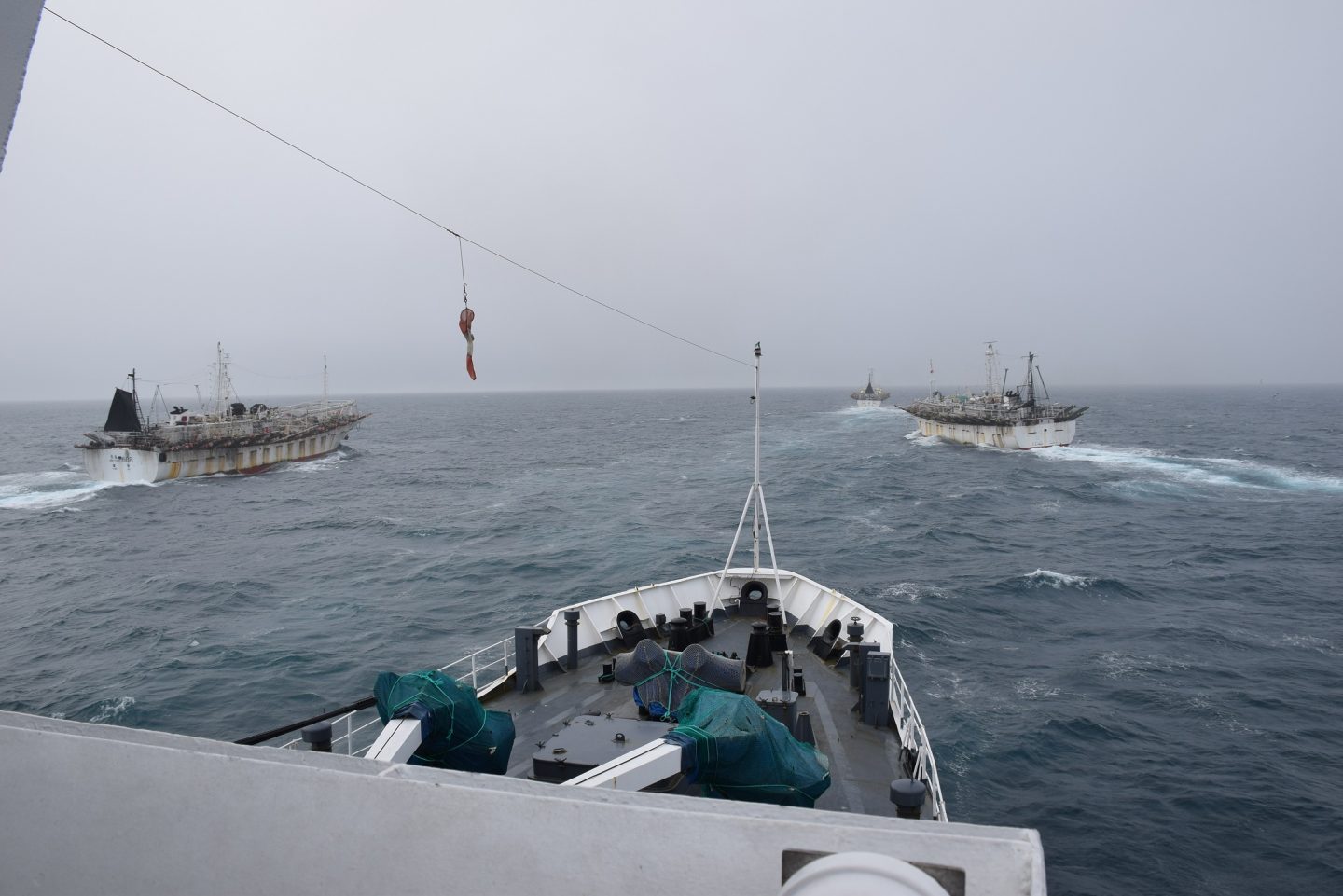
Until last year, the Prefecture detected and caught on average one ship every year and a half. But captures are becoming more common. In February, a Chinese and a Spanish boat were found fishing in Argentine waters. The Navy gave pursuit, catching the Spanish boat while the other vessel escaped (see image above). The case drew wide media coverage.
Big data
Interest in tackling transshipment on the high seas is growing.
Environmental organisations, governments and companies from the fishing sector are using new technologies and large, publicly available databases on maritime traffic to monitor fishing activity. This has helped provide a measure of control and transparency.
Platforms such as Global Fishing Watch, MarineTraffic, FishSpektrum, Navama, TM Tracking and OceanMind are some of the profit-making and non-profit initiatives dedicated to monitoring fishing activity.
“The typical behaviour of two boats when transferring loads is that they travel on parallel trajectories for about nine hours, which is the average time it takes for the transfer of fish from one boat to another,” says Trueba from OceanMind.
However, it is not so easy to determine whether or not a vessel is carrying illegal fish, according to Nathan Miller, a data scientist at Global Fishing Watch, a free online platform that displays shipping activity on maps of the ocean.
“While we cannot definitively say what is happening, you can infer a possibility of transshipment taking place, and decisions can then be made,” Miller added.
Solutions
Biologist Javier Corcuera, a specialist in environmental politics, recommends moving toward a form of fisheries management that involves other countries in the region. He advocates the creation of marine protected areas on the high seas.
“I think it’s important to speak with other nations that fish in the area in order to reach an agreement to protect marine stocks and set acceptable limits for annual catches,” he says.
He also suggests establishing a system of “black boxes” on boats, whose data cannot be altered, as a further control mechanism.
Involving the private sector in countries that fish in the region is also important, as is equipping the Prefecture with new tools, such as aerial and submarine drones.
For Cañete, the long-term solution lies in the United Nations’ advancing a global regulation that is effective on the high seas and that is acceptable to Argentina. At the same time, Argentina should define a policy on fishing in the area adjacent to the EEZ that offers incentives for vessels that calculate and respect biological limits while fishing.
Campaign organisation Greenpeace is seeking the total prohibition of maritime transshipment of overexploited species, and the creation of lists of authorised transfer vessels, as well as the presence of qualified observers on all transshipment vessels.
“There is a lot of pressure to ban transshipment when it cannot be supervised by observers on board the reefers. This is a real loophole for illegal fishing,” says Gutiérrez.
ODI also advocates a global agreement that considers illegal fishing a transnational crime, and urges the ratification and implementation of the Port State Measures Agreement aimed at preventing IUU.
Civil society also has a role to play in demanding countries protect marine resources.
“We are being left without fish, without food and without work,” says Schvartzman.