While many had hoped this would be the session to do it, after two weeks of talks at the UN headquarters in New York, member states have failed to conclude a legally binding agreement to conserve and sustainably use biodiversity on the high seas.
Now, governments will have to keep bridging their differences until a new meeting, for which a date has not yet been set.
Progress was achieved in several key aspects of the draft agreement, especially during the last two days of the negotiations. Governments largely said they ran out of time, while environmental organisations described the meeting as a missed opportunity.
In some ways, we made more progress in those two weeks than in the last five yearsLisa Speer, head of the ocean program at the Natural Resources Defence Council
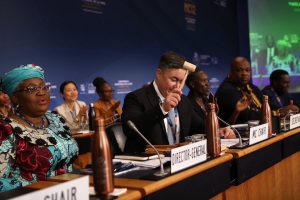
Conference president Rena Lee said: “We are closer to the finish line than we have ever been before. But we need more time to continue working. I urge everyone to redouble our efforts.”
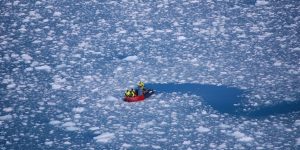
The high seas – the area more than 200 nautical miles (370 kilometres) from any shore and therefore beyond national jurisdiction – represent about two-thirds of the global ocean. However, only 1% of these waters are currently protected. These areas contain diverse ecosystems and are teeming with life.
Last year, a group of more than 100 countries known as the High Ambition Coalition (HAC) committed to protecting 30% of the planet’s land and sea by 2030. But without an international agreement, this pledge has no legal basis on the high seas. The treaty would place more parts of the world’s oceans into the network of Marine Protected Areas (MPAs).
“The negotiations were able to resolve a number of important issues. In some ways, we made more progress in those two weeks than in the last five years,” said Lisa Speer, head of the ocean program at the Natural Resources Defence Council (NRDC). “Delegates came prepared to truly negotiate, rather than reiterating their positions.”
Areas of progress
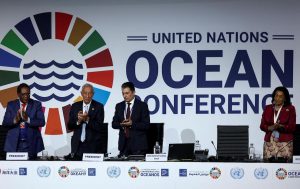
Expectations to finalise the agreement had been high after world leaders at the UN Ocean Conference in Lisbon in July pledged to take action to save the world’s oceans. States have been trying to negotiate a treaty for more than a decade.
Negotiations in New York addressed all four components of the proposed agreement: area-based management tools like MPAs; marine genetic resources; environmental impact assessments; and capacity-building and transfer of technology from developed to developing nations.
Luisina Vueso, an ocean campaigner at Greenpeace, said there was a “lack of urgency” from governments, who spent most of the two weeks not actually negotiating. This changed close to the end when delegations showed more flexibility and willingness to reach compromises, Vueso explained.
There was a feeling that we can finalise the treaty – it was a matter of countries running out of timeElizabeth Karan, Pew’s high seas program leader
Countries made progress on area-based management tools and on the institutional arrangements of a future treaty, something that will be critical to its effectiveness. This includes the mandate and rules for a Conference of the Parties (COP), like the one held annually on climate, and coordination with existing bodies regulating the high seas.
However, the sharing of possible profits from the extraction of resources in the high seas remained a very sensitive issue. Delegates still need to reach an agreement on how to do this equitably, on the types of benefits to be shared (monetary and non-monetary) and on whether policies will be voluntary or mandatory.
A revised draft text was published during the first weekend of the summit, with several brackets remaining in the areas where no agreement had been reached. New versions of the text were then circulated among delegates during the second week but not released to the public by the UN.
“There was a lot of good movement and a feeling that we can finalise the treaty; it was a matter of countries running out of time,” Elizabeth Karan, who leads Pew’s high seas program, said. “The sticking point is still around benefit sharing of marine genetic resources. We knew it was going to be the difficult issue, and it was.”
Next steps
Speaking at the closing plenary, representatives from most countries agreed significant progress had been made, highlighting the flexibility of all parties to reach compromises. The mindset of delegates was different this time, enabling more constructive discussions, they said.
Not everybody agreed. Representatives from small island states in the Pacific and the Caribbean were very disappointed. They asked for their special circumstances to be reflected in the text and asked for a balanced agreement that supports them.
“Pacific citizens came with good faith and willingness to negotiate. We live far and it’s not cheap to travel. The money spent to bring a delegation wasn’t spent on roads or medicine. We made hard compromises on issues of importance to us,” a delegate from Samoa said, holding back her tears, and followed by applause from the entire plenary session.
Jessica Battle, an ocean policy expert at WWF, said Norway and Iceland shifted their position furthest at the meeting, now being much more open to a treaty. On the other hand, Russia, and to a lesser extent China, still had doubts over some aspects, including comments on several articles of the text, she added.
Speaking at the plenary, a delegate from China said discussions were “deep and fruitful” and that while an agreement wasn’t reached in all areas, delegations now “have a better understanding of each other’s positions.” The agreement is a package deal and no aspect of it should be ignored, he added.
The UN General Assembly resolution which convened the negotiations mandated that they should be concluded by the end of 2022. This was the final scheduled session and the process is now suspended. It’s not yet clear when countries will come back together to continue negotiations.
There’s a packed calendar of UN meetings on other issues between now and January, including the climate COP27 in November, biodiversity COP15 in December and General Assembly in September. Observers said the next high seas meeting could be one week long instead of two thanks to the progress made at this session.