My father was born in the city of Marabá, in Pará state, in Brazil’s Amazon region. He once told me: “When I was a child in the 1940s, I never imagined that one day I would have a son who studies Mandarin and researches China.” Decades later, his hometown has received billions of dollars in Chinese investment, into its railways and factories, and consolidated itself as a regional hub for the transportation and processing of iron ore. The city is a symbol of the recent Sino-Brazilian journey, and of how China has become a power with significant impacts in the Amazon, through its trade and investments.
Why are the Amazon and its forests important for China? In short, for its natural and agricultural resources, but also for its essential role in storing carbon and controlling global warming. These factors are hugely relevant for China and its growing influence in the 21st century.
Soy, ore, meat and water
Chinese presence in the Amazon began with trade, through the purchase of commodities produced in the region; it deepened with investment in large infrastructure projects; and it is now advancing through the elaboration of global norms on the control of climate change and the tracing of supply chains to combat illegal deforestation.
In 2005, 1.14 million hectares were planted with soybean in the Amazon. By 2018, this had more than quadrupled, to 5 million. Much of this growth was driven by increasing demand from China, with around 70% of Brazil’s soybean production now exported to the Asian nation. During the global commodities boom of the 2000s, China also consolidated itself as the largest buyer of the iron ore mined in the region. These two products are Brazil’s biggest exports to China.
Did you know…
Only 15% of Brazil’s livestock production is exported to China, with most consumed domestically, according to official data
Meat exports to the Chinese market are relevant for Brazil, but to a lesser degree. Only 15% of the country’s livestock production is exported to China, with most consumed domestically, according to official data. Fishing exports to China from the Amazon are becoming more important too, stimulated by demand for swim bladders, a delicacy in Asia.
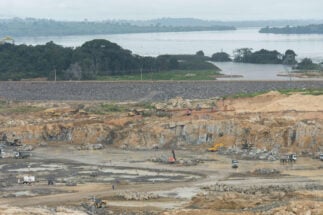
Another natural resource of interest to Chinese investors in the Amazon is water. The main investments in the region from China are in electricity generation and transmission. Large state-owned companies like State Grid and China Three Gorges have invested in hydroelectric plants in the Tapajós and Xingu basins – sometimes in gigantic projects, such as the 2,500-kilometre transmission line that connects the Belo Monte hydropower plant to the country’s southeast.
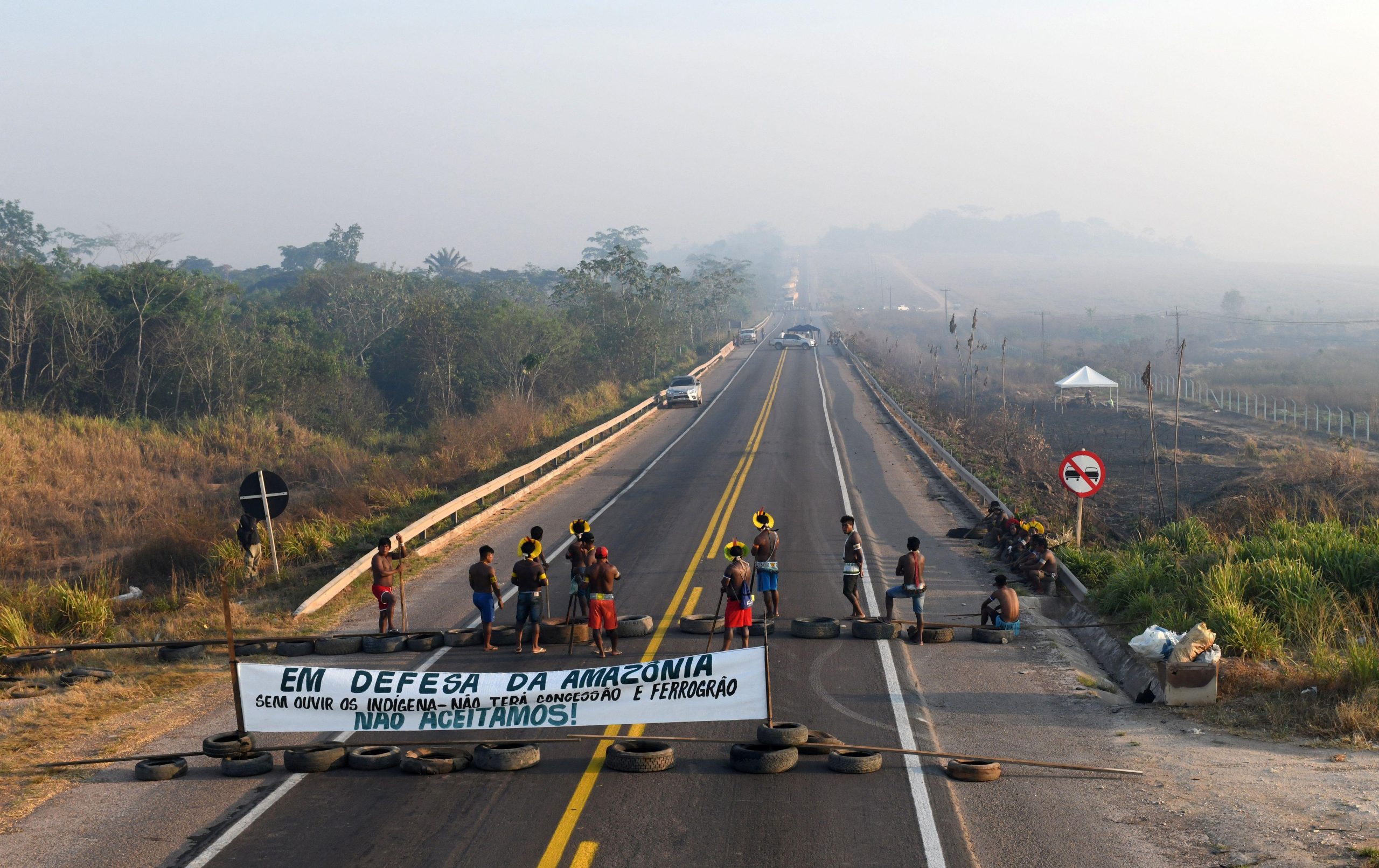
In addition to power plants, investments have also come from China into infrastructure projects such as railways. In general, these are initiatives dedicated to facilitating and reducing costs of commodities exports to Asia, connecting mines, soybean plantations and pastures to river ports. This is the case for the Paraense Railway, which connects Marabá and the municipality of Barcarena, on the banks of the Tocantins River, and the Ferrogrão project, planned to go from Sinop, in Mato Grosso state, to Miritituba in Pará.
Such infrastructure works sometimes lead to socio-environmental conflicts, especially with traditional communities – such as indigenous, riverine and quilombola communities – affected by the constructions. In cases such as Ferrogrão, the complaints and demonstrations of these groups interrupted project construction and resulted in interventions from a wide range of actors, including the Federal Public Ministry – the country’s public prosecutor’s office – political parties and the judiciary.
These tensions do not only occur with Chinese companies, but with companies of many nations operating in the Amazon, including domestic firms. More than a reflection of the culture of a company’s country of origin, they illustrate the problems of the Amazon region’s development model, the gaps in legislation or the fragility of social movements.
China, Amazonia and environmental diplomacy
Last but not least, the Amazon is relevant to China because of the forest’s weight in absorbing carbon and mitigating climate change. Chinese diplomacy has changed significantly since the 2010s, abandoning its reluctance to admit a share of responsibility for global warming and to decarbonise its economy.
These transformations were often made in partnership with Brazil, as in the BASIC group, which brings together both countries alongside South Africa and India, in UN climate negotiations. Such convergence was fundamental in reaching the 2015 Paris Agreement, though the Brazilian trajectory since has been more erratic, with the country walking back on many of its objectives.
In its various manifestations, the growing Chinese presence in the Amazon region is a sign of a region more integrated into the global economy. This is Amazon geopolitics in development
Chinese diplomacy for the Amazon has highlighted the need to tackle deforestation –Brazil’s largest source of carbon emissions. China engages in this through the actions in the region of its large state-owned companies, such as COFCO, a food processing giant and one of the main buyers of Brazilian agribusiness. The company signed an agreement with the World Bank to guarantee that the soybean it buys in the Cerrado – another Brazilian biome threatened by an advancing agricultural frontier – is not related to illegal destruction of forests. Later, it announced plans to extend the tracking to the Amazon, but press and human rights organisations have criticised failures in the implementation of these goals, drawing attention to gaps that make them impossible to fulfil.

These are similar trends to those of many Western companies, which since the 2000s have supported initiatives such as deforestation moratoria for soy and meat, in partnerships with organisations such as Greenpeace and the Federal Public Ministry. The main difficulty for all actors are systems of tracing the Brazilian supply chain, which, filled with gaps and flaws, need to be greatly improved.
China has also financed many sustainable development projects in Brazil, covering new technologies, such as electric vehicles, and renewable energy. These are partnerships with great potential if the Brazilian government resumes its traditional position since the return to democracy in 1985 – that is, a more assertive agenda regarding the protection of the environment.
In its various manifestations, the growing Chinese presence in the Amazon region is a sign of a region more integrated into the global economy, mainly through the extraction of its natural resources, and having Asia as the main external market for many of its major commodities. This is Amazon geopolitics in development.
This article is adapted from the fourth chapter of Maurício Santoro’s book Brazil-China Relations in the 21st Century: The Making of a Strategic Partnership (Springer, 2022).