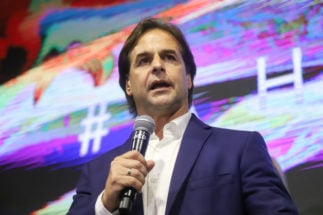
Uruguay’s new president Luis Lacalle Pou took office in early March, highlighting in his inaugural speech the importance of “not turning a blind eye” to the environment.
Lacalle Pou will have to tackle an intense agenda that hangs over from the previous government, as Milko Schvartzman recently wrote in Diálogo Chino. This includes social, economic and above all environmental issues. On top of this is the coronavirus outbreak, which challenges everyone.
Despite this situation, the new president has shown a vision and commitment to environmental issues and, above all, ocean issues. This was demonstrated by the proposal to create a Ministry of Environment and Water, yet to be approved by parliament.
Montevideo’s port is a key hub for the loading of illegal, unreported and unregulated catches
Schvartzman correctly identified a series of environmental problems that are present in Uruguay, including the excessive use of chemical products in the agricultural sector, untreated effluents in the main cities and the expansion of afforestation.
But these are all old problems worsened by the privatisation and commodification of nature. More than two decades have passed since commercial, genetically-modified crops were planted in our country and more than 30 years since agrochemicals started to pollute Montevideo’s drinking water.
The root of these problems will remain there as long as transnational capital flows into agriculture with the expansion of a global free trade regime, consolidating this so-called “commercialisation” of nature, which prioritises exchange value over use value.
It’s true that the model of intensive agriculture in Uruguay, which boosted this small country’s economy, has had serious environmental consequences. It is also true that these have worsened in recent years, eliminating native forests and contaminating basins and streams with fertilizers.
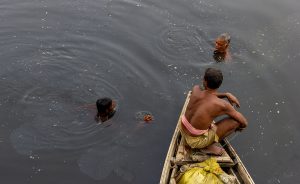
The reduction of oxygen in the water, caused by the saturation of algae due to excess nutrients, is a worsening reality that is discussed little. It affects the biodiversity of the Río de la Plata estuary, its coasts and the ocean, and interacts with the annual summer explosion of cyanobacteria – organisms that produce and consumer their own food and can be injurious to human health – witnessed since 2018.
30%
of all Uruguay's fishing vessels were in operation prior to the COVID-19 outbreak
Uruguay is clearly an aquatic country – its ocean floor extends to 350 nautical miles. There is also a crisis of Uruguay’s industrial fishing fleet, only 30% of vessels in operation prior to the coronavirus outbreak. Although ocean culture is not so present in citizens’ minds, the new president is more aware.
A blue agenda
What Schartzmann’s article doesn’t address is the critical need to expand protections around Uruguay’s exclusive economic zone (EEZ) through a set of marine protected areas (MPAs), as the current ones are ineffective. And in fact, this is an issue the government and Oceanosanos are already taking seriously.
Oceanosanos (Healthyoceans), a Uruguayan organisation that promotes ocean conservation, presented Lacalle Pou its proposal for a “blue ocean agenda” at a meeting in January, hoping to advance the creation of offshore marine reserves that would occupy 30% of the country’s EEZ.
Uruguay is committed to the UN Sustainable Development Goals, having agreed to ensure 10% of its EEZ falls within a marine protected area by 2020. However, this commitment has yet not been reached.
“These are the meetings that I like,” said Lacalle Pou on hosting Oceanosanos. For an hour, the new president showed interest in our blue agenda and said that learning about coral banks within the new marine reserve had “brightened up his day”. There is little history of presidents with such an affinity and commitment to the oceans.
As a presidential candidate, Lacalle Pou participated in the 2019 Ocean Conference, the first in Uruguay where he committed to the cause. Now, as president, he has appointed new directors of Environment and Aquatic Resources aligned with his promise to make the environment and the oceans key topics.
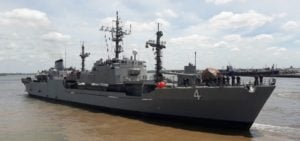
Montevideo’s port is a key hub for the loading of illegal, unreported and unregulated catches. The new government has the chance to correct this situation. New effective controls and oversight measures will be developed, seeking to increase transparency in fishing.
There is optimism about aspiring to a healthy ocean and a healthy environment for Uruguayans, thousands of whom depend on them in their daily lives. There is a historic opportunity to have a Uruguayan government committed to the environment and ocean.