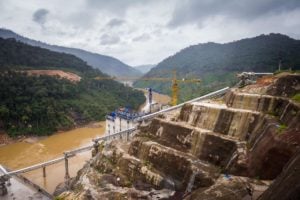
The landscape of global energy finance – and Latin American lithium mining – changed last week when China’s President Xi announced that his country would “step up support for other developing countries in developing green and low-carbon energy”, while also committing to end support for coal-fired power plants abroad.
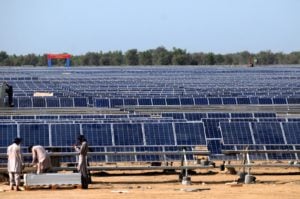
The demand for renewable energy already exists: developing countries around the world have proposed 494 gigawatts in renewable energy projects through their Nationally Determined Contributions (NDCs) to the Paris Agreement. In Latin America and the Caribbean alone, energy sector analysts foresee a boom in renewable energy, with installed capacity expected to more than double in the next few years.
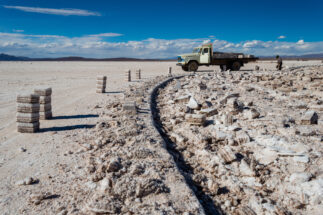
Given China’s role as a major producer of renewable technologies, a pivot to renewable energy will also necessitate a stepwise increase in its demand for lithium, a critical mineral necessary for storing power from intermittent sources like wind and solar. Nowhere in the world boasts a larger lithium deposit than the area that straddles Argentina, Bolivia and Chile, often called the lithium triangle countries (LTCs). China has already shown great interest in this sector, with lithium investments in all three LTCs and swiftly increasing import demand.
Lessons learned in Latin America
To successfully manage a looming lithium boom, LTC governments will need to balance environmental and social considerations, as well as the potential revenue. For example, the process of lithium mining is extremely water intensive. Each tonne of lithium extracted requires up to 2 million litres of water, depleting groundwater resources in a water-scarce region and severely disrupting fragile ecosystems.
Responsible water management will be key to ensuring that local communities – many of which depend on water resources for traditional livelihoods – share in the benefits from new investments. During the recent boom of Chinese mining investment in Latin America, the region’s relatively young environment ministries rapidly developed their capacity to manage the intrinsic risks in an extractive boom. Lessons from that boom will be crucial as China’s investors are looking to the LTCs, who have new opportunities to ensure demand delivers mutual benefits.
Did you know…
Up to 2 million litres of water are required to extract one tonne of lithium
As our recent contribution in the Latin American Studies Association Forum highlights, Argentina, Bolivia and Chile can learn from China’s history of copper mining in Peru and proactively build out robust domestic institutions to facilitate genuine consultations with local populations affected by lithium mining.
To do so, the LTCs and China face three main challenges. Firstly, the LTCs must continue to develop the institutional capacity to manage diverse stakeholders, complex environmental challenges, and foreign investors unfamiliar with the local context. These institutions should emphasise transparency throughout the planning process, ensuring all affected parties are meaningfully included in decisions from the earliest stages of planning.

In Peru, Chinese investors have been active in the mining sector since 1992. Yet, its governmental institutional capacity was reactively built up in parallel with the increasing Chinese investment in the sector in the mid-2000s. Although Peru signed a 1989 international agreement guaranteeing indigenous populations the right to “prior consultation” on potential projects impacting the environment they rely on, two of China’s largest mining investments in the country have faced protracted conflicts with local populations due, in part, to a lack of transparency and inclusion in the decision-making process.
In 2007, Zijin purchased the Rio Blanco copper mine in the northern Piura region, but the project remains undeveloped nearly 15 years later, due to staunch opposition and protests from local agricultural communities. A consortium led by the majority-Chinese company Minerals and Metals Group (MMG) purchased Las Bambas in Apurimac, southern Peru, in 2014 for over US$7 billion. While the mine is among the most productive copper mines in Peru, local communities continue to raise concerns about social and environmental issues.
A challenge for young ministries
Peru’s Ministry of Environment was created in 2008, amid China’s post-2007 mining investment surge and the Rio Blanco purchase. This reactive institution-building limited its capacity to make and enforce policy on prior consultation, or mitigation of environmental damages.
Like Peru, LTC environment ministries are also young, with Bolivia’s dating only to 2009, Chile’s to 2010, and Argentina’s to 2015. They will face many similar challenges in this coming wave of lithium investments, as Peru did with copper. However, the head start of a few years, combined with stronger international regulations for environmental protection, give the LTCs an advantage over Peru. But they must successfully implement key reforms for transparency, participation and accountability.
Secondly, Latin American countries should fulfil their commitments under the Escazú Agreement. This new international treaty was signed in 2018 by 24 Latin American and Caribbean nations, and guarantees local rights to environmental information, public participation in environmental decision-making, environmental justice, and a healthy and sustainable environment for current and future generations. The key components of the agreement require countries to go beyond the norm of prior consultation, engaging stakeholders much earlier in the process and providing them with greater agency to shape outcomes.
While Argentina and Bolivia have fully ratified the agreement, Chile has not yet signed it and Peru remains only a signatory. The agreement entered into force in April 2021, so its effects have yet to fully appear. But until Chile and Peru ratify the agreement, local communities and indigenous populations in Argentina and Bolivia will enjoy much broader legal rights to environmental information, participation and justice than similar groups in Chile and Peru.
Finally, China must follow through on its new commitments to honour protections for stakeholders in its overseas investments and development financing projects, especially indigenous peoples and other vulnerable populations. Successfully coexisting with local communities who also depend on the region’s groundwater will require including those communities in project planning and water management, as well as the economic benefits of lithium investments.
Greater transparency and accountability can help prevent environmental damage and associated conflict
China has assured the UN and the international community that it will implement new frameworks for due diligence on both environmental and social protections, especially for its companies operating in conflict-prone areas. LTC governments will ultimately be responsible for holding Chinese investors accountable on these promises, but international attention may be an important motivator for compliance.
If the process is managed properly, the pieces are in place for all LTC lithium mining stakeholders to benefit from a coming boom. Local communities, and especially historically excluded groups such as indigenous peoples, will be afforded greater access and participation in the government’s decision processes. Greater transparency and accountability can also help prevent significant environmental damage and any associated conflict in surrounding areas. LTC governments and Chinese investors will likely also benefit financially from more sustainable, peaceful outcomes.
Ultimately, realising these benefits will require the meaningful delivery of extensive commitments to transparency, inclusion and accountability from all sides.