Thousands of Nicaraguans took to the streets last Friday (22) to protest against the proposed interoceanic canal and the government’s poor response to the drought afflicting the country. The demonstration was the fourth such organised action against the infrastructure mega-project and coincided with the release of a new report revealing the extent of the country’s water crisis.
Amid chants of “no to the canal” and “Chinese out”, an estimated 15,000 to 20,000 mostly rural and indigenous protestors marched towards the town of Nueva Guinea in Nicaragua’s Autonomous Region of the Southern Atlantic Coast, the site of the longest land-based stretch of the canal.
The peaceful protest came just days after a citizen-led initiative to repeal a 2013 law awarding Chinese developer Wang Jing the right to build and operate the canal was rejected by Nicaragua’s National Assembly.
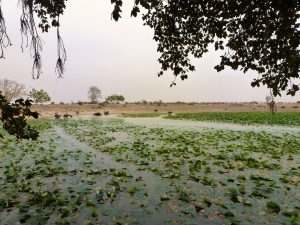
On the same day, a report released by a group of 15 NGOs entitled Nicaraguan Socio-Environmental Crisis: Post-2016 drought (Spanish) said water shortages in Nicaragua already affect up to 48% of rural communities as the country’s wetlands, rivers and lakes dry up as a result of climate change. The report said the destruction of forests and other ecosystems is to blame for falling water levels, which has jeopardised food security and caused social conflicts.
“We’re facing the most profound environmental crisis in recent history,” Victor Campos, one of the report’s authors, told a press conference on Friday. “The situation proves that we’re not doing things well at all in the country,” Campos added, and urged the government to better protect the country’s environment and resources. The report also calls on Nicaraguans to actively protect the land and water resources and report environmental crimes.
In addition to cutting through sensitive land-based ecosystems, the 173-mile (278km) waterway would cross Lake Nicaragua, having a devastating and ‘irreversible’ impact on aquatic ecosystems in what is Central America’s largest freshwater reserve.
Papering over the crack?
Canal concessionaire HKND earlier this month announced a plan to plant half a million tress along the canal route in order to keep water levels up. Afforestation will take place principally around the southern Atlantic coastal town of Brito, the nearby Indio Maíz reserve and the San Miguelito wetlands, located on the eastern shores of Lake Nicaragua.
According to Bill Wild, a senior advisor to HKND on the canal project, the reforestation plan is the largest ever seen in the Central American region and represents the ‘easiest and cheapest’ way of conserving water.
The first phase, timed to coincide with the rainy season which begins next month, will involve planting 250,000 trees.
It is not known what type of trees will be planted or how the forests will be managed in the future, factors conservationists say will be crucial to ensuring their survival.
Tensions rise
Discontent has been simmering in Nicaragua. Friday’s was the 74th protest expressing anti-government sentiment since Wang was awarded the canal concession in 2013. The country is the second poorest in the Western hemisphere and has been plagued by drought.
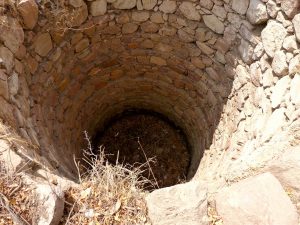
“The wells have run dry,” protestor Reyna Sosa told media outlet Confidencial at the march. “We don’t even have enough to wash…we have to buy canisters for two or three pesos.”
Although last week’s protest passed without serious incident, international organisations are increasingly concerned about the apparent politicisation of the country’s institutions. Just hours before the march, Amnesty International issued a public statement urging the Nicaraguan government to guarantee its citizens’ right to protest.
“In the past, demonstrators have been prevented from exercising their right to peaceful protest, suffering aggression, threats and arbitrary detention by both state and non-state actors during previous mobilizations,” the statement read, with reference to the police blockades set up at the third national anti-canal protest staged in October last year.
Amnesty International also urged the Nicaraguan government to listen to rural communities whose rights and livelihoods will be affected by the construction of the canal, both on the streets and in parliament. Protestors in Nueva Guinea marched with slogans demanding that the canal law (law 840) be abolished.
A citizen-led proposal to repeal the law 840 was rejected by the first secretary of Nicaragua’s general assembly on April 11 on the grounds that it did not have the jurisdiction to debate it. The decision was later upheld by the house’s governing body (Junta Directiva).
Mónica López Baltodano, the legal counsel for the initiative recently told Diálogo Chino the national assembly’s refusal to debate it was “completely illegal”.
![Black-necked cranes on the Naymjang Chu riverbed near Zemithang village of Pangchen valley in Tawang district. [image by Lham Tsering]](https://dialogue.earth/content/uploads/2016/05/2.-Black-necked-cranes-on-the-Naymjang-Chu-riverbed-near-Zemithang-village-of-Pangchen-valley-in-Tawang-district.-Photo-by-Lham-Tsering-300x190.jpg)